But most competitors can’t be bothered to build quality links consistently. That’s your opportunity.
These 9 proven link building tips cover everything from reverse-engineering competitor backlinks to earning editorial links through digital PR – and how to build links that get you cited in AI search results too.
Effective link building focuses on consistently acquiring high-quality, niche-relevant backlinks that increase domain authority and improve rankings.
The top strategies include replicating your competitors’ best links, digital PR, guest posts and building link inserts.
Here’s a stat that will surprise you:
95% of all web pages have zero backlinks pointing at them.
Let me explain why that’s actually good news:
The #1 ranking result on Google has 3.8x more backlinks than the pages ranking in positions 2-10. And that’s not all…
Backlinks are also one of the key factors that decide whether your site gets referenced in Google AI Overviews and AI tools like ChatGPT, Perplexity, Gemini, and Claude.
Link building is one of the most effective ways to:
- Increase rankings
- Improve AI visibility
- Drive more targeted traffic
The best part?
Most of your competitors can’t be bothered to build quality backlinks.
That’s your opportunity.
So I’m going to share 9 proven link building tips that will help you acquire more high-authority and relevant backlinks.

These are the exact strategies that our team has successfully used for our own link building service clients.

What Makes A Quality Backlink
Not all links are created equal.
Google and AI search tools like ChatGPT, Perplexity and Gemini have gotten scary good at evaluating link quality.
The leaked Google search API documents confirmed that Google uses multiple versions of PageRank internally, not just one. That means Google is evaluating your links in more ways than most people realise.
But the biggest factor?
Topical relevance. A backlink from a niche-relevant DR 30 site will outperform a DR 70 link from an unrelated site every time.
Crazy, right?
The more relevant they are, the bigger impact they’ll have on your site.

Here are the top factors that affect backlink quality:
• Niche-relevance - The linking site should be in the same niche or a closely related one
• In-content placement - Links placed inside the content carry more weight
• Real organic traffic - Ensure the site gets at least 500 organic visitors
• Natural anchor text - Use varied and natural anchor text for all links
• Site history - Check the site doesn't have a history of selling guest posts or dodgy links
• No spam - Avoid toxic sites like PBNs, link farms and sites with inflated authority metrics
That’s why at LinksThatRank we’ve built our entire link building process around quality. Every link we build is manually reviewed by a member of our quality control team and passes our strict 23-point quality checklist.
Quality is what separates the winners from the losers.
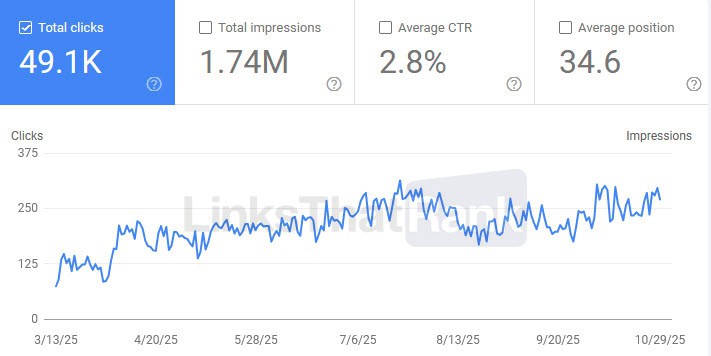
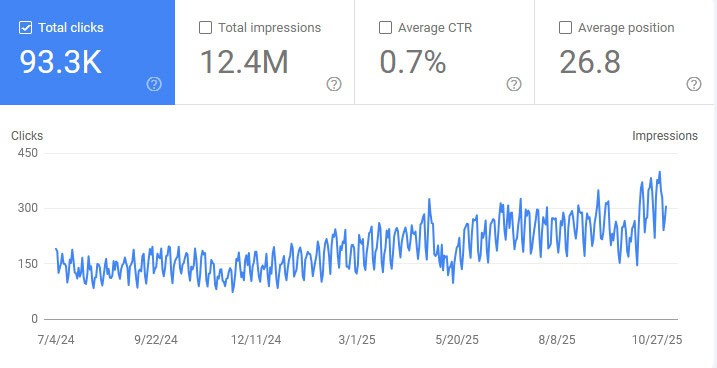
It’s why we consistently get results for our clients like this:

Link building is now a quality over quantity game. Focus on only acquiring high-quality, niche-relevant backlinks from trusted sites.
Because one great link will do more for your SEO than ten average ones.
With that in mind, let’s get into our 9 link building tips…

1. Reverse-Engineer Your Competitors’ Best Links
Foundation Tips:
✅ Compile a list of 6-10 direct SEO competitors that rank for your target keywords
✅ Run Ahrefs Link Intersect and look for websites linking to all your competitors but not you
✅ Export & filter for dofollow, in-content links with a minimum DR of 20
✅ Add your link prospects to a spreadsheet then research them all before outreach

Expert Tips:
✅ Give special attention to sites linking to 2+ competitors, they like linking to SEO resources like yours
✅ Reverse engineer the link type (guest post, link insert, resource mention, etc.) and repurpose that outreach method
✅ Look for links pointing directly at competitor pages that rank for keywords you’re targeting, gaining that same contextual signal
✅ Bonus points if the link to your competitor was earned in the past 6 months, implying that site is actively linking and open to outreach
Replicating your competitors’ backlinks is the best way to get quality links quickly.
And it’s where I recommend you start.
The premise is simple:
Sites that link to your competitors are also likely to link to you. If you can find how they got the backlink, you can follow the same process and replicate the link for yourself.
Simple, right?
Here’s how it works:

Start by brainstorming a list of your top SEO competitors. Aim for 6-10 key competitors that have similar content and rank for similar keywords.
Think of these as your gold mines. Now you need to find the gold…
For this next part, you’ll need a tool like Ahrefs to make the process easy.
Log in to Ahrefs and use Site Explorer to search for a competitor’s domain.

Click Backlinks on the left sidebar and apply the following filters:
Recommended Ahrefs Backlink Filters:
• Dofollow
• Backlink Type: In-content
• DR: From 20

Click apply and sort by the highest domain rating first. You now have a complete list of sites linking to your competitor.
You can take this list of opportunities and run.
But I want to show you how to refine it even further to increase the number of links you successfully build.
Click on Link Intersect in the left side panel and select referring domains. Add your domain at the top and then add 3-5 competitors to the bottom.

Finally, click the Links to competitor filter and select At least 2 competitors.

The report will show you sites that link to at least 2 of your competitors, but not to you. That’s exactly what you want.
Why?
Because you’re essentially seeing a list of sites that link to content similar to yours. And they’ve done it at least two times.
That means they’re also likely to link to you. Export the list as a CSV, and you’re ready to reach out.
How do you actually get the link?
Short answer: Replicate exactly what your competitors did.
Look at the link and ask yourself – How did my competitor earn this link?
For example:
- If it was a link insert, reach out with a link insert pitch
- If it was a guest post, reach out with a guest post pitch
- If it references a statistic, reach out with your own relevant statistic
- If it’s a quote, reach out with a relevant quote
You get the picture.
To find the contact details of the site owner, use a tool like Hunter.io. Simply enter the domain and it will pull up the email address.

Ideally, you want to reach out to the site owner, site manager or if it’s a bigger site, the person in charge of content. It might take a bit of digging but it’s worth it.
Only email the generic "contact@" email address as a last resort.
Keep your pitch short, to the point and lead with the value that you’re offering them. The more value you offer, the more likely you are to get a backlink.
Remember that your goal is to replicate what your competitors did by providing the same thing.
Your competitors have already done the hard work. All you have to do is knock on the same door and offer something better.

2. Earn Editorial Links Through Digital PR
Foundation Tips:
✅ Sign up for Sources of Sources, Featured.com and Qwoted so journalists can find you and send queries
✅ Answer every relevant journalist query within 15 minutes to maximise your chances of being picked
✅ Keep answers concise (4-5 sentences) with a quotable answer and a specific data point/stat
✅ Avoid pitching your product/service, always provide value as an expert first

Expert Tips:
✅ Create a "source kit" complete with your headshot, bio, credentials and 3-4 evergreen quotes on popular industry topics
✅ Track reporters/sites that mention you and use those angles to pitch related story ideas to the same reporters
✅ Monitor Google Trends to predict future stories/memes and pre-write responses for future queries
✅ Repurpose all your media mentions into testimonials on your website as future social proof for pitching
Digital PR has been the most effective link building tactic two years in a row.
67.3% of link building professionals say it's a significant part of their entire link building strategy.
The reason?
It’s one of the few link building tactics that can earn you massive backlinks from major media outlets and publishers. I’m talking about backlinks you would never otherwise be able to get.

Here’s how it works…
Sign up for Sources of Sources.

This is a completely free platform that helps journalists connect with relevant sources for their articles. It’s run by Peter Shankman, the founder of HARO.
Up to three times each day, you’ll get an email with queries from journalists from large media companies. When the question is about a topic you know a lot about, you can respond.
If chosen, you’ll get mentioned as a source.
Next, sign up for Featured.com and create an Expert Page.

Spend time making your profile look good and positioning yourself as a knowledgeable and approachable expert in your field.
Featured.com works similarly to Sources of Sources.
Journalists post questions and queries that they need sources to respond to. If you’re chosen, you’ll get sourced in the article and often receive a link to your site.
The big thing is that the journalists posting the questions work at places like the New York Times, USA Today, Forbes and Yahoo Life.

These are major media outlets. Links from these types of publishers are worth more than gold to your SEO.
The last step is to set up a profile on Qwoted.

Just like the other two, this platform connects journalists with relevant experts to use as sources. Qwoted is expensive, but the free tier gives you 2 free pitches per month.
The Qwoted dashboard is also the best and makes it easy to filter and respond to journalists quickly. If you have success with the free tier, you can always upgrade to the paid tier later.
Signed up for all 3 platforms?
When a relevant query comes in, respond as quickly as you can. Try to respond within 15 minutes. Journalists are on tight deadlines. The first good answer will always win.
Tips to write winning responses:
• Only respond to queries you're actually an expert on
• Keep responses to 4-5 sentences max
• Provide a genuine expert insight they won't find anywhere else
• Give them a usable quote with a specific data point
• Make it easy for them to use the information you provide
Important: Never sell or pitch your product or business. That’s the fastest way to get banned and you’ll get ignored by journalists anyway.
You’re a value provider first and a link builder second. Keep that in mind.
But beyond the tactical tips, remember what journalists actually care about:
- A credible source they can reference
- Unique expert opinion that supports their article
- Verifiable stat or data that supports your opinion
That’s it!
Deliver those three things consistently and digital PR becomes one of the most powerful link building strategies available to you.
The links you earn will boost your Google rankings and get you referenced in AI answers.

3. Capture and Convert Unlinked Brand Mentions
Foundation Tips:
✅ Setup Google Alerts for your brand name, product names and common misspellings/+variants
✅ Leverage search operators like "brand name" -site:yoursite.com to discover existing brand mentions
✅ Whenever possible reach out to the author/content creator directly rather than using contact forms
✅ Keep it brief. Thank them for the mention and simply ask if they could please add the link

Expert Tips:
✅ Setup alerts for your brand with Ahrefs Web Mentions to capture mentions Google Alerts will likely miss
✅ Focus on mentioning pages that already rank within top 20 for relevant keywords -these links are more valuable
✅ Monitor for your competitors brand mentions as well, if someone mentions them but doesn't link, pitch your brand as alternative resource
✅ Calculate your linked vs unlinked mention ratio monthly to track growth in brand authority
This is the easiest link building tip to implement.
People are already mentioning your brand online without linking to it. All you have to do is find them and ask them to add a link to your site.
Easy right?
But here’s why you should already be taking advantage of this:
Firstly, unlinked brand mentions are some of the easiest links you’ll ever build. You can literally put the entire strategy on autopilot. More on that in a moment.
More importantly…
We’ve found that there is a strong correlation between the number of brand mentions a site has and how well it performs in AI Overviews.
Put simply: The more brand mentions you build, the more likely you are to be included as a source in Google AI Overviews.
This is particularly true for searches related to products and services your business offers. Who wouldn’t want that, right?
Brand mentions will boost your rankings in traditional searches today and improve your brand visibility in AI searches for the future. That’s a win-win.
Follow these steps to set it up.
Create a Google Alert for:
• Your brand name
• Common misspellings
• Founders names
• Branded product names

Set the delivery to “as it happens” for brand name and “once per day” for all the others.
When your brand is mentioned online, Google Alerts will email you immediately. For all the others, you will receive a roundup email once per day.
That makes the entire strategy manageable.
When you receive an alert, click through to check if the author added a link to your site. If not, email them as soon as possible to secure the link.
Here’s how to do that:
Look for the author’s email on the site. If you can’t find it, use a tool like Hunter.io to find the website manager/owner’s email address.
Avoid using the generic form on their Contact page or emailing the generic business email when possible. Your primary goal is to reach the person in charge of content and make it as easy as possible to add the links.
Use this email template as a starting point:
Hey [Name],

I'm the [owner/founder/manager] of [Brand].

Thanks for mentioning [Brand] in your piece about [topic] - [Page URL]. I really appreciate it!

Would you mind linking our website in the mention - [Your URL]? It would mean a lot to us if you did!

Either way, great article, I really enjoyed it.

Thanks,
[Your Name]
Simple, right?
Don’t just copy and paste this template directly. Make changes and match it to your own style so it doesn’t sound so generic.
In my experience, most unlinked mentions occur just because the writer or website owner forgot to add a link. That means they’re usually more than happy to add it in when you reach out.
The conversion rate of unlinked mentions is way higher than normal cold outreach-based link building because the author already chose to mention you – so you’re not starting from zero.
And because you can set the entire system up for free and run it on autopilot, unlinked mentions is a strategy that every website owner should be taking advantage of.
Pro Tip: Take unlinked mentions up a notch by using the Ahrefs Web Mentions alert feature. It automates monitoring and is specifically designed to flag unlinked mentions so you can jump on them quickly.

4. Publish Data That Earns Links on Autopilot
Foundation Tips:
✅ Identify keywords that naturally lend themselves to statistic websites like "[topic] + statistics" or "[topic] + data"
✅ Use ChatGPT Deep Research to scrape 60-80 statistics, then manually check every single source for validity
✅ Categorise your statistics into logical groups so journalists can find what they need quickly
✅ Include charts, graphics and a key statistics section at the top of your page

Expert Tips:
✅ Run your own custom survey (at least 200-300 responses) to generate unique data that nobody else has
✅ Build 3-7 links to your page using Outreach Ledger before letting it start earning links naturally
✅ Keep updating your stats page every 3-6 months with fresh data for recrawl priority and ranking retention
✅ Create an infographic from your statistics page that other sites can embed with an attribution link to pass along some traffic
There’s nothing a journalist loves more than original data that brings out a unique insight.
And that’s exactly why you should use this next link building tip.
Publishing original data does three things:
- Increases the authority of your brand
- Puts you in front of the right people
- Creates a unique linkable asset
The reality is that generic blog posts don’t attract backlinks anymore – but original data does.
Here’s why this works:
Journalists, writers and bloggers are always looking for credible data points and statistics to back up the articles they write. They’re also looking for interesting stories that will engage their readers.
Publishing data fulfils both of those criteria. All you need to do is compile a list of relevant statistics, group them under relevant categories and publish them on your site.

Sounds too good to be true?
The first step is to brainstorm ideas you could publish data and statistics about.
Pick a topic in your niche that:
• Is interesting and engaging
• The current statistics are outdated or generic
• Has search volume
Think about your niche and sub-categories. They should give you some inspiration about topic ideas.
Next, use a keyword research tool like Ahrefs to look up the search volume.
You’re looking for keywords like:
- topic + statistics
- topic + trends
- topic + stats
- topic + data

This part is important…
You need to find a relevant keyword that you could realistically rank for that still has reasonable search volume.
Found your keyword?
Now it’s time to use AI to do what used to take hours in less than 10 minutes.
Log in to ChatGPT, select Deep Research, and use this mega prompt:
"I am creating a piece of content to rank for [target keywords]. Compile 60-80 relevant and insightful statistics about [YOUR TOPIC] from 2024-2026 with source URLs and dates that tell the whole story of the current state of [YOUR TOPIC]. For each statistic provide: (1) The exact statistic with specific numbers, (2) The source name and publication, (3) The year published/collected, (4) A 1-2 sentence 'Why this matters' commentary explaining significance. Group statistics into logical categories/themes that I can use for my content structure. Focus on frequently cited, surprising, or particularly useful statistics."
You’ll get a response like this:

Cool, right?
Within minutes, all of your research is done, and the statistics are listed in relevant categories.
Keep in mind that AI hallucinates. So you need to manually comb through the list of statistics and check that each statistic is real and the source is accurate.
Now write the content.
Don’t just list the statistics and call it a day. The best statistics pages state the statistics and write a short explanation.
Bring your page to life. Your stats and data should tell a story and draw out real insights that people can apply.
For example, look at this:

That section has 3 statistics in it, but ultimately comes to a usable insight that someone can apply to their SEO strategy.
You need to do the same.
Written your post?
Now it’s time to make your content pop.
Add:
• Custom graphics
• Charts
• Tables
• Call out boxes
• Quotations

That makes key stats and insight jump off the page. Your content should be scannable, easy to understand and most importantly… Referenceable.
That’s how you’ll end up getting cited as a source by writers and journalists and build a ton of quality links.
Don’t forget to add a key statistics section at the top of your page with 5-9 of the heaviest-hitting points.

I also recommend using Canva to create an infographic that lists those key statistics.

That will immediately make your content more shareable.
The last step is to build initial links.
The main goal is to rank your statistics page at the top of the Google SERPs:

And within AI Overviews:

That way, journalists, writers and bloggers will find you organically, and you’ll naturally start earning high-authority links.
That's why we recommend building 3-7 links to establish foundational authority and boost initial rankings.
The good news is that you have two options:
- Manually build them yourself
- Outsource to LinksThatRank
The best way I’ve found to build links myself is by reaching out to sites that already reference statistics pages. Let them know about your new page and provide them with an updated statistic to refresh their article.
Don’t have time?
Use LinksThatRank to build the initial links for you. Choose the number of links you want and tell us your target keyword – our team will take care of the rest.

Publishing data that journalists, bloggers and writers use as a source can be one of the most passive link building strategies.
The best part?
There’s almost no limit to the number of them you can create. And they earn massive backlinks from major news sites and media publishers that significantly boost your domain authority.
Pro Tip: To create an even stronger data-driven linkable asset, create your OWN data. Run a simple 8-10 question survey to your audience and use a tool like Google Forms or TypeForm to collect responses. You only need 200 to 300 responses to make your data statistically relevant.
When you own the data, you tend to get more links and rank better. Plus, a headline like “We surveyed 250 [industry] professionals and found…” is an irresistible hook that journalists can’t ignore.
5. Replace Dead Links With Your Content
Foundation Tips:
✅ Make a list of 10-15 SEO competitors, go to their site and run Ahrefs Best by Links report to find broken pages
✅ Filter out 404 pages then sort by number of referring domains to prioritise your outreach list
✅ Utilise archive.org to identify what was on that broken page before
✅ Reach out with a helpful tone, let them know about the broken link then suggest your page can serve as a replacement

Expert Tips:
✅ Prioritize broken pages with 5+ referring domains, 1 piece of new content could win you 5 links!
✅ If you cant find an existing page that matches your topic perfectly, create a custom blog post tailored to that broken link
✅ Batch-outreach broken link opportunities by broken linking site, not by competitor (some sites will have multiple broken links you can fix in 1 email!)
✅ Send your broken link outreach with a screenshot of the 404 page. Make it easy for them to understand the problem.
For this next link building tip…
I’m going to show you how to clean up the web and acquire relevant links at the same time.
The strategy is called broken link building:
66.5% of links on websites have become dead over the past nine years. Pages get deleted, technical issues occur, and content gets moved.
All of that creates a wealth of broken link opportunities.
Let me explain:
When a website owner links to a broken page, they are essentially linking to a 404 page. This affects the quality of their site and their SEO.
If you have a page that you can offer as a replacement, you fix their issue and earn yourself a juicy backlink at the same time. That’s what I call a win-win.
You can reverse engineer the whole process so that you’re getting highly relevant links that were originally pointing at your competitors’ pages.
Start by listing out all of your main SEO competitors.
These are sites that:
• Have similar content
• Rank for the same keywords
• Target the same audience
Aim for 10-15 key competitors you can use for this process.
There are two ways to find broken links:
- Broken Link Checker
- Ahrefs
If you’re serious about broken link building, then Ahrefs is an absolute no-brainer because it will save you so much time.
Go to Site Explorer and enter the domain for your first competitor.
Select the “Best by links” report, filter for “404 not found” pages and sort by Referring domains.

Now you have a complete list of all the broken pages on your competitor’s site that have backlinks pointing at them.
Those backlinks will be your targets.
You might have to go through a few competitors before you find some decent link targets. That’s completely normal and just part of the process.
Next, you want to win those links…
Look at archive.org to see what that broken link used to point to.

Next, ask yourself – Do I have a relevant piece of content that I could use to replace that link?
If the answer is yes, you’re good to go. If not, you have a decision to make on whether it’s worth creating something similar to try to win the link replacement.
Use archive.org to guide your decision.
Sometimes you might have a piece of content that’s close but just needs a few updates to make it relevant to the original linked page.
Found a match? Now it’s time to reach out.
Use Hunter.io to find the website owner’s contact information.
Then, reach out and let them know about their broken link. Include your URL as a replacement and write one sentence about why it makes sense.
Hey [Name],

I wanted to let you know that you have a broken link on your article [Article Title] - [Article URL].

You're linking to [Broken URL] in [Paragraph], but that page no longer exists. I've attached a screenshot below.

I have a more comprehensive guide that would make a perfect replacement. It's a straight swap that fixes the broken link on your site.

Here's the URL - [Your URL].

I can see that the article still ranks pretty well in Google, so I'm highlighting it so that it doesn't affect your SEO.

Hope that helps!
[Your Name]
Important: Don’t be pushy or salesy.
Your primary goal should be to let them know about the broken link and position your link as a convenient solution.
Most website owners appreciate the fact that you’re pointing out the broken link and are happy to update it with your URL as a replacement.
Rinse and repeat this process for each of your SEO competitors. It should supply you with a ton of great backlink opportunities.
6. Write Outreach Emails That Actually Get Responses
Foundation Tips:
✅ Breakout into 2 emails, 1 relationship-building 'feeler' email and 1 link ask as follow up
✅ Personalise EVERYTHING beyond just their first and last name
✅ Don’t use email hunters or generic email addresses, FIND who to contact via LinkedIn
✅ Send a follow-up email if you don’t hear back within 5-7 days

Expert Tips:
✅ Run prospects’ websites through ChatGPT to discover recent content and generate customised openers at scale
✅ A/B split your subject lines and track open rates to continuously optimise your process
✅ Reference a specific section/study on their page that you liked to demonstrate you read it
✅ Always try to give value in the first email before asking for anything in return (bonus tip: don't ask for a link)
Here’s what most website owners miss when building links…
Personalisation is everything.
It’s the single biggest factor that separates the winners from the losers.
Our own results show that personalised subject lines and body copy can increase response rates by over 30%. That's a big difference.
I’m not talking about just adding their name or mentioning their brand in the email.
I’m talking about genuine personalisation that shows the person you’re reaching out to, you know them and care about them.
The truth is that the link builders consistently pulling in response rates of 25% to 30% are pros at personalising their emails. Templates are great and should be used to streamline outreach.
But templates alone won’t cut it anymore.
Think about it…
The people you’re trying to collaborate with get hundreds of link request emails per month.
How are you going to stand out?
With that in mind, here’s the biggest link building tip we use to skyrocket our own response rates…
Use a two-pronged approach for every outreach campaign:
- The feeler – Make the connection, no link request.
- The follow-up – Natural link request after they’ve responded.
Here’s what that looks like in practice:
Email 1 – The Feeler (no link request):
“Hey [Name], your piece on [specific article title] was one of the better takes I’ve read on [topic] – especially the section about [specific detail from their article]. I recently published something related covering [your angle/data point] and thought you might find it interesting: [URL]. No ask here, just thought it was right up your alley. Cheers, [You]”
Email 2 – The Follow-up (5-7 days later, only if they engaged):
“Hey [Name], just circling back on that [topic] resource I shared last week. A few people have told me it’d make a useful addition to articles covering [their article’s topic]. If you think your readers would find it helpful, I’d be thrilled if you linked to it from [their specific URL]. If not, no worries at all. [You]”
Simple, right?
The Feeler builds the relationship first, and the follow-up makes the ask feel natural rather than transactional.
But this is where most people get stuck…
Genuine personalisation at scale sounds great in theory. But doing it manually for 50+ prospects takes forever.
That’s where ChatGPT comes in.
Give ChatGPT the domain URL or URL for a recent article and use this prompt:
I am doing link building outreach to [Site Name]. Here is a link to their recent article: [URL]. Write me a personalised email opener of 2-3 sentences that references something specific from this article. Keep it genuine, conversational and don't mention a link request.
You’ll get a response like this:

Cool, right?
Use the opening line and key details to personalise The Feeler template. Then, write the rest of it yourself.
This style of outreach means that ChatGPT does the heavy lifting in terms of research and you add the human touch that makes the difference.
That’s exactly how the pros do it.
The combination is what gets the replies. It will take a few emails to get used to the process.
But once you get it down, you’ll be pumping out quality personalised outreach emails like a machine.
Now, I don’t want to oversell outreach. The truth is, even with the right approach like the strategy above, link building outreach is hard work and time-consuming.
You've got to:
• Constantly find new prospects
• Collect contact details
• Craft personalised emails
• Follow up consistently
• Track everything
That’s no small task. I mean, there’s a reason that even SEO and marketing agencies outsource link building.
Don’t have the time?
LinksThatRank handles the entire process end-to-end. Every link we build is manually reviewed by a member of our team and passes our strict 23-point quality control checklist. That means each backlink is engineered to provide maximum benefit to your SEO and rankings.
All you have to do is choose the links you need and tell us the target keyword. Our specialist team will take care of the rest.
7. Guest Post on Sites That Actually Move the Needle
Foundation Tips:
✅ Use Ahrefs Content Explorer to discover active sites in your niche with DR 40+ and referring domains 50+
✅ Vet each website for >=500 organic traffic, quality content and multiple authors
✅ Pitch each site owner 3 unique topic ideas that would fit well on their site
✅ Provide additional value beyond just the content, make yourself unforgettable

Expert Tips:
✅ Ignore websites that openly flaunt "write for us" pages. Google discounts links from these pages
✅ Provide unique value through each guest article by writing >= 1500 words of unique content nobody else has compiled
✅ Ensure your guest post link appears in the body content, not your author bio or sidebar link round-up
✅ Expect to pay $200-$300+/article on legitimate sites. If you find anyone offering guest posts for $50 bucks, RUN
Strategic guest posts are still one of the most effective link building tactics.
64.9% of link builders use guest posts as one of their primary ways to get backlinks.

Here's the problem: 85.3% of guest posts end up on low-quality or spammy sites.
That’s exactly what you DON’T want.
So in this next section, I’m going to show you how we find quality guest post opportunities consistently. For this, you will need Ahrefs.
Go to Ahrefs Content Explorer and search for recent articles in your niche by typing in your main topic or keyword.

Apply the following filters:
- Minimum DR 40+
- Referring domains 50+
- Published in the last 12 months

What you’re left with is a complete list of quality, active and authoritative sites regularly posting in your niche.

Now you need to click through each result you found to vet them for quality control.
Look for three things:
• Does the site have 500+ organic traffic verified by Ahrefs?
• Is their content high quality with real editorial standards?
• Do their articles have multiple authors?
You need to be able to confidently answer yes to all of these questions.
Why?
You only want to publish on sites that offer great quality content, that’s obvious enough. But verifying that they have organic traffic proves that Google trusts the site enough to refer traffic to it.
That’s essential information for building quality links.
And sites that have multiple different authors are more likely to accept guest posts, even if they don’t advertise it. This will ensure you’re not wasting time on a website that will never respond.
Create a list of 25 sites that match all three criteria.
These will be your initial targets.
Next, use Hunter.io or LinkedIn to find the website manager’s email address.
Don’t use the contact form or generic company email. You need to reach the right person so you can personalise the email and increase your chances of getting a response.
Now use this template to pitch your own guest post ideas:
Hey [Name],

My name is [Your Name] from [Website].

As you've probably guessed, I am reaching out to see if you would be open to a guest post collaboration. Why?

Because we deserve it and as you can see from our site... We know what we are talking about 😀

What do I want exactly?
I was reading your site and noticed that you don't have a piece of content about [topic].

So, I thought I could write a piece of content to fill the gap. Here are a few ideas I think would perform well:
[Topic Idea 1]
[Topic Idea 2]
[Topic Idea 3]

What's in it for you?
To go with your new shiny piece of content we can also:
[Benefit You Can Offer]
[Benefit You Can Offer]
[Benefit You Can Offer]

What do you think?

Thanks,
[Your Name]
Feel free to use ChatGPT to personalise the pitch for you.
The key to making this work is ensuring you’re offering a collaboration-type deal. The truth is that content has become more of a commodity since AI content generation has become normalised.
Your goal is to show thought leadership in your topic ideas and pair that with the extra benefits you can offer for free.
This will stand you out from the hundreds of other guest post requests they receive.
What can you offer as a benefit?
Think outside the box:
• Promote the guest post on social media
• Give the site a shoutout in your next newsletter
• Include branded graphics for free
• Share the article with your email list
• Leave a genuine testimonial for their product/service
Ideally, find a benefit that doesn’t cost you anything but provides a lot of value to the target site.
Secured a guest post opportunity?
The last step is to write the content. Write at least 1,500+ words of genuinely useful content. This is your time to shine.
Don’t give generic AI slop. Write the content yourself and give the article the time it deserves.
Add:
- Original insights
- Unique experiences
- Tables
- Charts
- Graphics
- Quotes
- Relevant statistics
Make this the best piece of content they’ve ever received.
Only then should you add your link naturally into the content where it adds value to the reader.
Important: Make sure that your link is in the body text of the content. If it ends up in an author bio or sidebar, it’s not worth your time.
One more thing to be aware of…
Guest posts on quality sites often still cost money. Website owners know the value of a link. Even with the right approach, it’s not uncommon to be asked for a “placement fee”. Expect to pay a placement fee of $200 to 300+. If someone is offering guest posts for $50, this should be a red flag.
Double-check the site to ensure it meets your quality standards and isn’t a PBN.
Want to skip all the hassle?
Our guest post services are placed on real sites, with real traffic, and everyone passes our strict 23-point quality control process to ensure you only get links that increase rankings.
8. Build Links That Get You Cited in AI Search Results
Foundation Tips:
✅ Write your content with clear question/answer format sections so AI models can easily scrape answers
✅ Include original data and insights. AI models are more likely to reference unique information it doesn’t know.
✅ Keep title tags and meta descriptions user intent-aligned
✅ Refresh content every 6 months to maximise priority ranking with AI language models

Expert Tips:
✅ Ask ChatGPT and Perplexity your target topics to see which websites their AI trusts content from, then build links there
✅ Build brand mentions on sites where these AI bots reside. More mentions correlate with AI included in their Overview snippets
✅ Focus on earning links from websites that are already being linked as answers on AI bots for your topics
✅ Don’t ignore traditional link building. Yes, build guest posts and do link inserts. Also build brand mentions.
SEO is changing fast.
Google still dominates organic traffic today and will for the foreseeable future. But AI Search is catching up quickly, and some experts expect it to take over as soon as 2028.
That means AI visibility needs to be on your radar now.
The good news?
Quality backlinks will improve your Google search rankings today AND increase your AI visibility at the same time.
73.2% of SEO professionals believe backlinks have a direct influence on whether your site gets cited by AI search tools like ChatGPT, Perplexity, Claude and Gemini.

AI Overviews use websites ranking in the top 10 as sources 75% of the time.
The links you build today will pay dividends in both Google search today and AI search as it grows in the future.
Two birds, one stone.

Here’s how to do both…
Structure all your content to provide clear and direct answers to specific questions.

AI tools extract answers from content that gets straight to the point. The easier you make it for AI to extract and summarise your content, the more you’ll get cited.
Simple as that.
Next, include original relevant data and statistics in your content.
Relevant data doesn’t just have to mean “statistics”. It means unique insights and information that your readers won’t find anywhere else.
This is what makes your content truly unique. LLMs like ChatGPT and Perplexity cite fresh content more.
When an AI model does a search, it initially scans the top results:
• Meta title
• Meta description
• Last updated date
If your metadata answers search intent and your content was updated recently, you’re much more likely to have AI extract answers from your page. Ensure that you regularly refresh your content at least every 6-12 months.
Now that you’ve taken care of the content side…
Build links from sites that AI already trusts. This is actually simpler than you think.
Open ChatGPT or Perplexity:
- Ask common questions related to your niche
- Search for your target keywords
- Research important information in your industry

All you’re doing here is looking at what websites ChatGPT and Perplexity are referencing in their answers and pulling information.
These are your target sites.
The fact that the AI models are using these sites as sources proves they’re trusted. A link from a site that AI trusts dramatically improves your own SEO and AI visibility.
Cool, right?
The last step is to build brand mentions.

Brand mentions correlate strongly with sites that rank in Google AI Overviews. In other words, the more brand mentions you have from quality sites, the more AI Overviews your site will be referenced in.

How do you build brand mentions?
The best tactics include:
- Digital PR
- Getting mentioned in round-ups
- Guest posts
- Get sourced by journalists
Sound familiar?
The rules of link building haven’t changed. But the prize has got bigger.
Make sure you optimise your content for LLMs and then build quality links that will get your content noticed.
9. Monitor, Protect, and Measure Your Link Building ROI
Foundation Tips:
✅ Turn on alerts for new backlinks & lost backlinks within Ahrefs / your favourite link-building tool
✅ Search for lost backlinks monthly and attempt to re-acquire any quality backlinks that were lost
✅ Log every single link you build with date, URL, DR, what strategy you used, and how much it cost (if any)
✅ Monitor keyword rankings, traffic and conversions quarterly instead of weekly

Expert Tips:
✅ Keep exact match anchor text ratios under 30% to avoid triggering an over-optimisation penalty
✅ Analyse which link-building strategies provide the most value to keyword rankings after 90-180 days
✅ Build links from websites that link to similar topics, overlapping topical relevance carries heavy authority weight
✅ Focus on relationship-building over recurring client work, relationships trigger warm-introductions to new links
Most people make the mistake of treating link building as a passive SEO tactic.
You build a link, confirm the placement and call it a day.
But that couldn’t be further from the truth.
You need to ensure that you protect your backlink profile and regularly measure your SEO results.
The good news?
It’s actually very straightforward. You just need the right process.
The best tools to monitor your backlinks:
• Ahrefs - Largest link index with 35 trillion+ live backlinks
• Semrush - Great all-in-one SEO platform
• SE Ranking - Budget-friendly option with a lot of firepower
Ahrefs is my preferred choice because it makes monitoring your backlinks easy, and it has one of the biggest link indexes.

SE Ranking is a good option if you need a more budget-friendly tool.
Whatever tool you choose, set up alerts for new and lost backlinks.

Next, make a regular calendar event to track lost backlinks each month.
You're looking for valuable lost links:
• DR 30+
• Dofollow
• 500+ organic site traffic
Why?
Because most lost links are simply due to content updates or page restructuring. You work hard to earn links, the last thing you want to do is slowly lose them because the site made a simple change.
If you see a lost backlink, reach out to the site owner with this template:
Hey [Name],

I noticed the link to our [Page] from your article [Title] seems to have been removed from [Their URL].

Was that intentional?

Happy to update the resource if needed.

Thanks
[Your Name]
A simple email like this takes just a few minutes to send and usually does the trick to get the link restored.
Next, check your anchor text distribution.
Pull your full anchor text report from Ahrefs (or your chosen tool) and look at the anchor text ratio of:
- Exact-match
- Branded
- Natural
- Generic
If your exact-match anchors exceed 30% of your total anchor text, you need to diversify. Sites with low anchor text diversity see drops of up to 15 positions on average.
Keeping a balanced and natural anchor text profile is essential to consistent growth.
Check out our exact process for how we choose the right anchor text for clients.
Now that you’ve got the basics of monitoring down, the next step is to measure performance.
Every time you build a link, write down the following:
- Date it was built
- Link URL
- Domain rating
- Time taken to build
- Strategy used
- Costs (including your hourly rate)
This information is gold.
After 3-6 months, you have a clear picture of which strategies deliver the best results and ROI for your website.
As I like to say – what gets tracked, gets improved.
The last step is to measure the ranking impact of your links. You’d be surprised how many SEOs (and even agencies) skip this step.
How often should you measure results?
Once every quarter.
That’s it. Don’t track results weekly or even monthly. Our client results show that most links take 5-12 weeks before their full effect is felt.
You don’t want to try to measure results too early and risk false conclusions.
Each quarter, check your:
• Keyword rankings
• AI Visibility
• Organic traffic
• Organic conversions
Compare it to the previous quarter and pay special attention to specific pages you built links to.
One thing to keep in mind:
The results you see this quarter are from the links you built in the last quarter. For example, the links you built in Q1 will be driving the results you see in Q2.
Stay patient, stay consistent and look for what types of links are making the biggest impact on your site.
Then double down on what works.
Link Building Mistakes That’ll Cost You
Google and AI search tools like ChatGPT, Perplexity and Claude are very good at assessing link quality.
Sites that play fast and loose with their backlinks are going to pay a heavy price. Make sure you have a strict quality control process in place and pay attention to these common mistakes.
Don’t Buy Links Based On Domain Rating Alone
Domain Rating can be a vanity metric.
The truth is that you can artificially manipulate the domain authority of your site, making it look more authoritative than it is. People who do this trick SEO tools like Ahrefs, Moz and Semrush. But they don’t fool Google.
Don’t build links on domain rating alone.
Instead, check:
- Does the site have 500+ organic traffic?
- Is it topically relevant to your niche?
- Does it have an unnatural number of outbound links?
I’ve seen a lot of sites that are DR 60, but have less than 100 organic visitors per month and 500 outbound links with 250 thin pages. Don’t be fooled…
These types of links are worthless and can get you in hot water with Google.
Use Domain Rating as a guide, not as a final decision.
Avoid Using PBNs or Expired Domain Networks
This one should be obvious…
But I’m always surprised by the number of people who still get sucked into PBNs.
Google’s August 2025 spam update was the final nail in the coffin for private blog networks. Sites using PBNs for link building were destroyed overnight.
Google doesn’t just ignore these types of links anymore – it actively punishes sites using them.
That’s a big reason that we manage a database of over 60,000 spammy domains and PBNs called the Backlink Blacklist.
PBNs are a ticking time bomb. It’s not a matter of if you will get hit by Google, but when.
Focus on quality links on real sites with real organic traffic.
Don’t Over-Optimise Your Anchor Text
If more than 30% of your anchors are exact-match keywords, your site is at risk.
Keep your anchor text profile natural with a mix of:
- Branded
- Topical
- Exact
- URL
- Generic
Overoptimised anchor text is one of the primary ways that Google identifies sites manipulating their algorithm to rank higher.
Maintain a diverse anchor text profile on your site and each page.
This will help drive rankings long-term and ensure you don’t wake up to an anchor text penalty one day.
Never Ignore Link Decay
Two-thirds of links disappear over time.
That’s just the nature of websites and the internet in general. Pages get deleted, content gets moved, and sites get restructured.
If you’re not paying attention, your links can vanish as well.
Set up a simple link monitoring process and automated alerts. That way, if any of your important links are removed by mistake, you can quickly reach out and win them back.
Stop Sending Mass Templated Outreach
Basic templates are no longer effective.
Site owners get hundreds of generic link requests each month. Most go straight to spam and the rest are ignored.
Every outreach email you send must have some level of personalisation. With the power of AI, you can now create quality, personalised outreach email campaigns at scale.
Personalised emails are shown to increase response rates by over 30%. It's a no-brainer.
Wrapping It Up
Modern link building is simple in theory and hard in practice.
But it’s also essential for consistent growth on Google and greater visibility on AI platforms.
Focus on building quality links from real sites with real organic traffic.
The 9 link building tips in this post are everything you need to build a strong backlink profile that dominates Google search rankings and gets you cited in AI search results. The key is consistency.
Don’t want to build the links yourself? Let our specialist team at LinksThatRank build them for you. Choose the number of links you need and tell us your target keywords – we will take care of the rest.
Frequently Asked Questions
Do backlinks still matter for SEO?
Yes, backlinks are still one of the top 3 ranking factors. They’ve become even more important because of the positive effect they have on Google search rankings and AI visibility. The thing to keep in mind is that the quality of backlinks is much more important than the quantity of links.
How many backlinks do I need to rank?
There is no single magic number of backlinks that you need to rank. The number of links you need depends on your niche, competition, target keywords and current level of domain authority. The best way to see how many links you need is to calculate the link gap to top-ranking competitors.
How long until backlinks impact my rankings?
Most of our clients see the initial impact of backlinks within about 6 weeks of them going live. The full impact of backlinks is typically seen within about 6-12 weeks. Link inserts placed in already indexed content tend to deliver faster results than guest posts that need time to be crawled and indexed.
What’s the best free link building strategy?
Unlinked brand mentions and broken link building are the best free link building strategies for most website owners. Responding to journalist queries on platforms like Sources of Sources and Featured.com is also an effective free strategy to earn high-authority media links.
Is paying for link building safe?
While all link building technically falls outside of Google’s guidelines, the risk depends on quality. Buying random links from dodgy sites with no quality control is high-risk. But working with a quality link building service who build high-authority links on real sites is the safest approach. The most important thing is that the link building service you choose to work with has a documented quality control process.