
AI search tools like ChatGPT, Perplexity and Gemini are changing how people discover content, products and services. And the businesses that adapt now will have a significant advantage.
Structure your content for AI citations, build quality backlinks from trusted sources, optimise for conversational queries and keep your content fresh. That’s how you win in the next generation of search.
Generative Engine Optimisation (GEO) is the future of SEO, evolving from traditional search where 10 blue links appear in the SERPs to links being cited directly as sources in AI answers.
That doesn’t mean that GEO is replacing SEO. It simply adds a layer on top that changes how SEOs should approach content writing, authority building and technical optimisation.
Let’s face it:
The way that people search online has already changed.

Instead of:
- Typing a search query into Google
- Scanning through a list of blue links
- Jumping back and forth to find your answer
Hundreds of millions of users now ask AI search tools like ChatGPT, Perplexity and Gemini to get answers to their questions in seconds. This is the biggest shift in SEO since search engines were invented.
ChatGPT now has 400 million active users, and Google AI Overviews reach over 2 billion people monthly. 58% of consumers now rely on AI for product recommendations. That's more than double from just 2 years ago.
There is no doubt that AI-powered search is here to stay.
So, here’s the million-dollar question:
Is your business prepared for this next generation of search?
In this post, I will explain how GEO is different, why it matters now and how to optimise your website so you’re positioned to take advantage of it.

What Is Generative Engine Optimisation?
Generative Engine Optimisation (GEO) is the process of optimising your website and content to improve visibility in AI-powered search engines like ChatGPT, Perplexity and Google AI Overviews.

Unlike traditional SEO, which focuses on ranking higher in the organic search results, GEO aims to make your content more digestible, authoritative and quotable for AI models.
Four big shifts change with GEO:
• Context is more important than keywords
• Structured, easy-to-summarise content gets cited more
• Authority, credibility and trust matter more
• Brand details and consistency are essential
Think of it like this…
Traditional search engines like Google act as librarians. They point users to relevant web pages and let them figure out the rest on their own.
But AI search engines and LLMs are more like personal advisors. They summarise the information available and personalise it to answer the user’s question directly.
In GEO, consistent, clear, credible and authoritative content matters most.

Why Does GEO Matter For Your Business?
Generative Engine Optimisation matters for your business because it is the future of search. Businesses that are recommended in AI search engines and LLMs will have a significant competitive advantage over businesses that aren’t.

GEO is changing the way that customers will discover your products and services. Those that adapt now will thrive, those that don’t will get left behind.
It’s as simple as that.
Zero-click searches are already eating into traditional organic traffic. When AI can answer the search directly, there is no need to click through to your site.
Google AI Overviews are reducing clicks by as much as 58%. AI search is impacting search traffic more than any change to the SEO industry ever.
But as I like to say – change creates opportunity.

And that’s exactly what’s happening right now with GEO.
Brands that are cited in AI Overview answers see a 38% increase in organic clicks. The average visitors from AI tools are worth 4.4x more than the traditional organic visitor.
Here’s where this really gets interesting…
The businesses that are adapting to this new change are actually seeing gains. While overall traffic might drop, conversions are increasing.
The time to take advantage of this shift is now.

What Is Different Between Traditional SEO vs GEO?
Traditional SEO focused on ranking individual pages in Google’s organic search results. GEO focuses on getting AI models to summarise your content and link to you as a source.
That’s a big difference.
The truth is that GEO has many similarities to traditional SEO. But there are also some significant differences.
Look at this table of key differences between GEO vs traditional SEO:
| Generative Engine Optimisation (GEO) | Traditional SEO | |
|---|---|---|
| Primary Goal | Get cited as a source in AI-generated summaries | Rank individual pages in top SERP positions |
| Success Metric | Citation frequency and visibility within AI responses | Rankings, Click-Through Rate (CTR) and organic traffic |
| Target | Large Language Models (LLMs) and “Answer Engines” | Search engine crawlers (Googlebot, Bingbot) |
| User Intent | Specific and Narrow: Users want personalised answers to questions. | Exploratory and Transactional: Users want to browse, compare, and explore on their own. |
| Content Focus | Structured, conversational, and factually precise | Long-form, comprehensive, and technically sound |
For example for the query ‘best project management tools’ traditional search will provide you:

or the same query setting personalized results from GPT:
See the differences?
And it should change how you approach modern SEO in an AI-powered search world. SEO is changing because the way people search has changed.
When someone types a query into Google, it’s no longer just about ranking in the top spots (although this is still important). Your ultimate goal is to be one of the primary sources for the AI Overview that sits at the top of the search results.
GEO should shift your thinking away from “ranking” to becoming the “trusted source” that AI tools and LLMs are summarising in their answers.
The best part?
GEO best practices will naturally boost your traditional SEO as well.

How To Optimise For AI Search
Now you understand what GEO is, why you should pay attention to it and how it differs from traditional SEO…
I’m going to show you exactly what you need to do to optimise your site for AI search and start winning more citations in AI Overviews.
1. Structure Content For Citations
AI systems and large language models don’t read every word you write.
Instead they tokenise your content and scan it for extractable information that can be summarised.
Why is this important?
Because AI models like ChatGPT and Gemini don’t see every piece of information equally. They assign more “weight” to certain pieces of information based on the topic and context.

If you want to be cited more often in LLMs, you need to structure your content in a way that makes it easy to extract.
This is why FAQ schema pages get disproportionately more AI citations than traditional blog content.
Think about it…
An FAQ is essentially a specific answer to a specific question. The information is presented in a clear question-answer format that’s easy for AI to quote.
Here's what you need to do:
• Provide short, structured, direct answers at the beginning of every section
• Clearly define key terms and highlight relationships between entities
• Add relevant FAQ sections at the bottom of every page with concise, quotable answers
• Cite statistics with clear source attribution through links
Here’s the hack:
Whenever you have a sub-heading like an H2 or H3, type the heading into Google and see how the AI Overview answers it.

Mimic the AI Overview answer at the beginning of the section. The AI Overview is essentially a cheat code for what information Gemini is looking for AND how to structure it.
Cool, right?
Don’t copy it word for word. You need to manually write it in your own words, just mimicking the flow.
But that’s not all…
You must also clearly show the AI models how entities link together.
For example:
- Don’t write: Our software is great for helping remote teams stay organised.
- Instead: [Brand Name] is a project management tool designed for remote engineering teams to stay organised and hit deadlines.
See the difference?
Now AI knows exactly what the brand is, what it does and who it services. This is called “entity linking”.
Get the structure right and everything else becomes easier. Get it wrong, and even your best content gets ignored.
2. Build Authority Through Quality Backlinks
This is where traditional SEO and GEO meet in the middle.

Backlinks are a major factor for AI search engines and LLMs when deciding what websites to cite and which products or services to recommend.
But here’s why backlinks matter even more for GEO…
Traditional SEO shows 10 blue links and the user can browse and click on the one they want. But AI search gives only one answer, often with just 1-2 primary sources. You either get cited, or you don’t.
You need to be the primary source for an AI answer, or you’re essentially invisible.
Not all backlinks are created equal.
What makes a quality backlink? Build links from sites that:
• Are highly relevant to your website
• Have a strong domain authority
• Have at least 500+ monthly organic traffic
• Create quality content with high editorial standards
• Are already being featured in AI search and LLMs
This is the big shift with GEO link building…
You want to get relevant backlinks from websites that are already being cited in AI and LLMs.

Why?
Short answer – Because it proves they're trusted sources.
And that trust transfers directly to your site!
This is one of the most direct ways to improve your own AI citation rate right now.
Need help building those types of links?
Let our specialised link building team at LinksThatRank take care of it for you. We only build high-quality backlinks on trusted sites with verified organic traffic.
- Guest Posts – High-quality AI search-ready
- Link Building Packages – Discounted monthly bundles
- Link Inserts – Niche-relevant editorial placements
- Agency Program – Discounted white label services
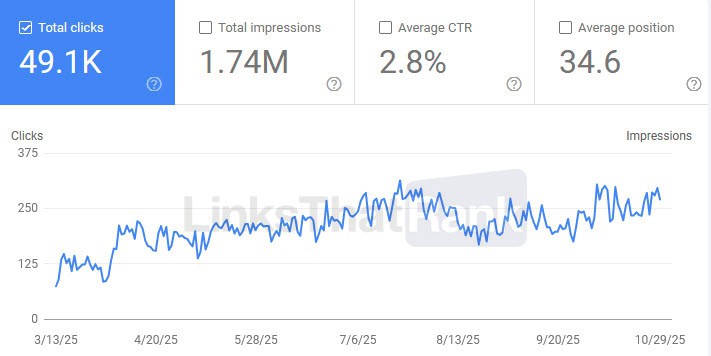
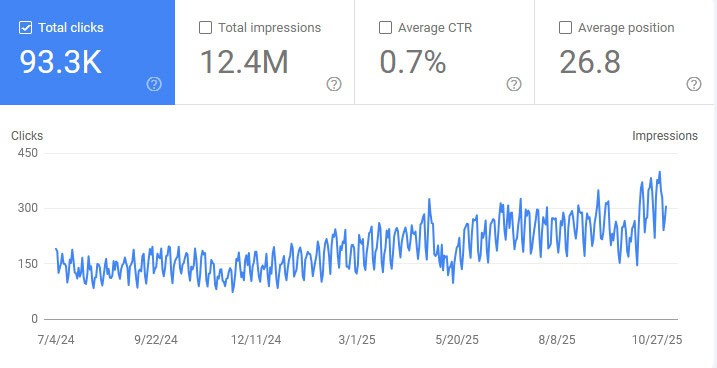
Our link building clients experience results like this:

Every link we build is manually reviewed by a member of our team and passes our strict 23-point quality control process.
If you want backlinks that will help your business get recommended in AI search, LinksThatRank has you covered.
Choose the links you need, we’ll take care of the rest.
3. Optimise For Conversational Queries
Users search differently in AI tools.
On Google, people type short keywords or brand names like “best CRM software” or “HubSpot CRM plans”. But with LLMs like ChatGPT, most people ask full questions and expect direct, personalised answers.
Think about it like this…
No one is opening ChatGPT and typing in “best CRM software”.
They ask:
- What’s the best small business CRM for teams of less than 5?
- Which CRM is best for fully remote teams that have a long sales cycle?
- Is a CRM worth it if you have less than 10 clients?
See the change?
The questions are full sentences with lots of context, nuance and specific intent. Your content needs to match the way people talk so AI can easily summarise it into an answer.
Here’s the best way to do that:
Search for your target keyword on Google and scroll down to the People Also Ask section.

These are common questions related to your topic. Pick the most relevant ones and shortlist them for your content outline.
Now, head over to ChatGPT and type in this prompt:
I am writing a piece of content on [keyword here]. List the 5 most common conversational questions people ask about this topic. Format them as bullet points.
ChatGPT will give you a response like this:

Combine the relevant People Also Ask and ChatGPT questions. Use the best ones as H2s and H3s in your content outline.
Now for the important part…
The first two sentences under each heading should cut straight to the answer. No warm-up, hook or fluff.
You want a direct, clear response to the heading like this:

See how the first two sentences answer the question directly?
This strategy will ensure that your content is scannable, relevant, conversational and easy to summarise for AI. The better you do this, the harder it becomes for AI to ignore you.
Pro Tip: Add an FAQ section at the bottom of every page with 4-6 relevant questions on the topic. Concisely answer each question with 40-60 words to make it easy for AI to extract answers.
4. Keep Content Fresh
Content freshness is arguably more important in GEO than traditional SEO.
Why?
LLMs like ChatGPT, Perplexity and Gemini only want to provide updated answers to users. Newer or updated content is considered more reliable and often prioritised.
When an LLM searches online, it can’t read 15 pieces of content at once.
Instead it scans the metadata of each page, looking specifically at:
• Meta title
• Meta description
• Last updated date
Think of this like a pre-screen that each model goes through before deciding which content to scan and cite.
If your page doesn’t pass the freshness check, the LLM moves on before even reading a word.
You’re probably thinking…
There is no way I have time to update every piece of content on my site. But I have a simple freshness update that takes less than 7 minutes to implement.
Here's how to do it:
• Update your title tag and meta description
• Add one new FAQ to the page
• Rewrite the page introduction
Simple, right?
That’s all it takes to pass the LLM freshness check and get back in the running for citations.

5. Build Your Brand Presence With Brand Mentions
AI models don’t just evaluate your website…
They evaluate your entire brand presence online.
ChatGPT, Perplexity and Gemini want to know that your content is trustworthy, credible and authoritative before they cite you as a source.
One of the biggest trust signals they use is brand mentions.

When your brand is mentioned online, AI models take notice. The more mentions you have, the more they trust your brand.
This is especially true if your brand is regularly mentioned in high authority sources and alongside other industry experts.
And it’s not just linked mentions either…
80.8% of SEO specialists believed that unlinked brand mentions also influence citations in AI and rankings on Google. AI is smart enough to connect a mention of your business name to your brand without a link.
Crazy, right?
Getting featured on:
- Top 10 lists
- Review sites
- Industry directories
- Authoritative blogs
- News publications
- Wikipedia
Helps AI understand your brand, expertise and target audience.
That’s why digital PR and strategic guest posts are one of the most powerful GEO strategies right now. Every mention, every feature and every link reinforces to AI that your brand is a credible, authoritative source.
Building your brand presence and mentions online should now be a primary objective for every business.
Want to learn more about brand signals?
Check out my complete How To Build Brand Signals guide to learn how to implement this strategy properly.
Wrapping It Up
Here’s the bottom line…
GEO is the future of SEO.
But instead of replacing SEO completely, it is simply building on top of it. That means if you’ve been doing SEO for years, you already have a solid base to work from.
The biggest change is how people are searching.
Millions of people use AI search engines every day to learn, discover new brands, find products and purchase services. And that’s only going to increase in the future.
The businesses that adapt to this change now will have a significant advantage over those that don’t.
Use the 5 steps above to start evolving your SEO strategy for the AI era. This is how you get cited, recommended and discovered in the next generation of search.
Want backlinks that increase Google rankings AND get you cited in AI search?
Let our link building team at LinksThatRank build them for you. Every link is built on a relevant, trusted website that creates the trust signals both Google and AI need to see.
- Guest Posts – High-quality AI search-ready
- Link Building Packages – Discounted monthly bundles
- Link Inserts – Niche-relevant editorial placements
- Agency Program – Discounted white label services
Frequently Asked Questions
Is GEO the same as SEO?
GEO and SEO both aim to increase visibility in search and the fundamentals overlap, but they are not exactly the same. GEO builds on traditional SEO best practices, specifically optimising website pages and content for AI-powered search engines like Perplexity, ChatGPT and Google AI Overviews. SEO focuses on ranking web pages higher in traditional search engines like Google and Bing.
Will AI search replace Google?
No, AI search will not replace Google anytime soon. 95.3% of ChatGPT users still use Google search regularly, showing that AI search is supplementary rather than a replacement. Google has now also become a hybrid search engine, with AI Overviews at the top and traditional search results at the bottom. As of tpday, Google still has 90% search engine market share.
Do backlinks help with AI search visibility?
Yes, high-quality relevant backlinks significantly improve AI search visibility, acting as trust signals that demonstrate authority, expertise and credibility. While AI systems use a range of factors to determine sources, 76.1% of websites sourced in AI Overviews also rank in the top 10 on Google. Since backlinks are considered a primary driver of top-ranking sites, backlinks are essentially a prerequisite to getting more AI mentions and visibility.
How long until GEO becomes essential?
GEO is already essential for businesses that want to position themselves to take advantage of the next generation of search. Traditional search traffic is expected to drop by the end of this year as AI search tools like ChatGPT, Perplexity and Gemini become a primary way for users to discover new content, products and services. That means GEO should already be a significant part of your business’s overall SEO strategy.
What is the first step to improve GEO?
The first step to improve your GEO is structure your content in a way that’s easy for AI search engines to summarise and build authoritative backlinks to boost trust signals and credibility. This alone will position your business to take advantage of GEO. Then, add FAQ sections to each page with FAQ schema. Include clear definitions in your content and ensure that you keep each piece of content updated and fresh.