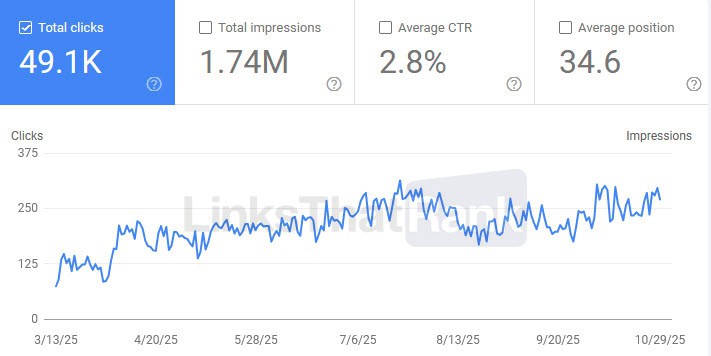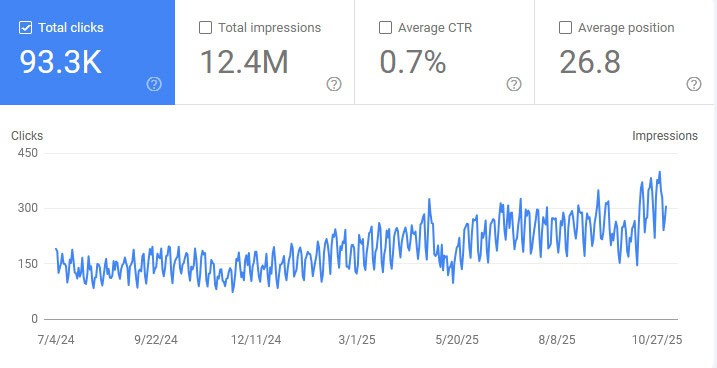

But when you crack it, the results are significant. Top-ranking ecommerce pages have 3.8x more backlinks than lower-ranked pages.
Use these 5 proven strategies – product review outreach, influencer collaborations, resource link building, broken link building, and strategic guest posting – to build quality links that boost your rankings in Google and AI search.

Ecommerce link building is fundamentally different compared to blogs or service-based businesses.
Why?
Product pages don’t naturally attract links. Category pages aren’t inherently “linkable”. That means most standard link building strategies don’t translate directly to online stores.
But here’s the thing…
Link building is still one of the most powerful growth strategies for ecommerce stores.
Top-ranking ecommerce pages have 3.8x more backlinks compared to lower-ranked pages. Stores that invest in link building see an average ROI of 150% when those links come from trusted sources.
And this will only become more critical as AI search continues to grow and every online store on the planet will be fighting to get featured in AI tools like Perplexity and ChatGPT.

Over the last 6 years, we’ve built tens of thousands of backlinks for ecommerce clients alone. I’m pulling back the curtain to show the best strategies to build quality ecommerce links consistently.
The best part?
These strategies will help you rank higher in Google search now and as AI search continues to grow in the future.

Why Is Ecommerce Link Building Different?
Ecommerce link building is different because it primarily targets transactional keywords instead of informational keywords.
That means competition is much higher and targeting them is much harder.
Think about it like this…
Blogs can publish high-quality content that naturally attracts links. Service businesses can create case studies or unique informational resources that do the same.
But ecommerce stores? You’re selling products.
This creates a fundamental problem. Websites don’t naturally link to product pages like they do to informational content. Most publishers don’t want to oversell to their audience and if they do link – it’s an affiliate link that doesn’t pass link equity anyway.
That means you’re already fighting an uphill battle to build quality backlinks consistently. But on the flip side, when you crack ecommerce link building, the results are significant.
And as a bonus…
Quality backlinks can drive qualified referral traffic with higher purchase intent. Your links not only boost authority, but can help you drive sales as well.

Strategy 1: Product Review Outreach
This is the simplest and most overlooked ecommerce link building strategy.
Product review sites and bloggers are always looking for new products to review. If you have a genuinely great product, reviews are a natural link building opportunity.
And not only will links from product review publishers pass great link equity, but the referral traffic can also drive real sales as well. Let me show you how to do it.

1. Find Relevant Review Sites
This is the most important part.
The key to any successful link building strategy is finding the right link opportunities.
Start by searching Google for:
• (your product type) reviews
• (your niche) best products
• best (product category) 2026

You’re looking for websites that have covered similar products or even your competitors in the past. If they’ve written about similar products, there is a good chance they’ll also cover yours.
Create a spreadsheet with the list of domains to target.
2. Qualify Each Website
You don’t just want to pitch anyone.
The last thing you need is spending all this time to win a link only to find out it wasn’t worth it. That means you only want high-quality, relevant links that naturally fit your products and store.
What’s a quality link look like?
This is my criteria:
✅ Domain Rating of DR30+
✅ 500+ monthly organic visitors
✅ Real editorial standards
✅ In-depth reviews with real photos
Use Ahrefs for the Domain Rating and Monthly Organic Traffic estimate. Then, use the power of observation to assess the editorial standards and average review quality.
Go through each domain on your list and filter out any that don’t meet your criteria.
3. Craft Personalised Outreach Emails
Got a list of quality prospects? Now it’s time to craft a great pitch.
Start by using a tool like hunter.io to find the contact information of the website owner or marketing manager.

It’s always better to find a person to contact rather than the generic company email. This allows you to personalise the pitch and will increase your response rates.
What should you write?
Keep in mind that any template is just a starting point. You need to customise it for your business and personalise it for the person you’re reaching out to.
4. Offer Unique Value
Before you send it, you need to offer something that will get their attention.
Think about it…
They get hundreds of review requests each week. How can you stand out?
Here’s what I recommend:
- Offer a free product that you ship to them
- Give them an exclusive coupon for their audience
- Offer them an affiliate percentage for people who buy with the coupon
- Link to the review from your site once they’ve published it
Think outside the box and offer what makes sense for your business.
Product review sites are flooded with emails asking for reviews and links every day. Most of the emails are poorly written, not personalised and are just interested in what they can get from the review site. Your approach should be different.
Focus on what you can offer them and be clear about what you’re looking for. We’ve found that product review publishers like it when you’re upfront.
Tools You’ll Need
✅ Ahrefs - Assess the quality of websites and get key metrics
✅ Hunter.io - Find the publisher's contact information
✅ Backlink Blacklist - Check to ensure that you're getting quality links
✅ Google Sheets - Track websites and links earned

Strategy 2: Influencer Collaborations
Influencer marketing isn’t just for social media.
When done right, it’s a legitimate link building strategy.
The key is finding opportunities with influencers that have social media AND a website where they publish content. Most ecommerce brands only think about social media when it comes to influencer collabs.
But what if you could get your product in front of the right people and earn yourself a juicy backlink at the same time?
Here’s how to do it.
1. Find Influencers With Websites
Start your influencer search on Google rather than social media.
Search the following:
• [your niche] influencer blog
• top [your niche] blogs
• [your product category] expert blog

Now go through all of the results. Don’t be afraid to click beyond the first page. You’ll often find better opportunities on the 3rd page or higher that still offer high authority links.
You’re looking for influencers who actively publish on their blog, not just on social media. In most cases, you’ll find that these types of influencers drive traffic to their sites from their social media accounts.
That’s exactly what you want! Create a list of influencers and record their information in Google Sheets. You’ll need this to reach out later.
Pro Tip: Use a premium tool like BuzzSumo as a way to discover relevant influencers in your niche with quality written blog content.
2. Assess The Quality Of Their Content
Make sure you vet the quality of their website before reaching out.
Not every blog is worth your time. It’s not uncommon to find influencers with a decent social media following, but a terribly managed website.
Here's what to look for:
✅ 30+ domain rating
✅ 500+ monthly organic traffic
✅ Content published frequently
✅ Quality content, not just AI slop
Essentially, the blog shouldn’t be an afterthought. If it is, move on to the next opportunity.
As an extra precaution, use the Backlink Blacklist to ensure that the domain is not on our blacklist database.
3. Reach Out With A Clear Offer
Use hunter.io to find their contact information or check their “work with me” page.
Most influencers are open to collaborations and are used to working with brands. But you need to make it worth their time.
There’s a lot that you can offer:
- Free products for an honest review
- Sponsored posts
- Affiliate partnership with a coupon for their audience
- Co-created content collaboration
Again, think outside the box. What can you offer that provides value to them outside of direct payment?
Most influencers are open to genuine collaborations where everyone wins. That’s ideal!
4. Send Everything They Need
An influencer’s business is content production.
That means they spend a lot of time and effort creating content. The best way to have a successful collaboration is to make their job easy.
That means:
- Sending your product to them directly
- Providing high-quality product photos
- Listing key benefits and features
- Giving suggested talking points (not a script)
- Sending your URL and target anchor text
The easier you make it for them, the less they’ll demand and the faster you’ll get the content published.
Focus on creating a long-term relationship, not just a one-time transaction. Influencers in the same niche talk to each other which means there could be more opportunities in the future.
Tools You’ll Need
✅ Ahrefs - Check domain authority and traffic
✅ Hunter.io - Find the influencer contact information
✅ Backlink Blacklist - Ensure the domain isn't blacklisted
✅ Google Sheets - Track campaigns and link placements
✅ BuzzSumo - Optional tool to find influencers in your niche

Strategy 3: Resource Link Building
This is a simple yet powerful strategy that can attract hundreds of natural links.
Resource link building is when you create linkworthy content like statistics pages, original research and more that passively attracts links.
While it requires you to spend time creating great content upfront…
…you can earn quality backlinks for years to come. This is one of the hidden gem ecommerce link building strategies that only pros are taking advantage of.

1. Choose A Linkable Asset
Not all content is created equally.
There are some types of content that earn significantly more links than others. This is what we call “linkable assets” in the link building industry.
The best linkable assets for ecommerce stores are:
✅ Statistics Pages - Compile a list of industry statistics on a relevant topic
✅ Interactive Tool - Use Claude to vibe code a simple calculator/tool for your site
✅ Original Research - Survey your customers and publish the results
What’s the best one?
The truth is that all of them can work. The best linkable asset is the one that you can create.
For example, statistics pages are easier to create because you’re just compiling information and putting it into a scannable and digestible format. Interactive tools can both attract links and drive sales if built strategically.
On the other hand, original research takes time to do but you end up with a completely unique set of results to publish. Anyone who references it will essentially link to you.
The most important thing is that you can create a quality linkable asset and that it’s relevant to your niche.
2. Do Keyword Research
Don’t skip this step.
In order to ensure that your linkable asset earns natural links passively, you need to check the search data.
Use a tool like Ahrefs or Semrush to find relevant keywords to build your linkable assets around.
For statistics pages and original research, search for:
• [your niche] + statistics
• [your product category] + data
• [your industry] + facts
• [your industry] + survey

For interactive tools:
• [your niche] + calculator
• [your niche] + tool

Look for keywords with 100+ search volume per month and that you could reasonably rank for based on your domain authority.
The goal is to create a linkable asset that ranks and attracts natural backlinks over time.
3. Create Your Linkable Asset
Chosen your linkable asset?
Now it’s time to actually create it.
For statistics posts, compile a list of 30-50 relevant statistics and order them by sections.

Use ChatGPT’s deep research feature to make this easy. Just ensure you double-check the sources to ensure that the AI hasn’t hallucinated and write the content yourself.
Doing original research?
Survey at least 300+ people to ensure you get statistically relevant data. Again, ChatGPT can help you create the survey, and you just fine-tune it at the end.
Make sure you use a tool like Canva to create eye-catching graphics and charts to bring your data to life.

Use Claude to code your interactive tool. The Claude Opus is the best model and can easily code a web-based tool with just a few prompts.

Cool, right?
That was just one prompt and took about 30 seconds to build.
Regardless of what linkable asset you choose to create, quality is king.
Ensure that you have the best possible version of your linkable asset on the web so people naturally link to it.
4. Promote Your Asset To Build Initial Links
Don’t just publish and pray.
The best way to get the ball rolling is to build some initial links. This will provide the foundational authority you need to ensure your linkable asset ranks and starts attracting links naturally.
You have two options:
- Manually build the links yourself
- Order links from a link building service

If you choose to manually build your links, you need the right approach.
For statistics pages, you can reach out to bloggers and publishers who already have cited statistics in their content. Tell them about your statistics page so they can update their content.
With an interactive tool, focus on the free value you’re offering. Many publishers will link to a tool or calculator because it’s free and provides value to their audience.
Brainstorm relevant approaches for your linkable asset and start doing outreach.
Don’t have time to do all that?
Get LinksThatRank to build the initial links for you. Simply choose the number of links you need and the DR authority you want.

Our team will get to work and build those initial links, while you focus on growing your business.
Whichever option you choose, your goal is to acquire 3-5 quality links. This will lay the foundational authority you need to get your linkable asset ranking.
Tools You’ll Need
✅ Ahrefs - Keyword research and find linkable asset opportunities
✅ Hunter.io - Find contact information for outreach
✅ Google Sheets - Track campaigns and link placements
✅ Semrush - Alternative keyword research tool
✅ Canva - Create eye-catching graphs and charts
✅ Claude - Vibe code simple interactive web-based tools

Strategy 4: Broken Link Building
Broken link building is when you find broken links on websites and then replace them with your content.
Here’s why it works well:
You’re helping site owners identify broken links on their site and giving them a quick fix by linking to your content. It’s a win-win situation.
1. Find Websites With Broken Links
There are two ways to find broken links:
Free way - Broken Link Checker
Best way - Ahrefs
If you’re serious about broken links, then Ahrefs is a no-brainer because it will save you so much time.
I’ll show you how I use Ahrefs.
Go to Site Explorer, enter the domain of one of your competitors.

Select the “Best by links” report, filter for “404 not found” pages and sort by Referring domains.

This shows you a complete list of all the broken pages on your competitor’s website that still have links pointing at them.
These will be your targets!
Pro Tip: You may have to go through a few competitors’ domains to find broken link targets. That’s totally normal and just part of the process.
2. Find Or Create Replacement Content
Look at what the broken link used to point to using Wayback Machine.

Next, ask yourself: Do you have a relevant piece of content that you could replace the broken link with?
If the answer is yes, you’re ready to go. If not, you have to make a decision on whether it’s worth creating something similar to try to win the replacement.
The more similar your content is to the old one, the higher the chance the website owner will use your replacement.
3. Reach Out With Your Content
Use Hunter.io to get the website owners’ contact information.
Don’t be demanding or salesy. Your outreach email should come across like one business owner helping another. Let them know about the broken link and offer your content as a replacement.
Most site owners appreciate the fact that you’re pointing out the broken link and are happy to update it with your URL.
Tools You’ll Need
✅ Ahrefs - Find broken links quickly at scale
✅ Hunter.io - Find website owners' contact information
✅ Broken Link Checker - Free option to find broken links
✅ Wayback Machine - See what content the broken links used to point to
Strategy 5: Guest Posting for Ecommerce
Guest posting works for ecommerce – but you have to be strategic about it.
The truth is that most websites won’t link directly to your product pages in guest posts. But that doesn’t mean that guest posting is dead for online stores…
It just means you need the right approach!
1. Target The Right Sites
How do you find good guest post sites?
Two words – SEO Footprints.
SEO footprints are search patterns online that help you discover legitimate blogs in your niche that may accept guest posts.
For example, if you search “powered by WordPress” + intitle:running, you see a list of WordPress websites that are based on the topic of running.

WordPress powers about 30% of all websites online. And most website owners who have a WordPress site use it because they have a blog.
That makes WordPress websites a good target. The same goes for website builders like Elementor and Kadence, because they are often used to build out niche blogs.
Here's a list of SEO footprints to try:
• "powered by WordPress" + intitle:[your niche]
• "powered by WordPress" + "[your niche keyword]"
• [your keyword] + "comments"
• [your keyword] + "leave a comment"
• [your keyword] + inurl:blog "post a comment"
• "WordPress Theme by Kadence WP" + [your niche]
You get the idea!
Make a list of 50+ sites that you can reach out to. Qualify them with Ahrefs to ensure they have quality editorial standards, DR 20+ and at least 500+ monthly organic traffic.
Pro Tip: Once you’ve created a list of targets, paste them into our Backlink Blacklist to ensure that none of them are blacklisted domains before you reach out.
2. Pitch Quality Content
Every website owner on the planet now knows the value of their link.
And content for guest posting has become a commodity with AI. So, you have to be strategic in your pitch if you want to stand out and secure a link.
Here’s how to approach it:
Reach out with a clear email that explains you want to guest post. Remember to be upfront and don't be salesy. Tell the website owner you like their content and want to contribute a guest post.
But this is where you need to be strategic…
What can you offer on top of quality content?
This could be:
- Promotion of their website on your social media pages
- Mention in your next newsletter email
- A free product
- Custom graphics to go with the post
The idea here is to make it a win-win situation. They get great quality content + something extra – you get a link.
It’s not uncommon for the website owner to ask for a fee to place the content. It’s up to you whether it’s worth it.
But if you approach the pitch with a value add, you’re more likely to have higher success rates.
3. Write Great Guest Posts
Secured a guest post?
Create amazing content that wows the website owner. Most guest post contributors are lazy, and many of them use AI to generate sloppy content that’s low quality.
Don’t be like that.
Instead, use your expertise to provide real value that is unique and helpful.
Your guest post should also:
✅ Be thoroughly researched with unique data and examples
✅ Include relevant images and graphics
✅ Be formatted perfectly for the site
✅ Have tables, charts and callout boxes to stand out
The goal is to position yourself as an expert in your niche. Then, add your link strategically in a natural section of the article.
Make sure you use optimised anchor text that fits the link placement and reads completely naturally.
Strategic guest posting is a numbers game. So, be prepared to reach out to multiple website owners before you finally get a placement.
Tools You’ll Need
✅ Ahrefs - Verify site quality and DR
✅ Hunter.io - Find contact information for outreach
✅ Backlink Blacklist - Ensure none of the domains are blacklisted
✅ Google Sheets - Track outreach and link placements
✅ Canva - Create eye-catching graphs and charts
Strategy 6: Link Inserts in Existing Content
Link Inserts (also called niche edits) are when you place a link into an already existing, indexed piece of content.
Here’s why they’re great for ecommerce stores…
With a guest post, you have to create an entirely new piece of content and wait for Google to discover it. With link inserts, the content is already crawled and indexed. That means your link benefits from being part of already indexed content and often leads to a faster impact on your rankings.
Follow this process to build them.
1. Find Relevant Content For Link Inserts
Great link inserts come from content that’s a natural fit.
That means you want to find aged articles where your link is highly relevant.
Start by searching Google for:
• [your product category] + guide
• [your product category] + review
• best [your product category]
• how to choose [your product category]

Look for comprehensive, quality articles that are at least 12 months old. Use Wayback Machine to see when the article was originally posted if the date isn’t clear.
Most sites have an “updated on” date at the top, which doesn’t represent the initial publish date.
Create a list of URLs where a link would add genuine value to the existing content.
2. Reach Out With A Strong Value Proposition
Use hunter.io to find the website owner’s email address.
Your pitch should focus on improving the existing content, not just getting a link.
Here are some angles for outreach that work:
- Content refresh – Refresh their content so it’s updated.
- Missing information – Add a section that the content is missing.
- Updated data – Provide recent data so their content is accurate.
These are all value-added angles that offer something to the website owner. As a bonus offer to create a custom graphic to go with your link insert. That will help you stand out!
Keep the pitch short and helpful. Most website owners will be open to adding your link if it genuinely improves their content.
3. Diversify Your Anchor Text
This is essential for link inserts.
Don’t use the same anchor text for every link insert.
Mix it up with:
- Branded anchors like your website or brand name
- Generic anchors such as “learn more”
- Topical anchors related to your niche
- Target keyword anchors
- Your URL or domain as the anchor text

The most important thing is that you have a diverse anchor text profile so it looks natural to Google. Don’t spam your target keywords as the anchor.
That’s the fastest way to attract a Google penalty.
Tools You’ll Need
✅ Ahrefs - Verify domain metrics
✅ Hunter.io - Find website owners' contact information
✅ Backlink Blacklist - Ensure none of the domains are blacklisted
✅ Google Sheets - Track outreach and placements
✅ Wayback Machine - Verify content age
AI Search Optimisation for Ecommerce
Ecommerce SEO in 2026 isn’t just about Google rankings anymore.
37% of consumers now start with AI search engines like ChatGPT, Perplexity and Google to find products. Clicks from LLMs and AI search engines convert 4.4x more than clicks from traditional search engines like Google.
This represents a big change in customer behaviour. Discovery is now happening within LLMs, and the products they recommend are going to be winners.
The good news?
Most websites and businesses that are sourced or recommended in AI answers typically rank within the top 20 on traditional organic search.
Backlinks are one of the most important factors for getting featured in AI search. But your link building strategy should support your GEO (generative engine optimisation) strategy.
Here are the principles to keep in mind:
- Quality over quantity – Quality links matter more than total link count, so focus on high-quality placements.
- High authority domains – ChatGPT, Perplexity and Gemini prioritise citing pages that have higher authority links.
- Trusted sources – Build links on pages that mention other authoritative sources and experts in your niche.
- Brand mentions are critical – Build high-authority links in relevant content to your homepage and mention just your brand name.
- Multi-platform presence – Build a variety of links from trusted publications, relevant review sites, industry publications, directories, niche blogs and even platforms like Reddit.
- Fresh content with citations – AI models prioritise fresh content, so focus on building links from content that is new or recently updated.

All of these are principles that should help shape your overall ecommerce link building strategy.
This ensures the links you’re building benefit your site now in Google and in the future as AI search becomes more popular.
Measuring Ecommerce Link Building Success
An overlooked part of ecommerce link building is tracking.
And I’m not just talking about counting the number of links you build each month. You need to set up a system that allows you to track what matters most.
Here's what we recommend to our clients:
✅ Organic traffic to target pages
✅ Keyword rankings
✅ Referral traffic from links
✅ Domain authority growth
✅ Revenue from organic traffic
✅ AI visibility score
All of these metrics can be easily tracked using tools like Google Search Console, Google Analytics 4 and a quality SEO tool like Ahrefs or Semrush. You don’t need a massive tool stack.
Record all the information in a Google Sheet each month to measure progress reliably. This will help you keep your finger on the pulse of what’s actually moving your ecommerce store forward.
Wrapping It Up
Modern ecommerce link building requires a different approach than traditional SEO.
Store owners who embrace the changes in link building now are setting themselves up for success in the future.
Don’t try to use all of these ecommerce link building strategies at the same time.
Just choose the one that makes the most sense to you and execute until you start to see results. This is how you will consistently acquire quality links that actually move your rankings forward.
Remember:
Focus on quality links from authoritative and relevant sources. One link from a quality publication is better than ten links from low-quality sites.
Don’t have time to build links yourself?
Let our team at LinksThatRank take care of it for you while you focus on growth.
Frequently Asked Questions
How many backlinks do ecommerce sites need?
The number of backlinks your ecommerce store needs depends on your niche, target keywords, competitors and current domain authority. Smaller ecommerce stores might need 10-30 links, while more competitive niches could need 100+. The best way to see is to analyse your top competitors and calculate the “link gap” by seeing how many DR30+ dofollow links they have.
Should I build links to product pages or the homepage?
Build links to both your product pages and homepage, focusing on a balanced ratio. Links to your homepage tend to benefit your entire site, establishing your store as a trusted brand. Backlinks to product pages and category pages will help those pages rank for commercially valuable keywords.
Is link building worth it for small ecommerce stores?
Yes, link building is highly valuable for small ecommerce stores. Backlinks are considered a top 3 ranking factor and pillar in SEO, build brand credibility in search engines and increase overall visibility online. Start with building just a handful of links each month, and as you see success in organic growth, you can scale it up from there.
How long before I see results from ecommerce link building?
You can expect to see initial results within 6-8 weeks and more meaningful results within 2-6 months. For highly competitive niches, it may take 9+ months of consistent link building before you start to feel the impact of your efforts. Results depend on link quality, competition and your current domain authority.
What’s the biggest mistake ecommerce sites make with link building?
Chasing quantity of links over quality. Cheap links from irrelevant or spammy websites are often ignored by Google and can even hurt your store rankings. Focus only on building high-quality links from trusted websites that are relevant to your niche and product.