
FREE Mainstream Media, News, Gov, and Edu Links!

Traditional outreach costs thousands, takes months, and response rates have collapsed to under 1%. Authority assets flip that model completely.
Journalists need sources. AI search tools need verified data points. A single well-researched authority asset page gives both of them exactly what they want.
Build it once, refresh it once a year, and it keeps earning links for years.
I’ll show you how to build and scale this
Linkable assets are pages on your website that earn backlinks on their own, because writers, journalists and AI search tools need them as a source. The one that earns the most links is a data-driven statistics page about a relevant topic.
You compile the best statistics from research other people have done and put them all on one page.
Here’s the truth:
Traditional digital PR has a big problem that nobody wants to confront.
It costs thousands to hire an agency, takes months to run, and there is no guarantee it will work. Not to mention that digital PR outreach is only getting harder.
In 2019, good outreach campaigns had an average response rate of 8.5%. In 2026, response rates have dropped to 0.85%.
A linkable asset flips that on its head.
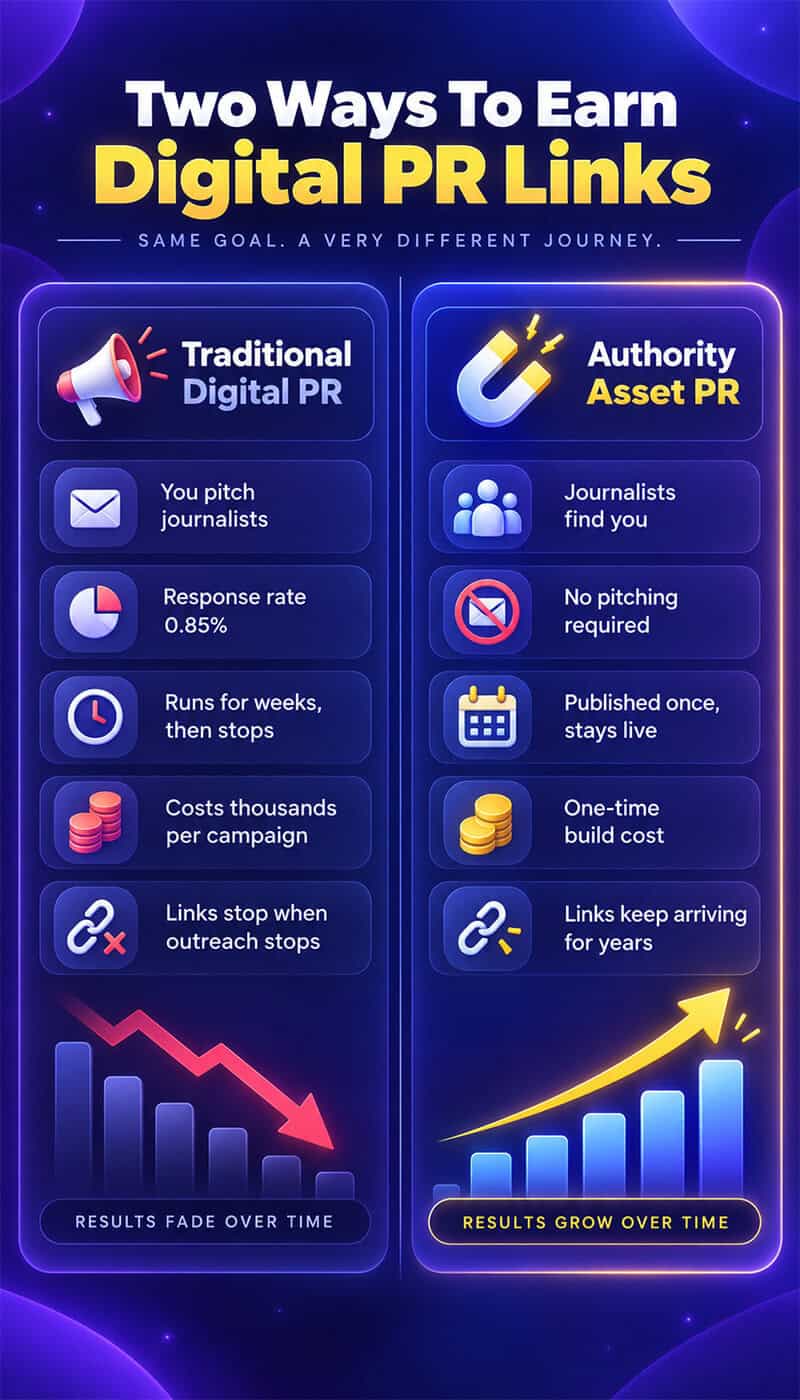
You build a page, and the backlinks come to you.
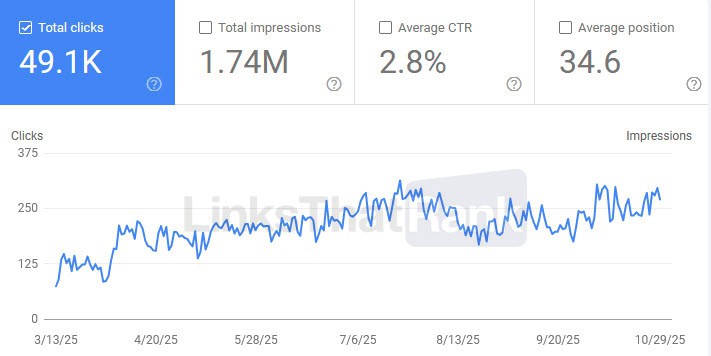
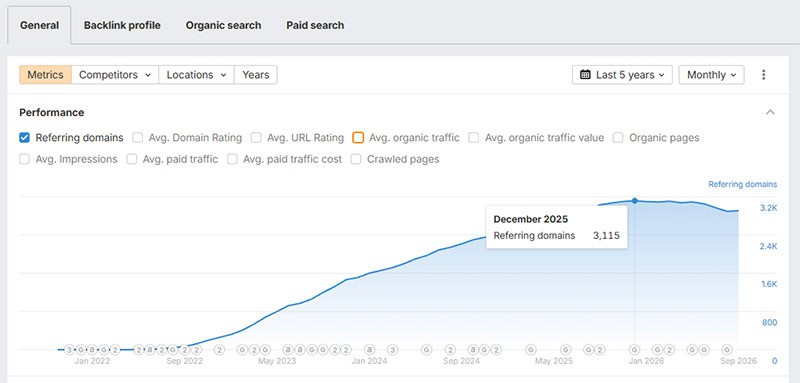
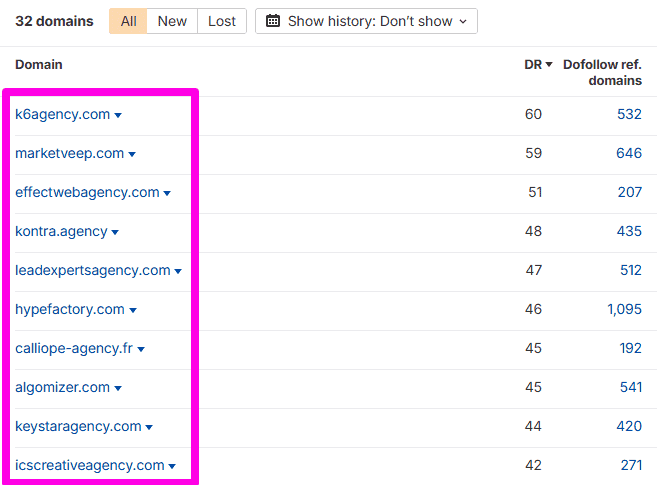
Using this strategy, this single page earned nearly 3,000 referring domains:
And the best part?
Including 150+ from major media publishers, a 7 figure advertorial spend if you were buying them – all without sending a single pitch.
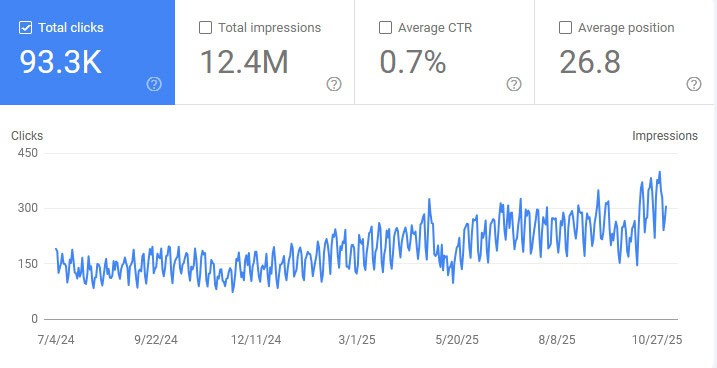
AI search tools like ChatGPT, Google AI Overviews, and Perplexity love statistics pages. They only need to read one page to get every data point for an answer.
Just look at how Statista is performing:
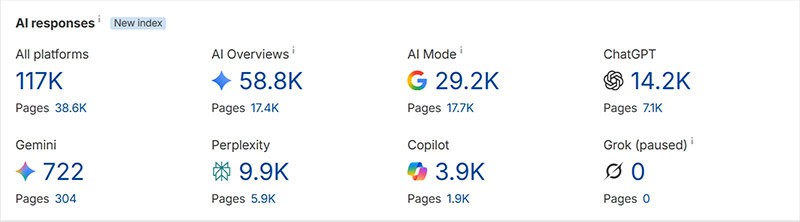
With that in mind, I’m going to show you exactly how to research and create a statistics page that earns major links.
Plus, I’ll show you the exact AI prompts my team uses to speed up the process.

What Is A Linkable Asset?
A linkable asset is a page on your website that people link to because it’s useful as a source, not because you asked them to.
Statistics pages, original research, free tools and in-depth guides can all be linkable assets. The one that earns links from journalists and AI search at scale is a data-driven statistics page. We call it an Authority Asset.
They’re built to be the source for journalists when they need relevant statistics and for AI search tools like ChatGPT and AI Overviews to easily cite.
Authority assets naturally earn powerful backlinks from major media companies without you needing to do outreach. You simply create the page, and it starts earning links naturally.
Who doesn’t want that, right?
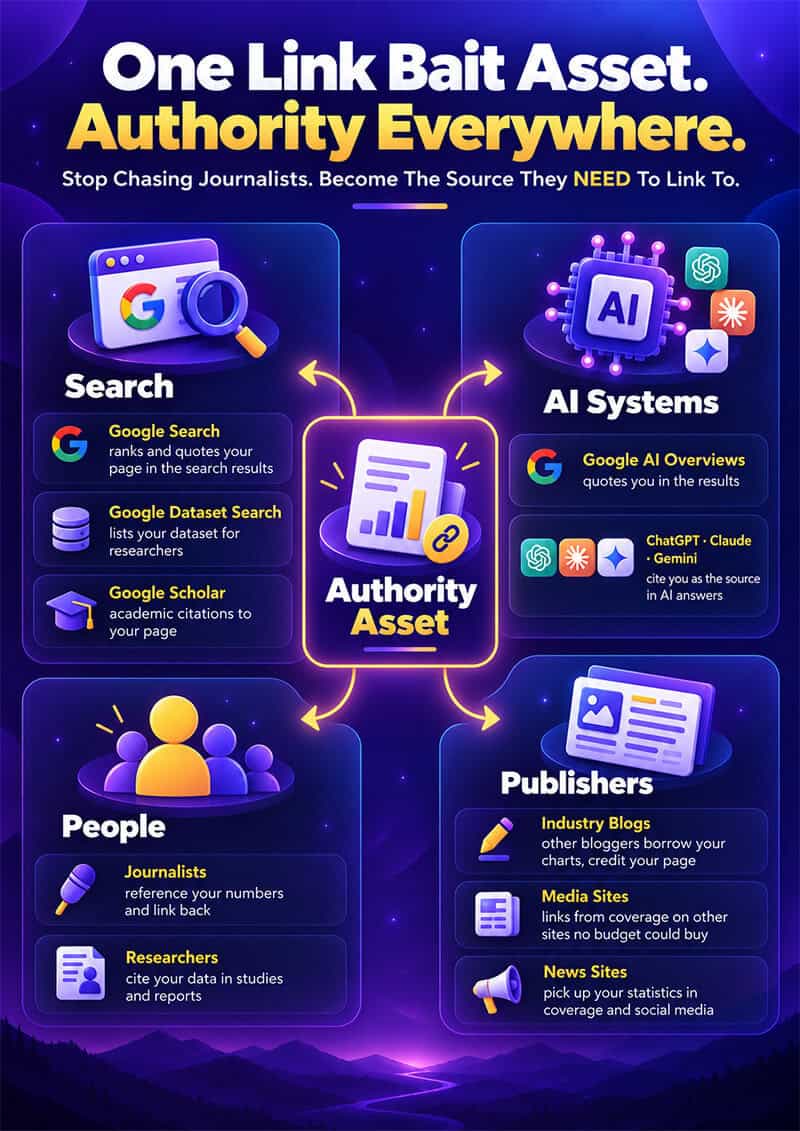
A digital PR authority asset grows authority four ways:
Google Search – Ranks and quotes your page in:
- Google search results
- Dataset schema results
- Google Scholar for academic citations to your page
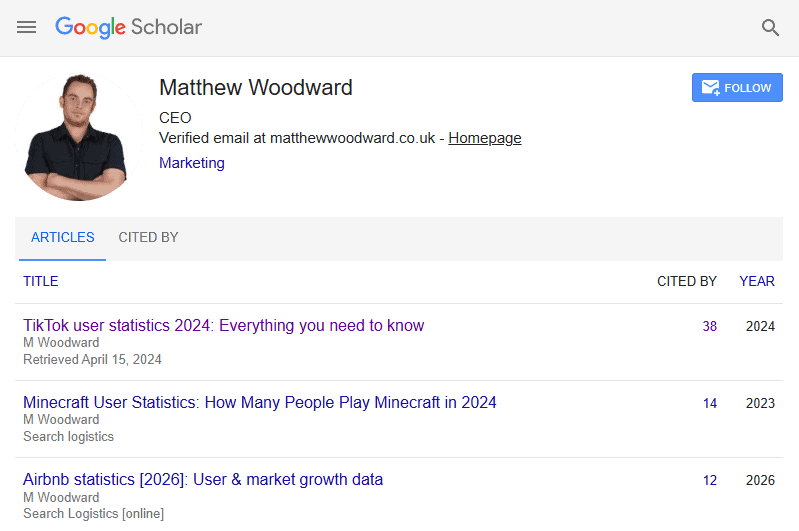
AI Search – Google AI Overviews, ChatGPT, Claude, Perplexity, and Gemini can cite you as the source in AI answers.
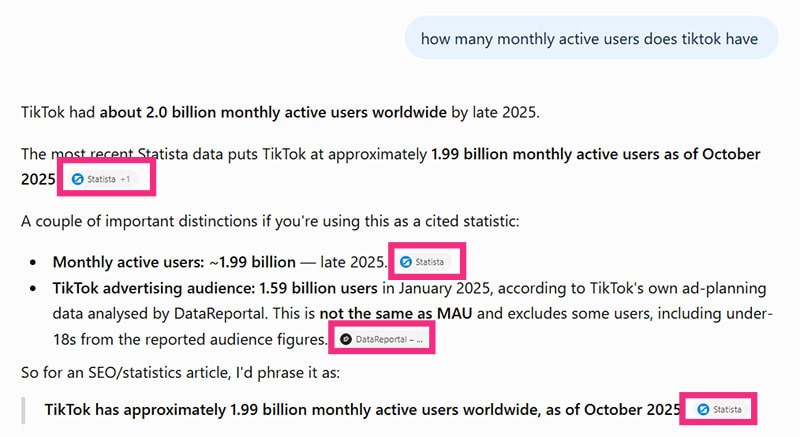
Journalist Links – Journalists reference your numbers and link back, and researchers cite your data in studies and reports.
Publishers – Industry blogs, media sites, and news sites all link to you when covering the topic.
You are creating a genuinely useful page that humans, AI search platforms, and traditional search engines love. And that’s what makes them so powerful.
You increase your website’s domain authority with strong backlinks while naturally earning more citations from AI and getting higher rankings. This leads to more visibility, which leads to more links, and the cycle continues.
And the best part?
You create it once, and it continues to earn links for years.
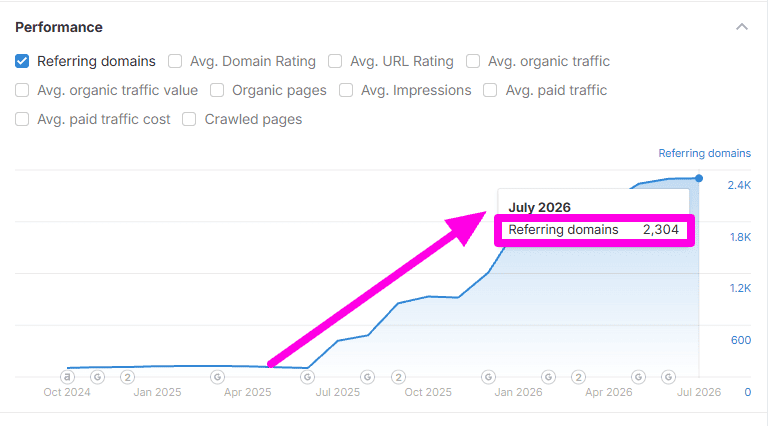
Authority assets have one of the highest SEO ROIs in terms of link building.
Want this for your website but don’t have the time?
Let the LinksThatRank team create authority assets for you. We create professionally researched statistics pages on a relevant topic in your niche to help you become your industry’s reference source.
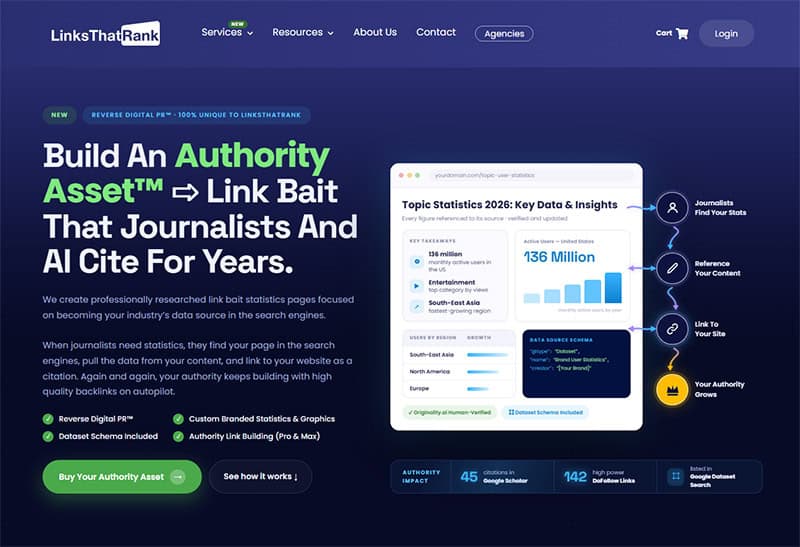
When journalists need statistics, they find your page and ultimately link to you as the source.
Order your authority asset now and start earning powerful links to boost SEO and AI search visibility.
Which Type Of Linkable Asset Earns The Most Links?
There are four main types of linkable assets. Here’s how they compare:
| Linkable Asset | What It Is | Pros | Cons |
|---|---|---|---|
| Statistics page | The best statistics on one topic, compiled on one page with links to the original sources | Quickest to build, and journalists and AI search tools cite it again and again | Popular topics are crowded, so you need a niche angle |
| Original research | A survey or study you run and publish yourself | You own the data, so every citation points back to you | Takes time and money to collect enough responses |
| Free tool or calculator | A simple tool that solves one specific problem | Earns links from resource pages and how-to guides | Takes longer to build and maintain, and gives AI search little to quote |
| In-depth guide | The most complete explanation of a topic | Earns links from bloggers who reference it | Easy for competitors to copy and outdo |
All of them can work. But statistics pages give you the best return for the effort:
- They’re the quickest to build because you compile research that already exists.
- Journalists need a number to back up a claim almost every time they write, so the demand never stops.
- AI search tools only need to read one page to get every data point for an answer.
That’s why the rest of this guide focuses on statistics pages.
Why Do Digital PR Authority Assets Work So Well?
Authority assets work because they have data and statistics that journalists need to cite as sources.
Let me explain:
Every time a journalist or publisher states a fact, they need a source to back it up. The first thing they do is go to Google or ChatGPT and look for that source.
Whatever page has the statistic they need becomes the source.
How do they source it?
Short answer: By adding a backlink.
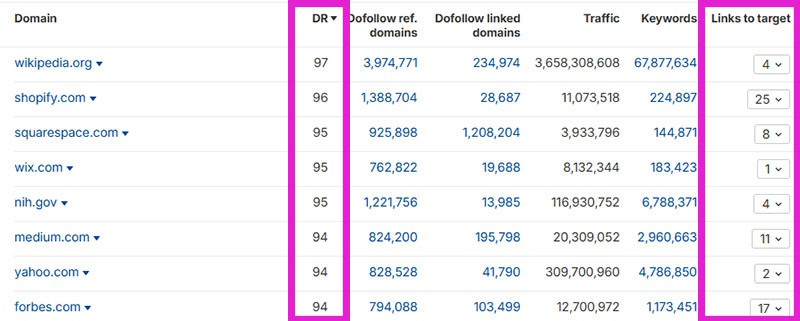
On the left you see DR 90+ sites, on the right the links they’re giving away for FREE.
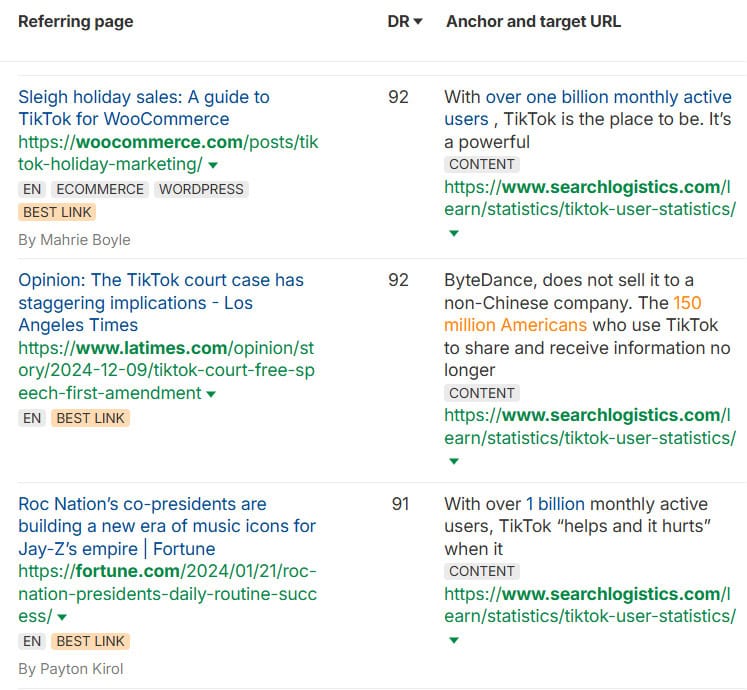
Authority assets work because they become the proof that what the journalist or publisher is saying is true. Your authority asset page adds the authority and the evidence they need.
In return, you earn powerful backlinks you’d never otherwise be able to build.
One Authority Asset page got 17 backlinks from Forbes.com
With traditional PR you’d be lucky to get one!
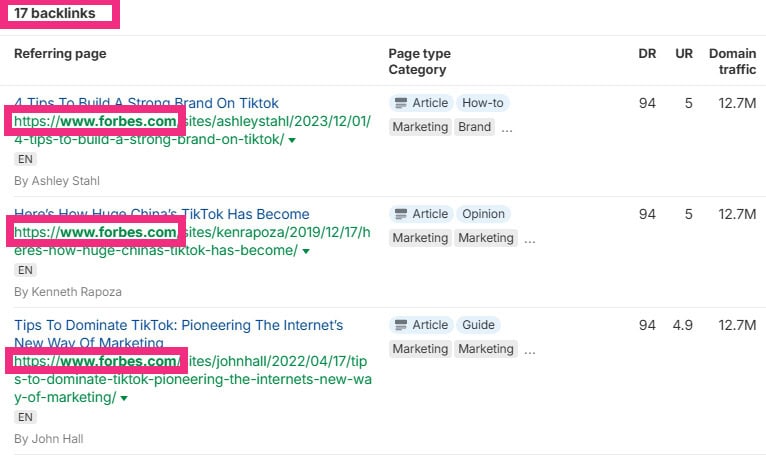
The more links you earn, the higher your page will rank and the more citations it will earn in AI search engines.
That only increases the number of links you get and ultimately reinforces that your page is the trusted source for your industry.
But there’s one more huge reason that authority assets work so well…
AI systems love data and statistics.
Here’s why:
We all know that AI models are prone to hallucinate. One of the ways that AI engineers have tried to overcome this is by forcing large language models (LLMs) to use Retrieval-Augmented Generation (RAG) in answers.
This architecture essentially pushes AI models to back up their claims with sources and cite facts in their answers… just like Journalists do
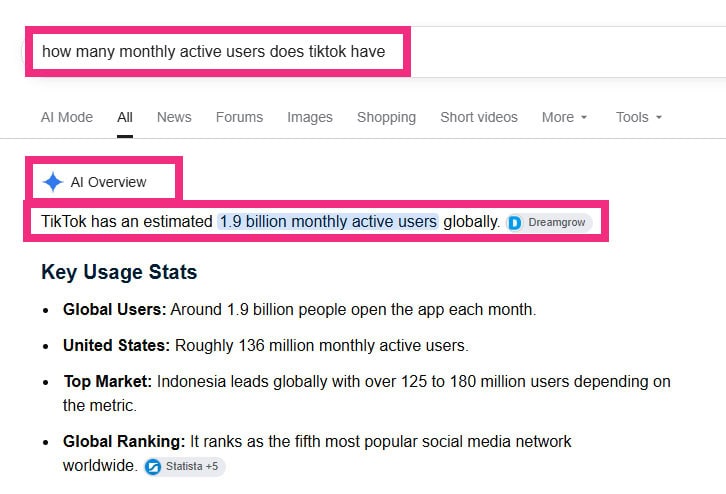
In other words, the more verified data points you have on a page, the more likely the AI model is to cite you. And as they see other media publishers linking to your pages, it reinforces you as the trusted source.
That only leads to more citations and ultimately more links.
That’s why every website on the planet should already be creating digital PR authority assets.
Authority Asset Case Study: The Exploding Topics Blog
Exploding Topics is a Semrush company that was founded by SEO pro Brian Dean.
I analysed Exploding Topics’ backlink profile with Ahrefs and found that authority assets are the backbone of their entire link building strategy.
It took their brand-new domain from a DR 0 to DR 73 in 12 months.
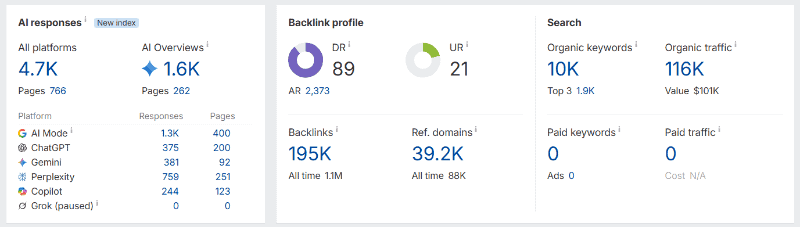
Today, the Exploding Topics website has an Ahrefs Domain Rating of 89, and the top 2,500 sites online for Authority.
How did they do it?
Short answer: Authority assets.
Here’s the breakdown of their strategy:
They created 150+ statistics-based pages on their website blog.
These included a wide range of topics such as:
- Big Data Statistics
- Average Screen Time Statistics
- Artificial Intelligence Statistics
- Outsourcing Statistics
- Generation Z Statistics
Because of their industry, they have a wide range of statistics and data topics they can create that are still relevant to the website.
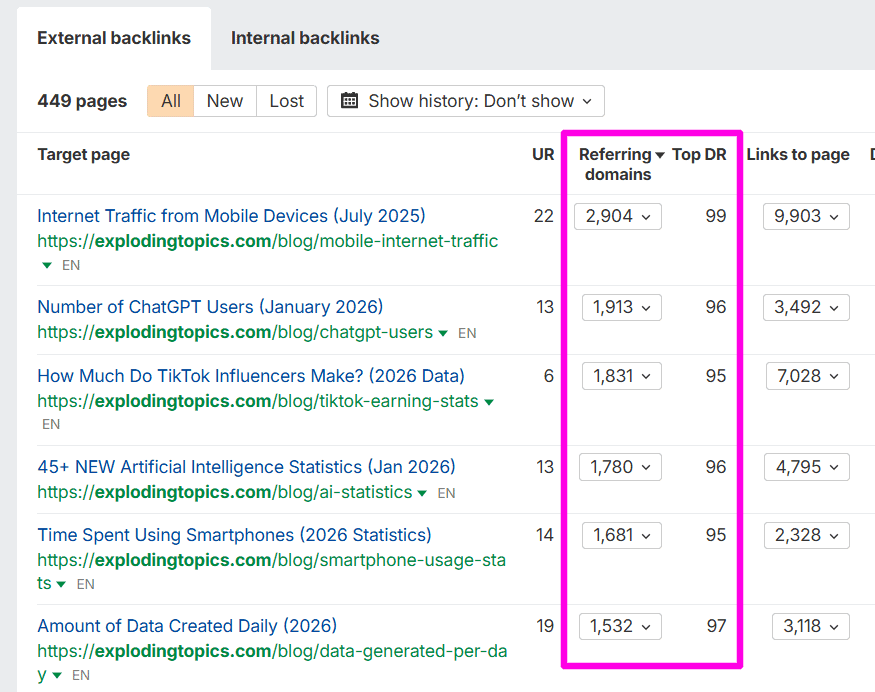
Twenty of Exploding Topics’ most-linked pages on their website are statistics and data pages.
The single most linked page “Mobile Traffic Internet Statistics” has 2,962 referring domains alone.
That’s more than most websites will ever get across all pages. But that’s just the tip of the iceberg.
In fact, the Exploding Topics blog has earned 30,000 referring domains in the past 5 years. Over 16,000 of those links come from 10 journalist bait statistic posts, just like our Authority Asset.
This includes backlinks from major websites, including Google, YouTube, Wikipedia, Microsoft, Forbes, and The New York Times.
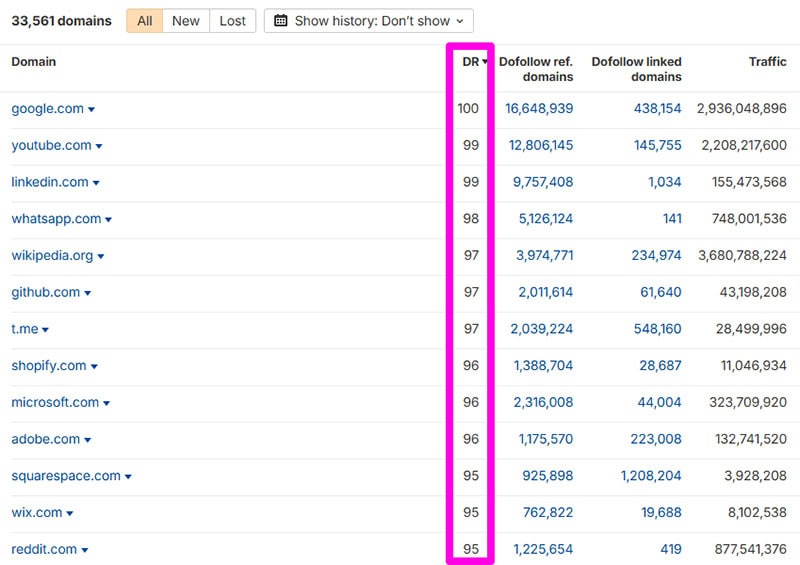
Crazy, right?
About one-third of the total anchor-text weight among the top 50 links is from brand-mention anchors. That means a large portion of Exploding Topics’ most powerful links are using their brand name, which is exactly what you want for AI SEO.
Their AI Visibility results include:
- 1,600 mentions in Google AI Overviews
- 1,300 mentions in Google AI Mode
- 375 mentions in ChatGPT
- 759 mentions in Perplexity
The results speak for themselves.
Exploding Topics has become an SEO powerhouse, and it’s mostly due to their authority assets.
They allowed them to get a foothold in a competitive industry and dominate both Google and AI search channels.
The best part?
You can replicate this strategy yourself.
How Authority Assets Compound After The Campaign Stops
One of the best aspects of Authority Asset digital PR is that your website continues to earn links long after the content was published.
Why?
Because there is a constant flow of journalists, writers, and publishers who need that data for their stories.
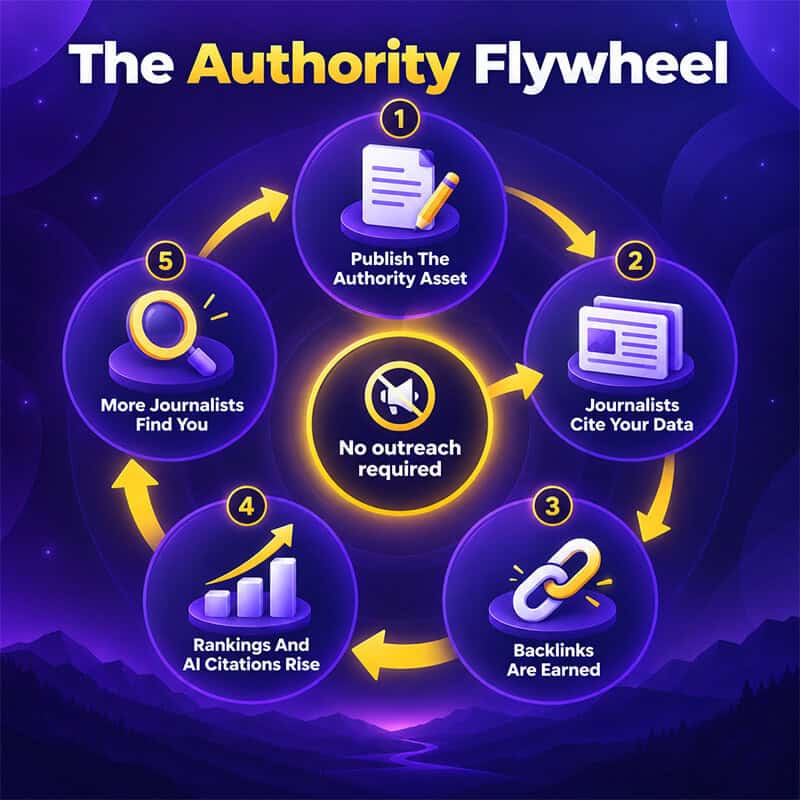
Every backlink earned strengthens your rankings and AI citations.
Rankings and AI visibility attract more journalists.
More journalists means more backlinks.
The cycle continues to compound on its own without you needing to do outreach. We call this the Authority Flywheel™, and it’s unique to authority asset digital PR as a link building strategy.
The number of backlinks you can get will feel almost unreachable to most website owners with traditional outreach.
But the reality is you just need the right strategy and commitment to get it done.
How To Build A Linkable Asset That Earns Links And Gets Cited
Building a linkable asset that earns links and gets cited starts with choosing the right topic.
Then compile all of the relevant statistics on that topic and publish the results on your website with links back to original source material.
The hardest part is choosing a topic that you can realistically rank for and has data that journalists naturally want to source.
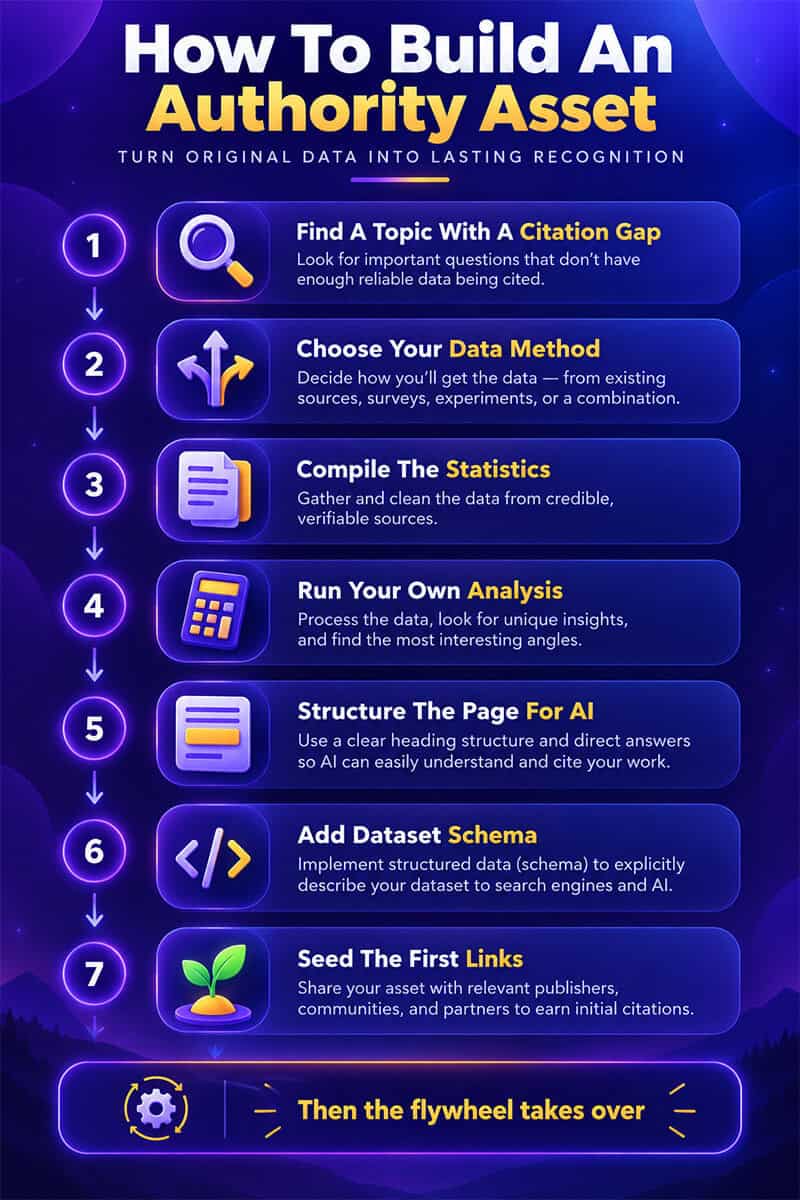
Follow these steps to create an authority asset that naturally earns powerful backlinks.
Step 1: Find A Relevant Topic That Has A Citation Gap
A citation gap is simply a statistics topic where the highest-ranking and the most cited content is outdated.
Don’t rush this step.
Finding the right topic will make or break your statistics page. The good news is that there are multiple different methods you can use to find great topics.
Use Ahrefs Content Explorer
- Open Ahrefs, click on Content Explorer, and search “[your topic] statistics”.
- Set the Referring domains filter to a minimum of 20.
- Tweak the minimum DR filter until the results look good.
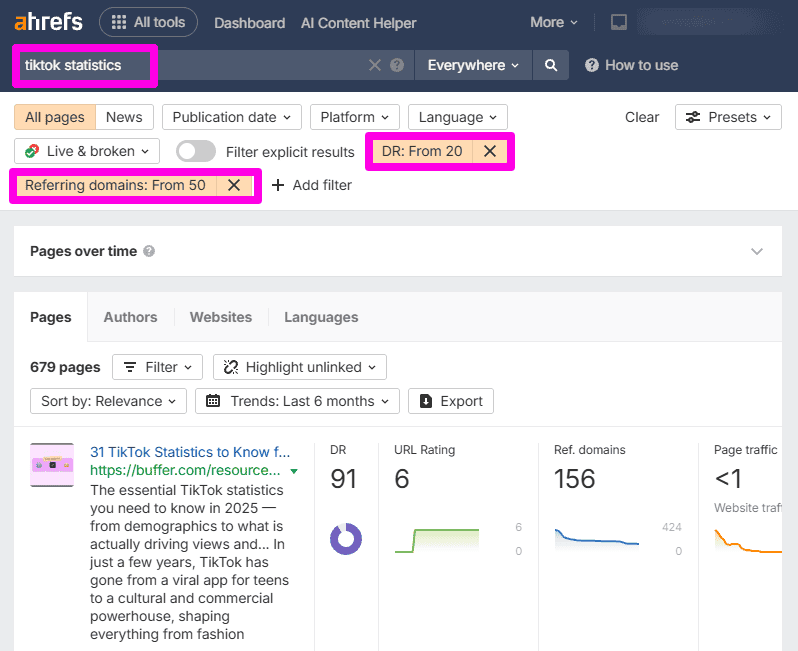
What you are left with is a huge range of statistics-based topics that are relevant to your industry.
This method is powerful because you can already see stats pages in your niche that have a proven track record of earning links.
All you need to do is target the same topic and create a more up to date and better authority asset.
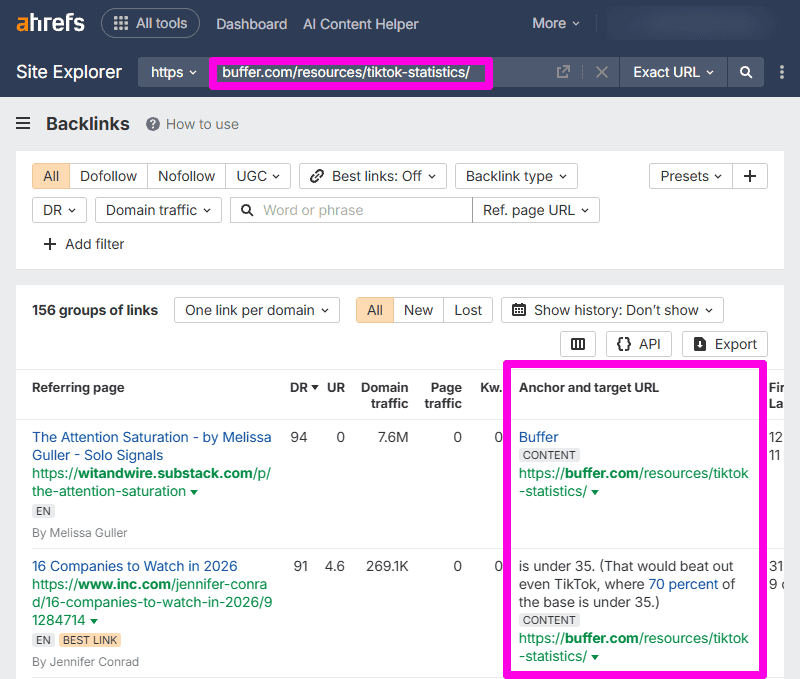
Pro Tip: Click on the backlinks that currently link to statistics pages and look at the anchor text. This will highlight key statistics that need to be included in your authority asset and are proven to earn links.
Use GPT or Claude to Crunch The Data
In some niches, there can be a lot of data – and relevance is often lost if you sort the Ahrefs Content Explorer report by referring domains.
We’ll use AI to filter these results and shortlist topics to validate.
- Export your Ahrefs Content Explorer results
- Delete redundant columns and leave only the following:
- Content Title
- Content URL
- Domain Rating
- Referring Domains
- Traffic
- Date
- Save this edited CSV
- Open GPT or Claude and import the newly edited CSV
- Paste in the prompt below, but don’t forget to fill in the placeholders
Here’s the prompt:
My website is [SITE], and my niche is [NICHE].

I want to create evergreen statistics roundup pages that naturally attract backlinks through citations from journalists, bloggers, and researchers - not one-off PR reports that get a short burst of links.

Attached is an Ahrefs Content Explorer export for [SEARCH TOPIC / KEYWORD].

Review the Content Titles, Domain Rating, Referring Domains, and Organic Traffic to identify the most viable statistics topics for my site.

Prioritise opportunities where:
• Existing pages have lots of referring domains, showing strong citation demand.
• Competing domains have relatively low DR, suggesting weaker competition.
• Pages have high referring domains but low traffic, which may indicate either outdated content or a topic with low search demand but unusually strong citation value.
• The topic is highly relevant to [SITE / NICHE] and gives the site a credible reason to be cited.
• Existing results are old, incomplete, poorly structured or could be replaced by a more comprehensive and regularly updated statistics resource.

Filter out obvious spam, hacked pages, irrelevant results and misleading inherited backlink profiles.

Separate SEO traffic opportunities from citation/link-magnet opportunities, as the best backlink topics may have little search traffic.

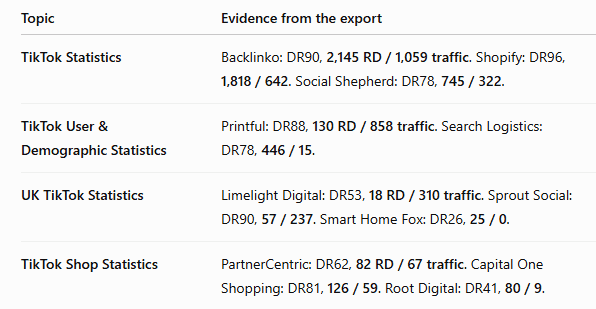
Finish with a prioritised table of recommended statistics pages, including the evidence from the export and why each topic is worth pursuing.
Then GPT (or Claude) will crunch all that data for you saving you hours.
Now you have a shortlist of topics to research.
Validating the ideas is easy…
Say I chose the ‘TikTok User Statistics’ option it suggested.
I would just follow up and ask:
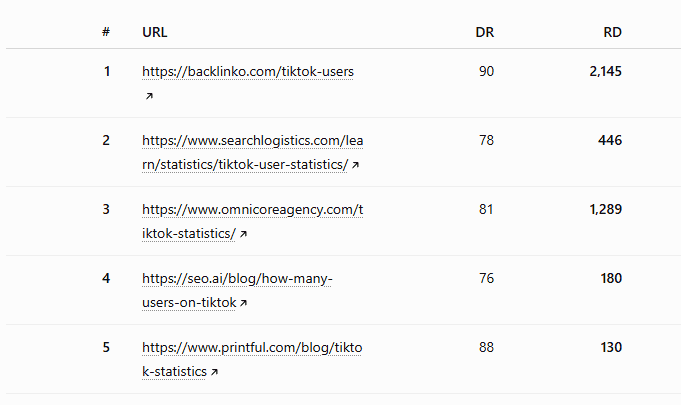
Give me all the relevant URLs from the report for 'TikTok User Statistics' to research in priority order
And you’ll get your final hit list.
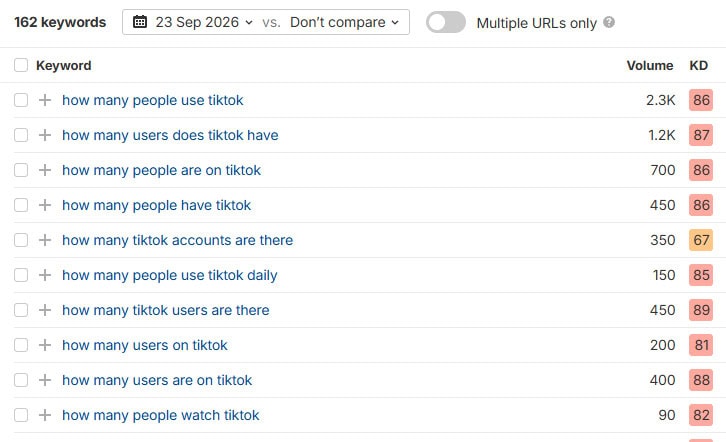
Then search the Ahrefs Keyword Report for each domain – it will show you what terms they rank for, giving you ideas of the most popular data seeding questions asked.
For example:
- How many users does TikTok have
- Number of smartphone sales in the US
- Crypto market share
- Average price of a home in England
- Home buyer demographics in the US
The Ahrefs Anchors Report will help you validate if those questions are the ones bringing in the lion’s share of the links.
Here all the criteria matches:
Keyword: How many users does TikTok have
Anchors: 1 billion (users, monthly users, active users)
Ref. domain counts: 57 domains linking to that stat
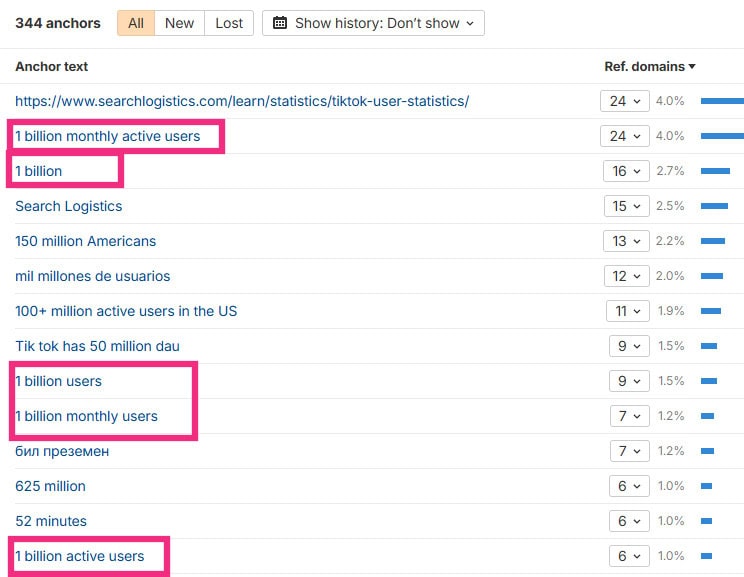
Expand ‘Links to Target’ to see the context of the cited data to understand if it matches the keyword report or is a totally new data point you need to focus on.
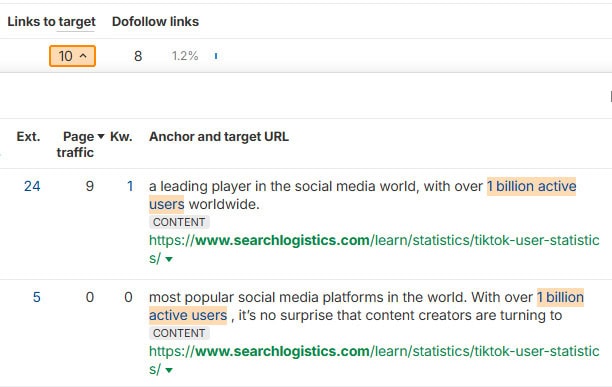
In this example it’s a match…
Now you have a great idea of what topics and data points send links on autopilot. You have the foundations of a successful Authority Asset.
Step 2: Choose How You Will Get Your Data
There are three ways you can get your authority asset data:
- Aggregate data
- Enriched data
- Original data
Here’s a breakdown of the differences between them:
| Data Type | How You Get It | Pros | Cons |
|---|---|---|---|
| Aggregate | Compile publicly available research and data | Easiest to collect, fastest to publish | Anyone can access that data |
| Enriched | Compile publicly available data, do your own deep analysis | Compile data quickly, do your own analysis, and create new data points | You have to choose a topic where an analysis makes sense |
| Original | Survey your audience and publish the results | You own the data because you did the research | It takes a lot of time to do original research |
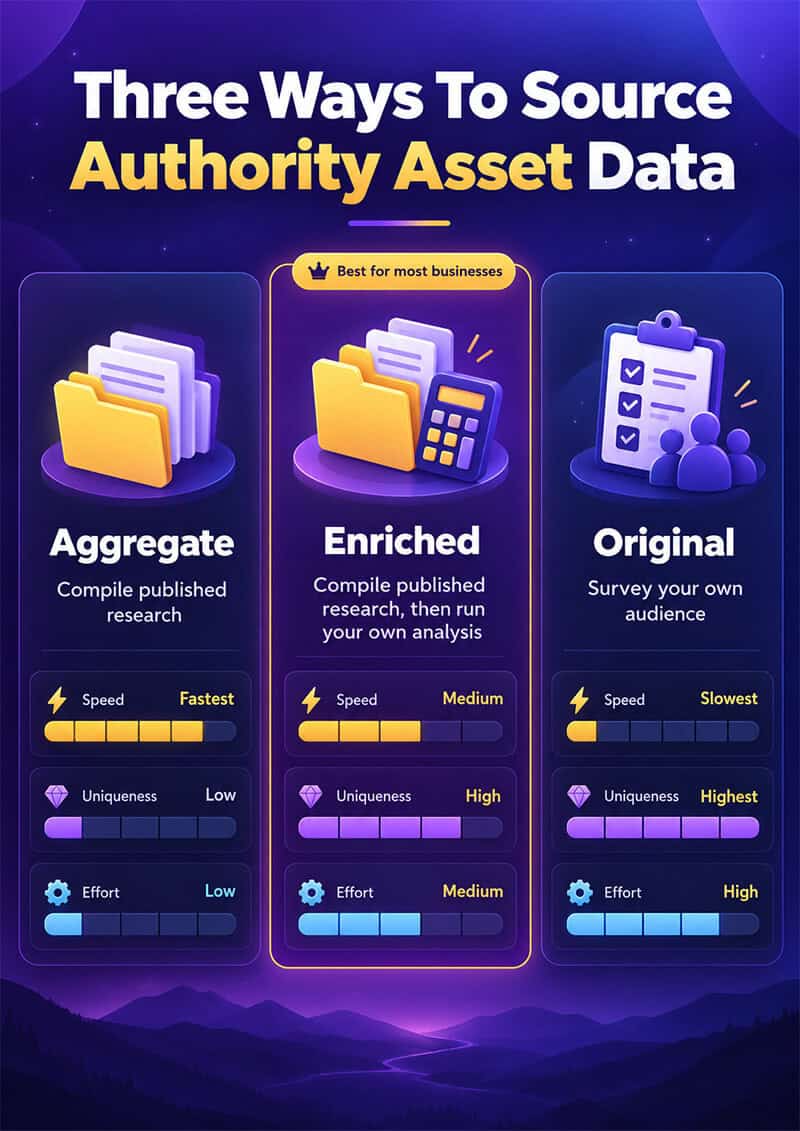
The best solutions for most businesses is going to be aggregate or enriched data.
You essentially compile all of the available research, statistics, and data on a topic.
Enriched means you’ll then do your own analysis of the available information with your own calculations.
The analysis allows you to create “new” data points that no one else will have.
That means your pages are going to have information gain and unique points not found anywhere else.
Aggregated data is also the same method the LinksThatRank team uses for our authority asset services.
Step 3: Compile Relevant Data For Your Authority Asset
Compiling relevant data and research for your authority assets used to take days.
It takes about 20 minutes with AI.
Here’s how to do it:
Head over to ChatGPT and turn on the highest ‘Thinking Effort’ you have access to.
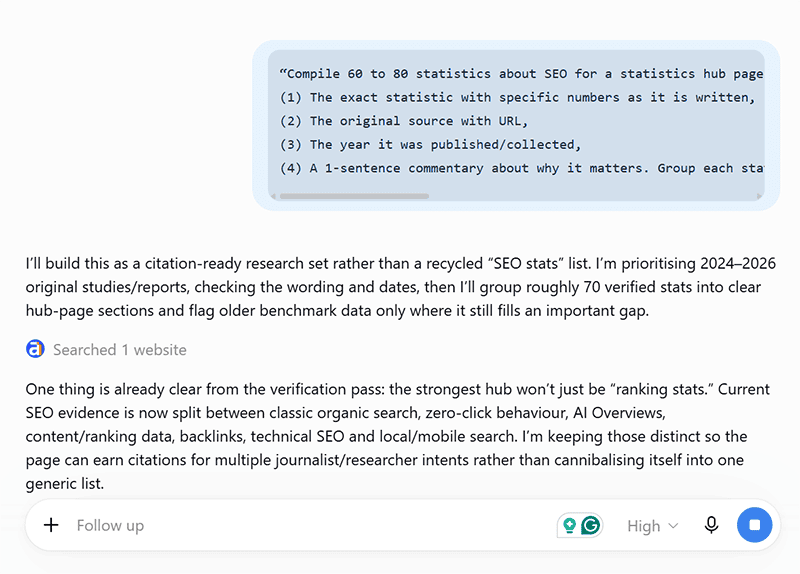
Now use this prompt:
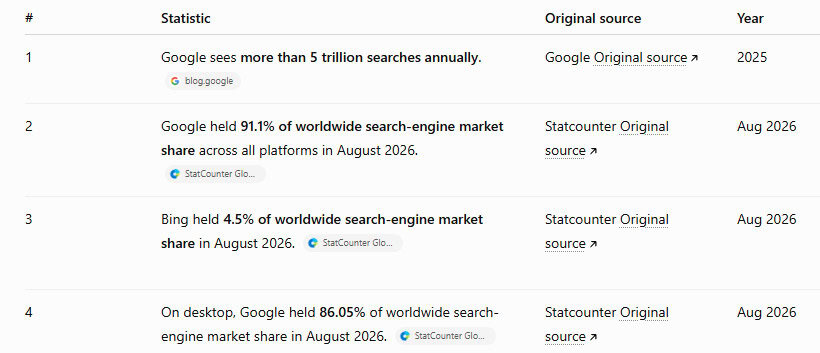
Compile 60 to 80 statistics about [topic] for a statistics hub page on my website [yourwebsite.com]. Prioritise recent data and statistics from the last 2 years where possible. For each statistic, provide:
(1) The exact statistic with specific numbers as it is written,
(2) The original source with URL,
(3) The year it was published/collected,
(4) A 1-sentence commentary about why it matters. Group each statistic into 6 to 10 logically themed categories. Success looks like a list of verified statistics that comprehensively cover the topic [topic].
It will take ChatGPT about 5-10 minutes to finish the research. In the end, you’ll have a page of relevant statistics that you can use on your authority asset page.
The next step is to create the page, right?
No. The truth is that even in ‘High Thinking Effort’ mode, ChatGPT may hallucinate and even invent statistics with fake URLs as the source.
That means you now need to put in the work to verify that each statistic is real and from a reliable source. This will take time now but will save you a lot of time correcting mistakes later.

Once you’ve verified each statistic, check to ensure that they are grouped logically under a subheading where the reader would expect to find them.
I’ve found that ChatGPT doesn’t catch everything.
It gives you a good foundation, but you’ll need to do extra research to fill in the gaps. Think of it like covering each subheading within the content comprehensively.
Step 4: Do Your Own Analysis Of The Data
Here’s the truth:
If you were to write your authority asset page using data that you collected just from the web, there would be nothing unique about it.
All of those statistics have been published online before.
Google’s algorithm and AI systems are trained to look for “information gain”. This is essentially information that has never been published online anywhere else.
Your own analysis of the available data is what creates information gain.
Let me show you what I mean:
Imagine you’re creating a statistics page on ‘remote working’.
One research study shows the percentage of people who have a hybrid remote work situation. Another study published data about average commute times to work.
Neither of these numbers is your own.
But by using both numbers, you can calculate how much commuting time the average hybrid worker saves every week.
Multiply that by 52, and you have the full-year figure for how much time is saved.
That’s two new data points that you’ve created based on your own analysis. And it will be highly valuable to your audience, journalists, and other writers.
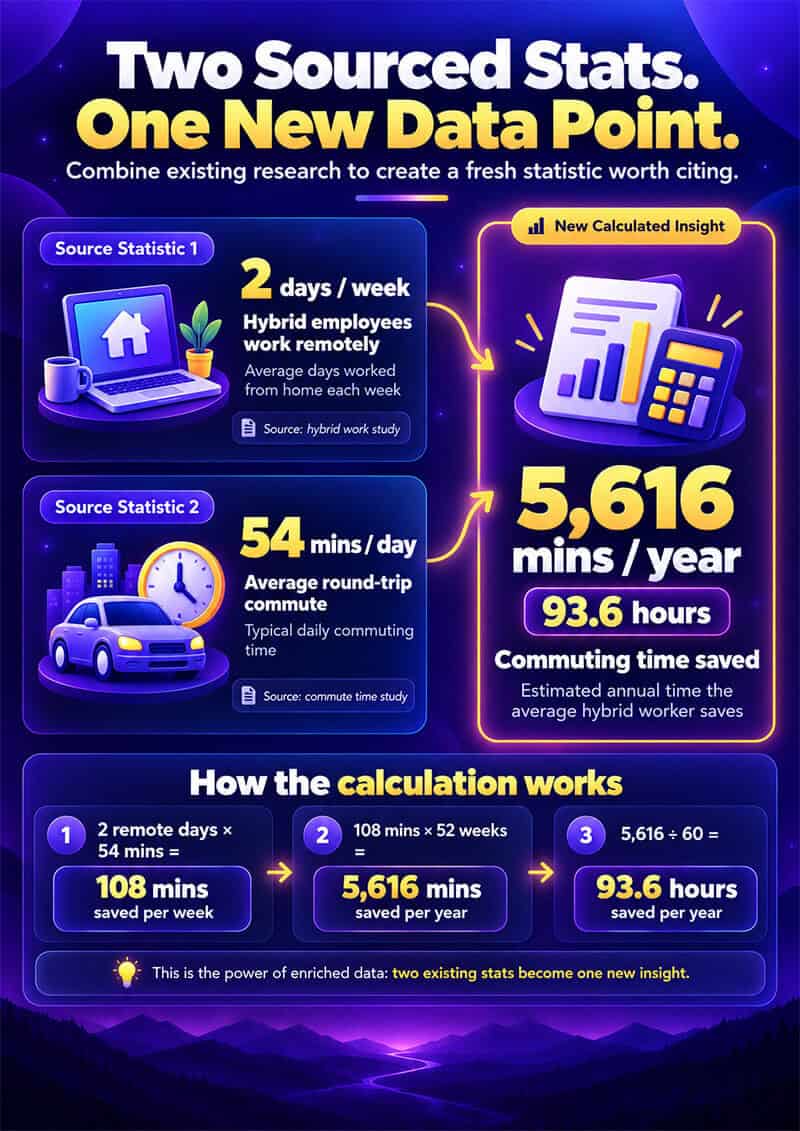
The most important part is that you cite the studies and you show how you came to the calculation.
Cool, right?
Lots of people create statistics pages as authority assets. But most are just too lazy to go that extra step.
Struggling to find analysis opportunities in your data?
Use this prompt:
“Here are the verified statistics for my page on [topic]. Read through all of them and suggest 5 to 10 areas where I could create new data points through my own analysis. This might be by combining two sources, calculating a per-year or per-person figure, or comparing across regions or industries. For each one, explain what calculation is needed and which statistics it uses. Logical critical thinking and accuracy are extremely important when doing the analysis.”
AI is particularly good at analysis. So you will be surprised at the opportunities it finds.
But don’t just rely on what AI says.
Use the suggestions as a starting point and do the analysis yourself. Journalists and AI models want your analysis as an expert on the subject.
AI is just a tool to help you find opportunities.
Step 5: Structure The Page So AI Can Extract Answers
GEO stands for Generative Engine Optimisation.
The primary goal of GEO is to optimise your pages so that it’s easy for AI search tools to extract information.
The easier you make it for AI search tools, the more citations you will get. Simple as that.
So what does good structure mean?
Start by creating each section heading. These will form the base structure of your page and generally act as H2s. Then create H3 sub-sections to break up your content and make it more scannable.
This is good for both AI and journalists.
Now for the important part…
Whenever possible, make each H2 and H3 a relevant question.
For example:
- Instead of – Number Of People Who Work Remotely In The US
- Use – How many people work remotely in the US?
See the difference?
Essentially the same heading, but the second one is phrased as a question.
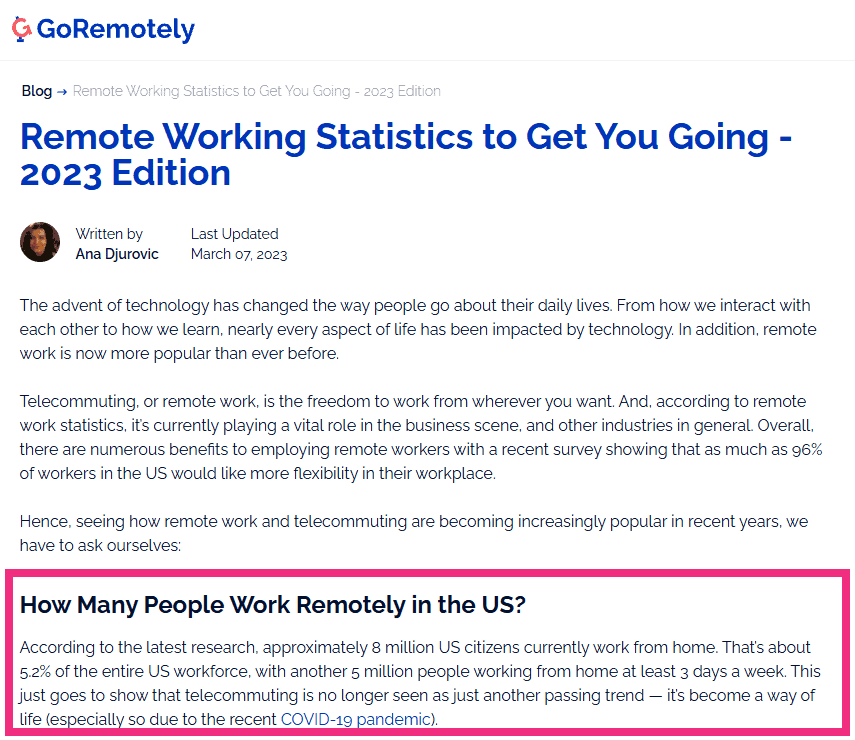
Under each heading, write a direct 2-sentence answer. Use the most important statistics to answer the question.
Then you can write the rest of the section using your own analysis and research data.
Here’s why this works so well:
Journalists and writers search using questions when looking for statistics to back up their points. It’s easy for AI to crawl your page because you phrase each heading as a question.
And the answer is directly under the question in two straightforward sentences.
Plus the keyword reports for your competitors can tell you what those questions are, right?
The AI systems can easily extract your answer and provide it to the user. You get more citations and visibility. That means more quality backlinks for your site.
Step 6: Add Schema Markup To Make Your Data Stand Out
There are two types of schema markup you need to add to your page:
- Dataset schema
- Article schema
Dataset schema is the most important for authority assets.
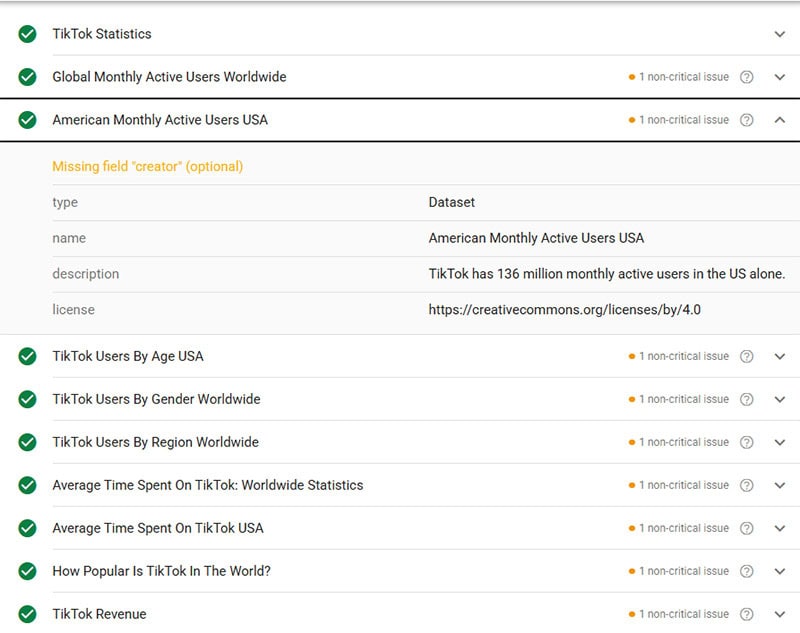
Why?
Think of it like highlighting the most important data on the page to search engines like Google and AI tools like ChatGPT and Perplexity.
But it does so much more than that…
Dataset schema:
• Allows your tables and statistics to be featured in the Google SERPs
• Makes it easier for AI to extract key data points
• Gets you indexed in Google Dataset Search
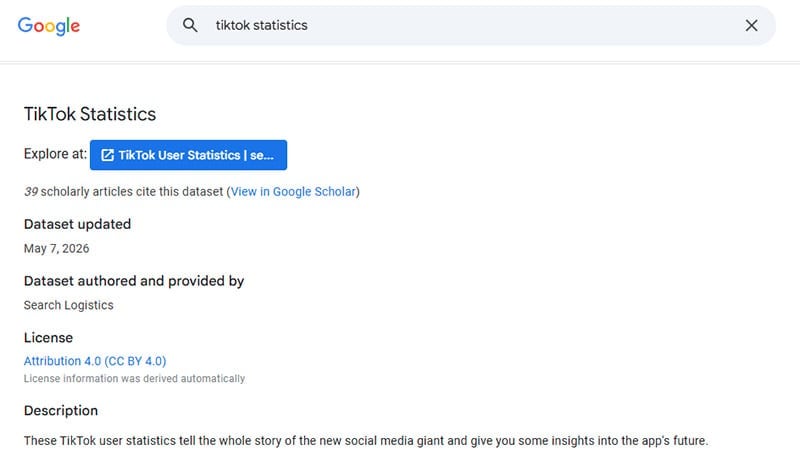
Dataset schema will benefit your page no matter how people search. It increases your visibility significantly. And other statistics pages don’t bother adding it, which gives you an advantage.
How do you add Dataset schema to your page?
If your website is on WordPress, use a tool like RankMath to make it easy. All you have to do is add data to the correct schema type in the post.
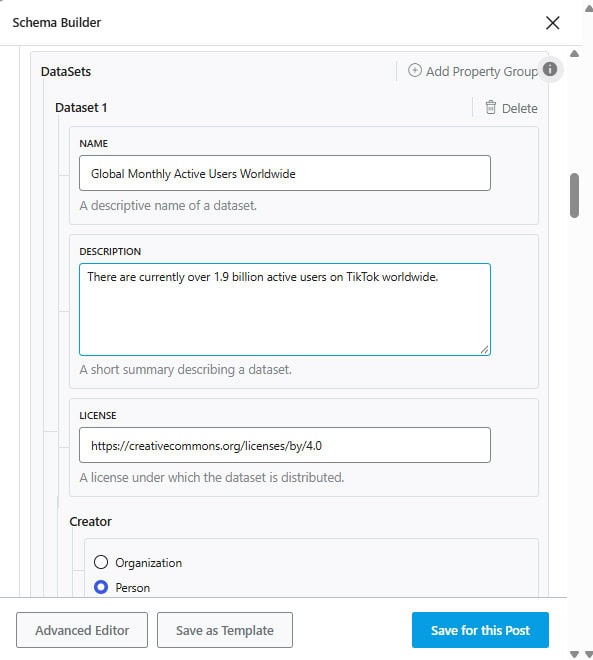
But you can also use Claude or ChatGPT to create the schema for you.
Use this prompt:
“Create Dataset schema and Article schema in JSON-LD format for my statistics page. The page URL is [URL]. The page title is [TITLE]. For the Dataset schema, include the dataset name, a plain-English description of what the data covers, the date it was last updated, and my business [NAME] as the creator. Give me both schemas as a single block of code I can paste into my page. [PASTE YOUR TABLES AND KEY STATS].”
The AI tool will write the Dataset and Article schema for you. Then all you need to do is copy and paste the schema code into the <head> section of your authority asset page.
Done that?
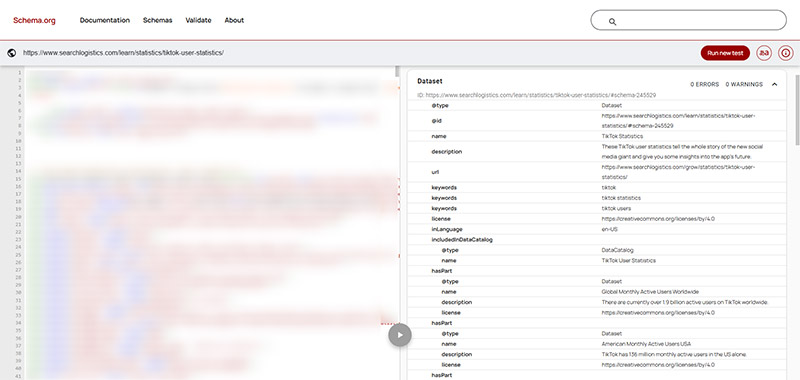
Copy the page URL and run it through the Schema.org validator to check for any errors. If there are no errors, you’re good to go.
Step 7: Seed The First Few Links, Then Let It Compound
You could just publish your authority asset, wait for it to rank, and start earning links naturally.
But if you’re like me, you prefer to take matters into your own hands.
That’s why I always recommend you build your first 3-7 links to your authority asset.
Those first links are what I call “seed links”. They give the page some initial authority to rank. Think of it like making Google and AI search platforms take notice of your new page.
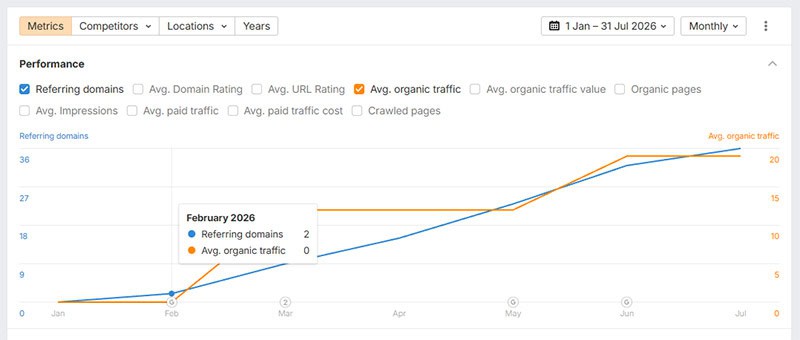
In this example, as soon as the first links land, you see more links, and more traffic come.
That’s the Authority Flywheel working on autopilot.
There are two types of links you need to build:
- Internal links
- External backlinks
Internal links are relatively straightforward. Go through all of the posts on your site and create a shortlist of posts relevant to your new authority asset.
PRO TIP: Search site:[yourdomain.com] and the keyword for your authority asset, google will hand pick relevant pages and bold out the internal text that it thinks is relevant to link.
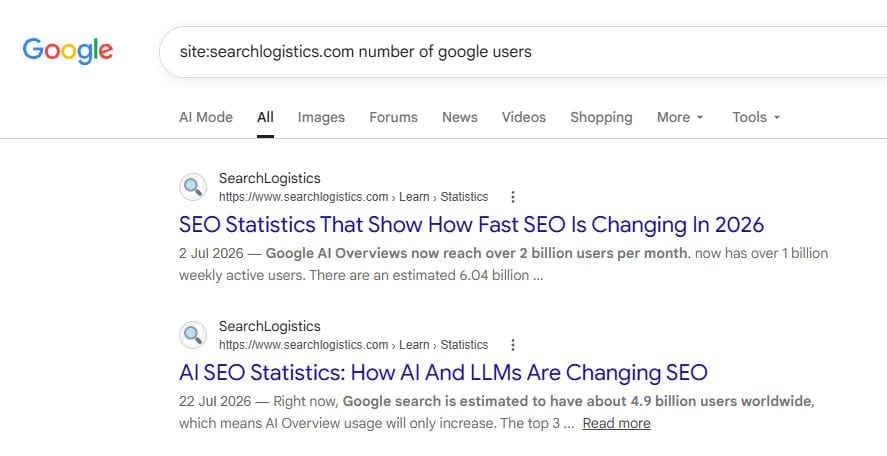
Edit each post and add 1-2 statistics from your authority asset into the page. Then simply link those statistics to your authority asset.
I’d also MASSIVELY recommend adding a link to your new statistics page in your footer to give it some additional love
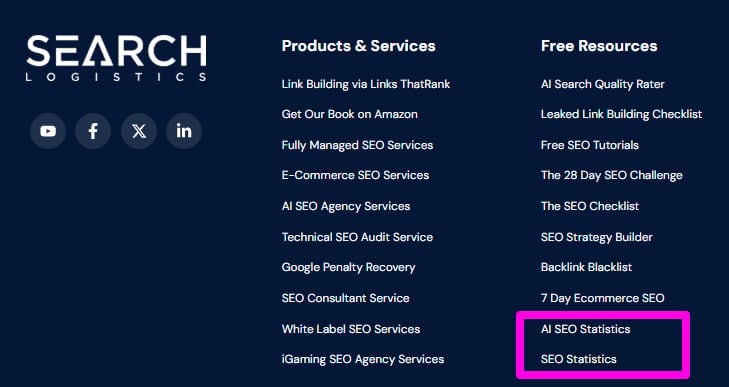
Simple as that.
This will add some initial authority to your asset and ensure it’s integrated into your website properly. That’s exactly what it needs to rank and earn citations.
What about backlinks?
Backlinks act as votes of confidence from other trusted websites in your authority asset. If you want faster results and to increase the chances of success, build some seed links.
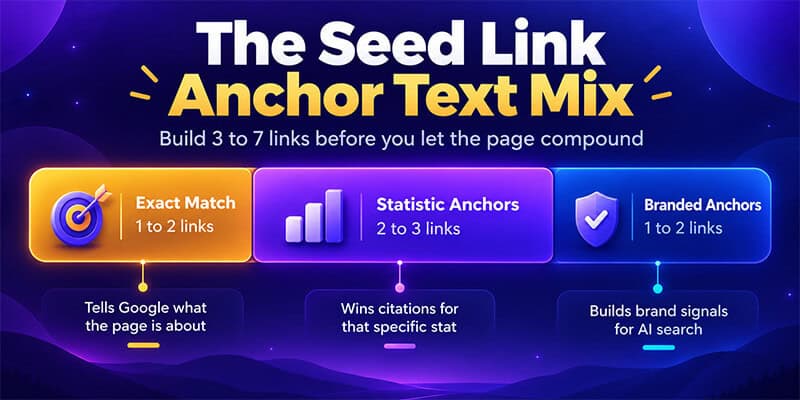
Here’s the strategy:
- 1-2 links with exact-match anchor text
- 2-3 links with statistics from the authority asset
- 1-2 links with branded anchor text
This will give AI search tools and Google a lot of context about the page. It also establishes a natural and diverse anchor text profile.
Be strategic with the statistics you choose to link.
The more sites that use a specific statistic as the link, the more likely you are to be cited and rank for that specific statistic. That’s exactly what you want.
Want us to build the links for you?
Choose the links you need and tell us your URL and anchor text. Our specialised link building team at LinksThatRank will do the rest.
Why You Need To Refresh Your Authority Assets Regularly
Roughly 50% of all AI citations are from content that is less than 11 months old. AI tools value the latest information even more than Google.
The average URL that AI tools like ChatGPT, Copilot, and Perplexity cite is 25.7% fresher than the content that Google ranks.
As new studies are done and new research comes to light, your authority assets will become outdated.
The reality is that if you don’t keep updating your pages, you will lose rankings and AI tools will stop citing you. If your visibility drops, so will your backlinks.
But the good news is that it’s not as complicated as you think.
Set a recurring calendar event every 12 months to update your authority asset pages.
All you need to do is:
- Replace outdated statistics
- Add new statistics that make sense
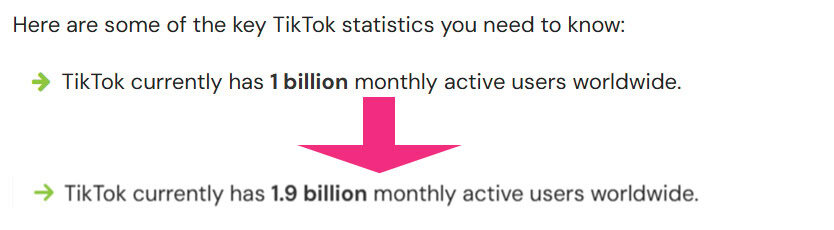
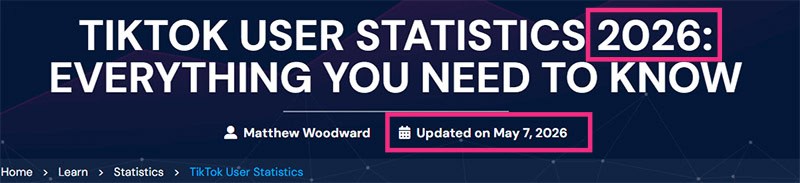
It typically takes 30 to 60 minutes to update a single statistics page.
This simple update ensures that you’ve always got fresh data and allows you to maintain your rankings.
Tip: If you used GPT or Claude to do the research, save the link to the old chat so you can feed it your URL when you want to update it, and it will tell you what data points are needing an update.
The fresher your data, the more AI citations you will earn.
More citations mean more visibility, which means more backlinks.
That’s the whole point, right?
When Is Authority Asset Digital PR The Wrong Strategy?
There are a few times when authority asset digital PR doesn’t work.
The LinksThatRank team has built quality backlinks for 12,000+ business owners, websites, and even SEO agencies. And there are times when authority asset digital PR isn’t the best strategy to use.

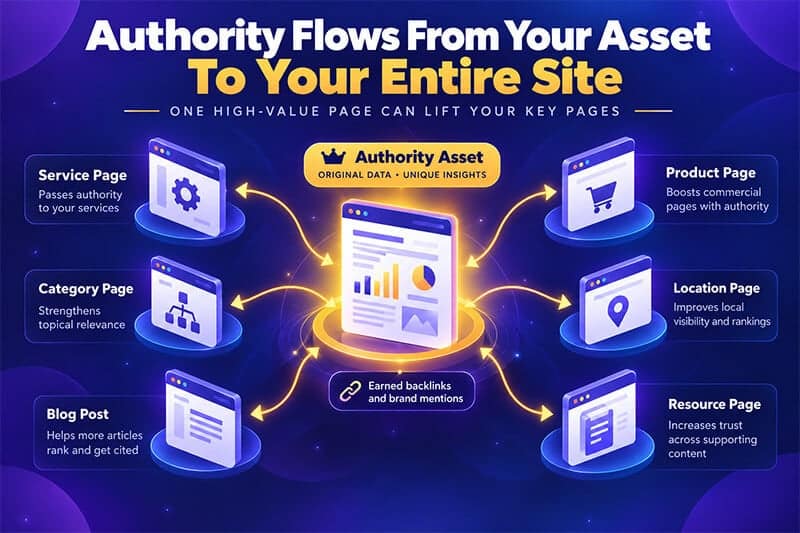
Think of authority assets as foundational building blocks for your brand and website.
They attract backlinks from major websites, which builds a lot of trust, credibility, and authority in your website. This trust and credibility then helps other pieces of content on your website rank.
With that in mind, I recommend NOT using authority asset digital PR when:
- Your domain authority is far below the top 10 sites ranking for the statistics
- Business needs immediate sales
- Website content is thin and weak
- Plan is to treat it as a one-time campaign
- Website has fundamental technical issues
- Product or service has flaws which have led to significant negative reviews
The most important thing is that you understand the role of an authority asset. It compounds slowly and earns powerful links over time.
I also recommend combining authority asset digital PR with other proven mention based link building strategies:
- Listicles – Get featured in “best of” articles that AI naturally likes to cite.
- Reviews – Genuine reviews on independent sites that build trust with AI search tools.
- Guest Posts – Quality backlinks that build SEO authority.
You can read the full process for listicle link building in a separate guide.
The same goes for earning genuine review links on independent sites.
This will give you a strong, diverse, and natural backlink profile. That’s exactly what you need to rank higher in Google and earn citations in AI search platforms like AI Overviews, ChatGPT, and Perplexity.
How To Measure Authority Asset Digital PR Results
Measuring authority asset digital PR is straightforward.
You just need a tool like Ahrefs or Semrush that will accurately count every new link you build.
I prefer Ahrefs because they have the best backlink analysis tools in the industry.
Log in to Ahrefs:
1. Search your website in Site Explorer
2. Select the backlinks report
3. Sort by “First Seen”
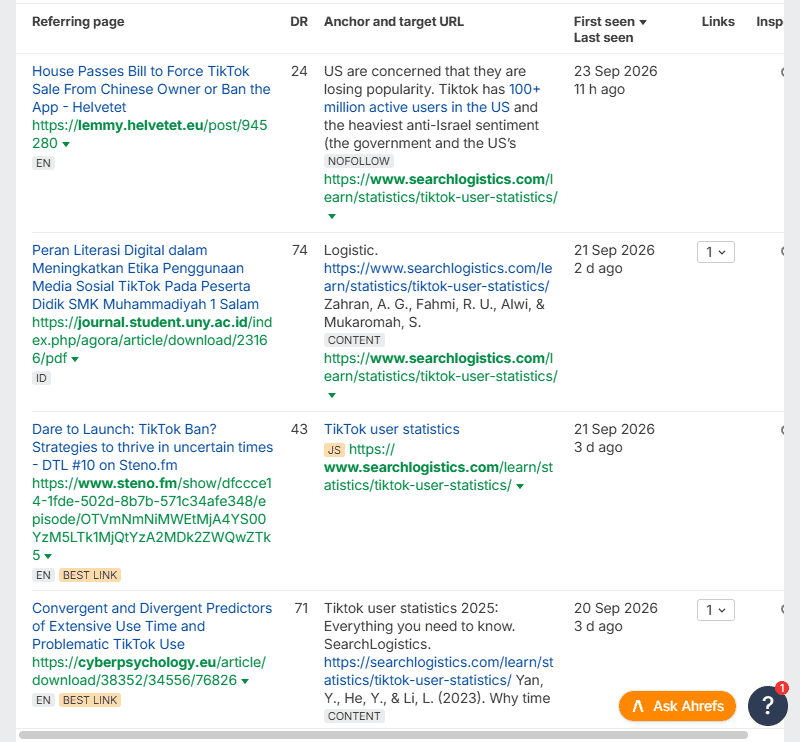
This will show you all of your backlinks, starting with the ones that were most recently earned.
You can then add your target URL to only show backlinks pointing at your authority asset page.
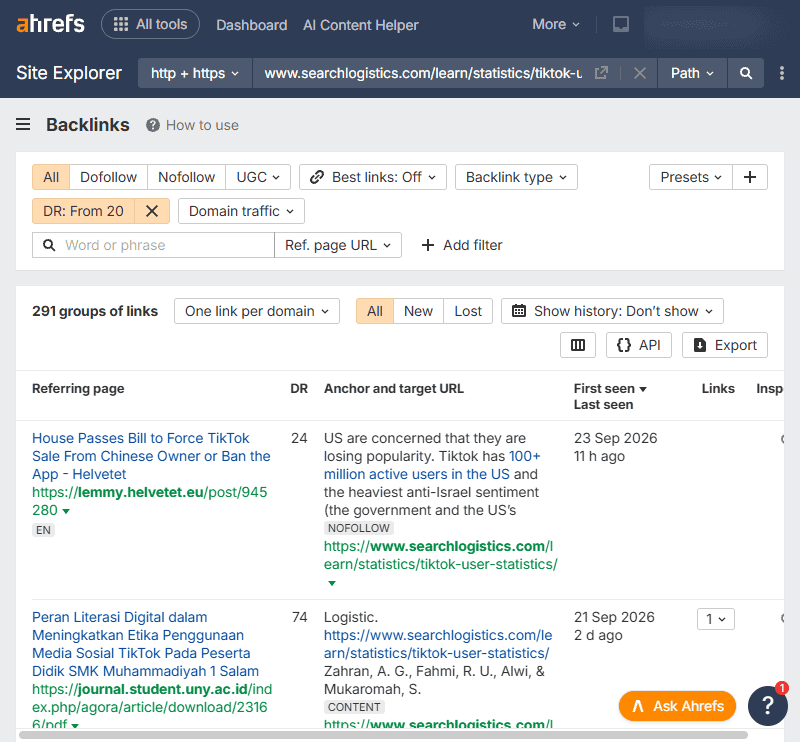
How do you actually measure if the authority asset is working?
Your authority asset is working if you are acquiring backlinks organically like this:
The number of backlinks you get will depend on the topic. The more a topic is sourced, the more links you will earn.
That’s why I always say that the topic is the most important part of building authority pages.
What If The Authority Asset Doesn’t Get Backlinks?
If the authority asset doesn’t get backlinks, it typically means you need to narrow the topic.
The good news is that you don’t have to redesign the entire page from scratch. You simply need to niche it down to a more relevant and specific topic for your website.
The easiest way to do that is with a modifier.
Add a:
- Location
- Industry
- Audience demographic
Don’t go after a topics with 100’s of links if your competitors for that search term are massive. Find one data point getting links on that page and expand on that.
Example: A search for 'TikTok statistics' might be saturated with competition, while most the links go to the data point 'how many users does TikTok have'. You can then break that topic down.
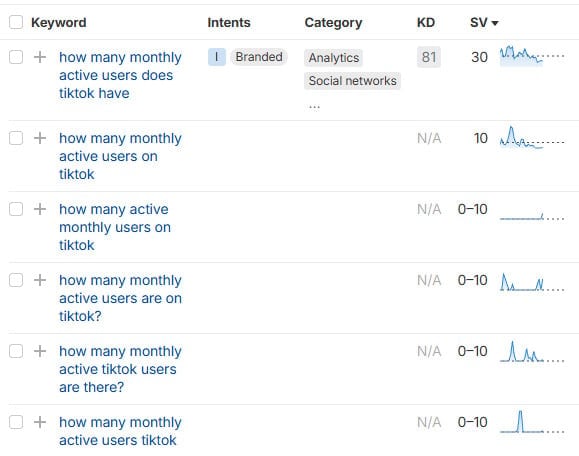
This will angle the topic to be more specific, and it means you won’t need to change your data. It’s a simple optimisation that makes a huge difference.
Pro Tip: Check the page’s AI citations BEFORE you choose to niche your authority page down. We’ve found that some pieces don’t necessarily rank in Google but do earn AI citations.
AI citations mean that you are getting visibility for targeted searches. Many journalists and writers use AI tools over Google to search for sources.
Just because traffic isn’t high doesn’t mean it’s not working.
Why Should You Outsource Authority Asset Creation?
It’s worth outsourcing authority asset creation when you don’t have time.
Creating quality authority assets that rank and earn citations is hard work. It takes a lot of time to research, write, and optimise the asset.
That’s exactly why we built our Authority Asset™ service.
Here’s what you get:
- Complete statistics post ready for you to publish
- 3+ custom branded images with your logo
- Fully structured data tables
- Dataset schema included in delivery
- Human-verified written content by Originality.ai
Don’t have time to maintain the asset?
We even have an optional annual update add-on that keeps your authority asset fresh and current. We build and maintain, you earn the links passively.
Doesn’t get much easier than that, right?
Choose from one of three packages based on your needs:
- Basic – Complete authority asset
- Pro – Authority asset + 3x quality seed backlinks
- Max – Authority asset + 6x quality seed backlinks
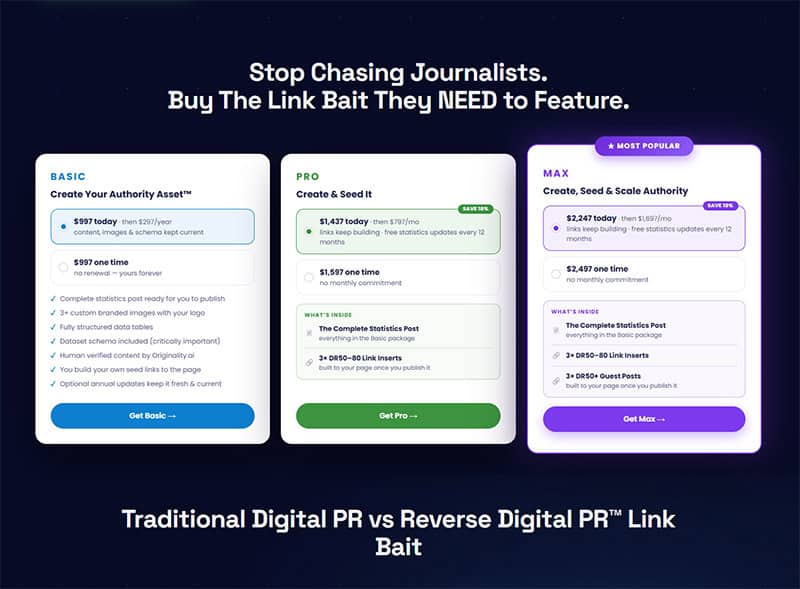
Our Pro and Max packages include the seed backlinks to give the page the initial authority needed to rank and earn citations.
Every authority asset is structured to earn maximum citations and optimised to rank in Google.
Wrapping It Up
Traditional digital PR stops working the moment you stop doing outreach.
But an Authority Asset is the opposite.
It earns links for you passively for years to come. And the best part?
Your authority asset earns links passively and compounds in growth over time.
You naturally earn more AI citations and higher rankings. This leads to more quality links, which only strengthens your rankings and earns you more citations.
This cycle is unique to authority assets.
Start by choosing a relevant topic for your asset. Then follow the rest of the process to compile quality data and create an authority that ranks in Google and is cited by AI.
Want the LinksThatRank team to do it for you?
We create professionally researched statistics pages designed to become your industry’s source of data. When journalists need relevant statistics, they find your page.
- Guest Posts – High-quality AI search-ready
- Link Building Packages – Discounted monthly bundles
- Link Inserts – Niche-relevant editorial placements
- Brand Mention Reviews – Best for brand recommendations
- Listicles – Get featured in ‘best-of’ guides
- Agency Program – Discounted white label services
Order your LinksThatRank Authority Asset now and let the digital PR links come to you.
Frequently Asked Questions
What is a linkable asset?
A linkable asset is a page on your website that earns backlinks naturally because people use it as a source. Statistics pages, original research, free tools and in-depth guides are the most common types. A data-driven statistics page, which we call an Authority Asset, earns the most links because journalists and AI search tools cite it without you doing any outreach.
What is the difference between link bait and an authority asset?
Link bait refers to any content that attracts links organically, such as quizzes, tools, infographics, and clickbait stories. An authority asset is a statistics page that acts as a source for journalists and writers. It naturally attracts digital PR-type backlinks because journalists link to it as the source for their stories. An authority asset also gets cited in AI answers because it provides clear information with verifiable research and data.
Why do some statistics keywords show zero search volume?
Statistics keywords sometimes show zero or low volume because tools rely on delayed historical data and can miss brand-new search queries. Keyword tools also estimate search volume based on clickstream data. It’s not a good idea to only rely on keyword tools when choosing statistics keywords for your authority asset.
How long does a statistics page take to earn links?
Most statistics pages typically take 2-6 weeks to start earning links organically. It depends on the topic, how many journalists search, and your current website authority. For faster results, most people build 3-7 seed backlinks to give the page some initial authority and help it rank quicker.
How many seed links does a statistics page need?
Most statistics pages need 3-7 quality seed links before they start ranking and earning backlinks on their own. It’s also important to build internal links from other relevant pages on your website. The most important thing is that you build only quality seed links from real sites with at least 500+ monthly organic visitors.
Do AI engines cite statistics pages?
Yes, AI engines naturally cite statistics pages. Large language models (LLMs) use Retrieval-Augmented Generation (RAG) to generate answers for users. This architecture naturally pushes AI models to back up claims with sources and cite facts in their answers. A statistics page means that AI only has to retrieve one page to have all the verified data points it needs. That’s why AI engines regularly cite statistics pages, even over the original source pages.
Are statistics pages saturated in 2026?
Statistics pages can be saturated, depending on the topic and industry. That’s why it’s better to choose a smaller, niche topic than go after a major topic that’s already competitive. Focus only on topics that naturally add to your website’s topical authority. Add search modifiers to niche the topics down, such as a location, industry, or audience demographic.
How do I get a page into Google Dataset Search?
To get a page into Google Dataset Search, you must add Dataset structured data to your page’s <head> or <body> section. When Google crawls your page, it will see the Dataset structured data, and you can be added to Google Dataset Search. This will naturally put you in front of more journalists, academics, and professional writers.