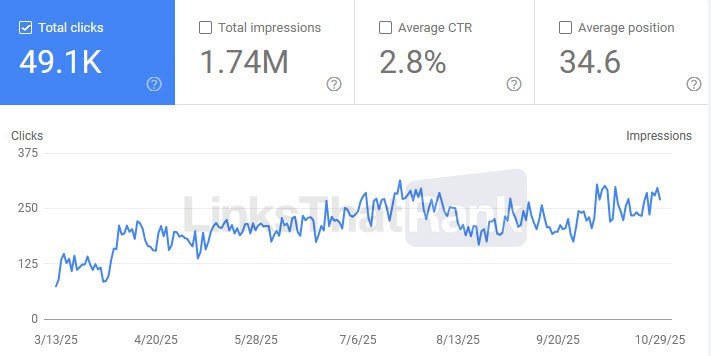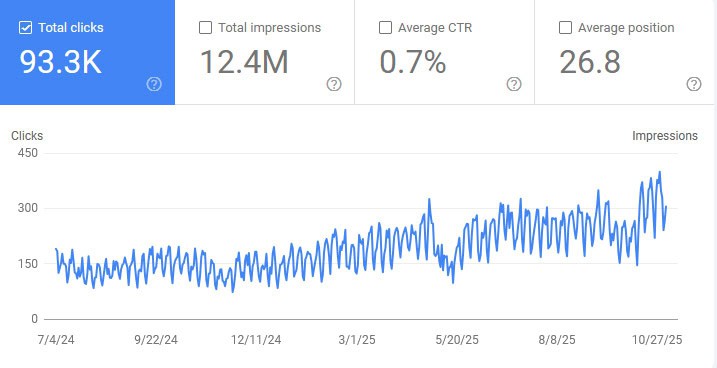

The catch is that most of your competitors won’t put in the work, which is exactly why it’s such a big opportunity.
This guide breaks down four proven strategies (reverse digital PR, source requests, data-led research, and thought leadership pitching) you can use to earn links journalists actually want to give.
Stick with it, track your results, and you’ll build an advantage that’s hard to copy.
Digital PR is the process of earning high-authority backlinks and brand mentions from large media sites.
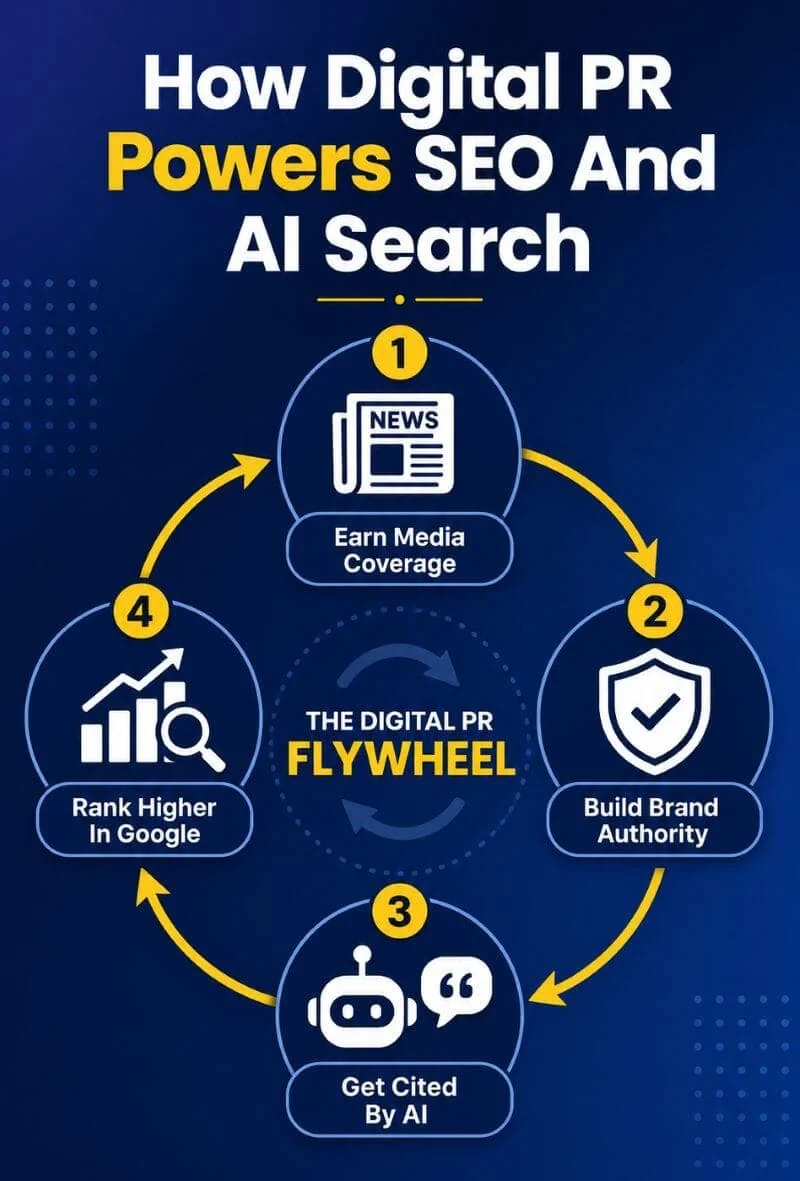
The goal is to create content that journalists, writers, and bloggers naturally want to link to.
It’s one of the most powerful link building strategies right now.
Why?
AI search tools such as ChatGPT, Perplexity, and Google AI Overviews use trusted, authoritative websites as sources for their answers.
Backlinks and brand mentions from large media publishers are proof that your brand is credible and trustworthy.
In other words…
Getting links from major media brands and relevant industry publishers puts you on the map for both Google and AI search right now.
Brand mentions correlate about 3x more strongly with AI overview visibility than standard backlinks. And most digital PR links are brand mentions.
One link from the right publication can do more for your SEO and online visibility than ten generic links.
That’s what makes digital PR so powerful.
In this guide, I’ll explain why digital PR should be a priority for your business right now and four proven tactics to help you earn more digital PR backlinks.

What Is The Main Benefit Of Digital PR For SEO?
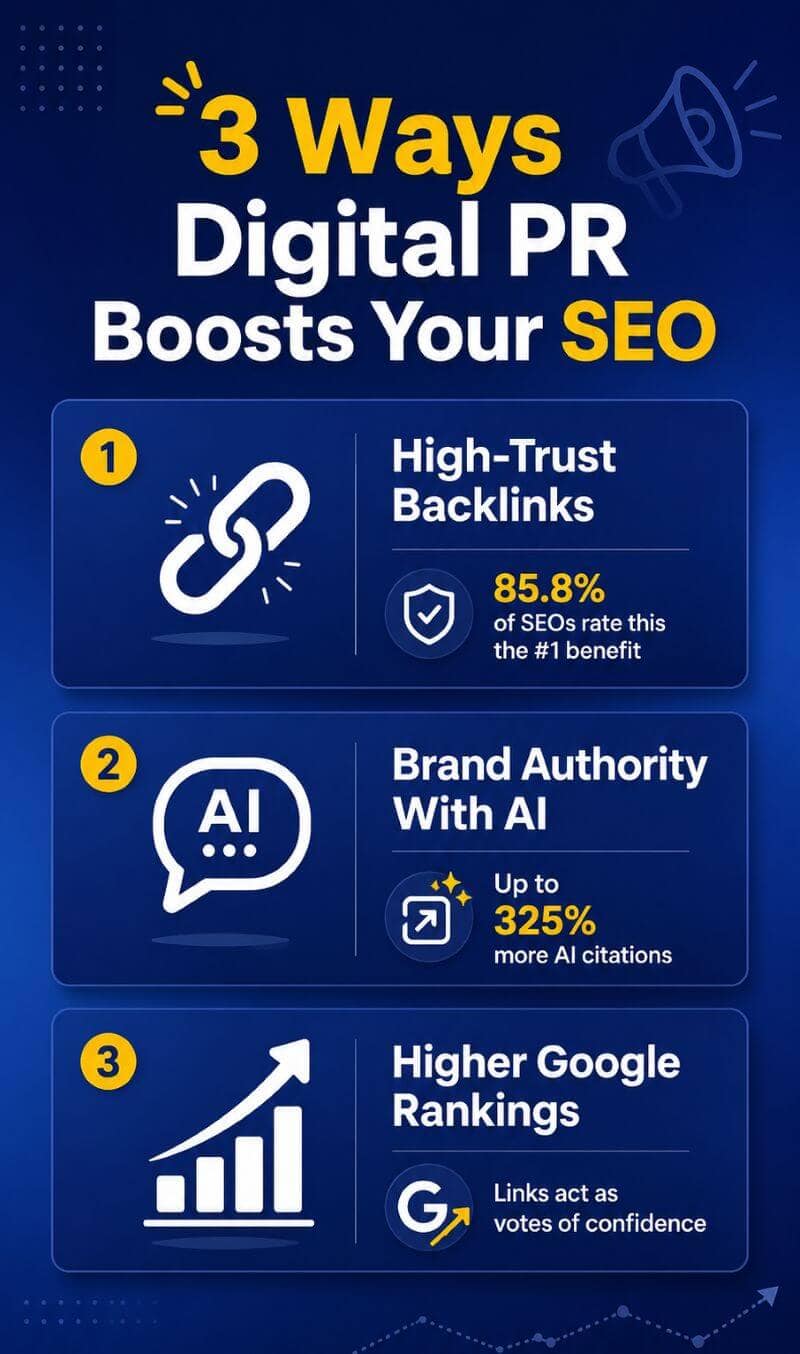
Digital PR boosts your SEO through:
- High-quality backlinks
- Brand mentions
- Visibility in media publications
It positions your brand as a trusted authority and credible source.
That’s exactly what AI search tools and Google want to see.
Digital PR does these three things for your SEO.
1. It Earns You High-Trust Backlinks
85.8% of digital PR professionals say that high-quality backlinks are digital PR’s primary benefit.
And that makes sense…
Digital PR gives you links from major publishers such as the New York Times, Forbes, The Guardian, Business Insider and more.
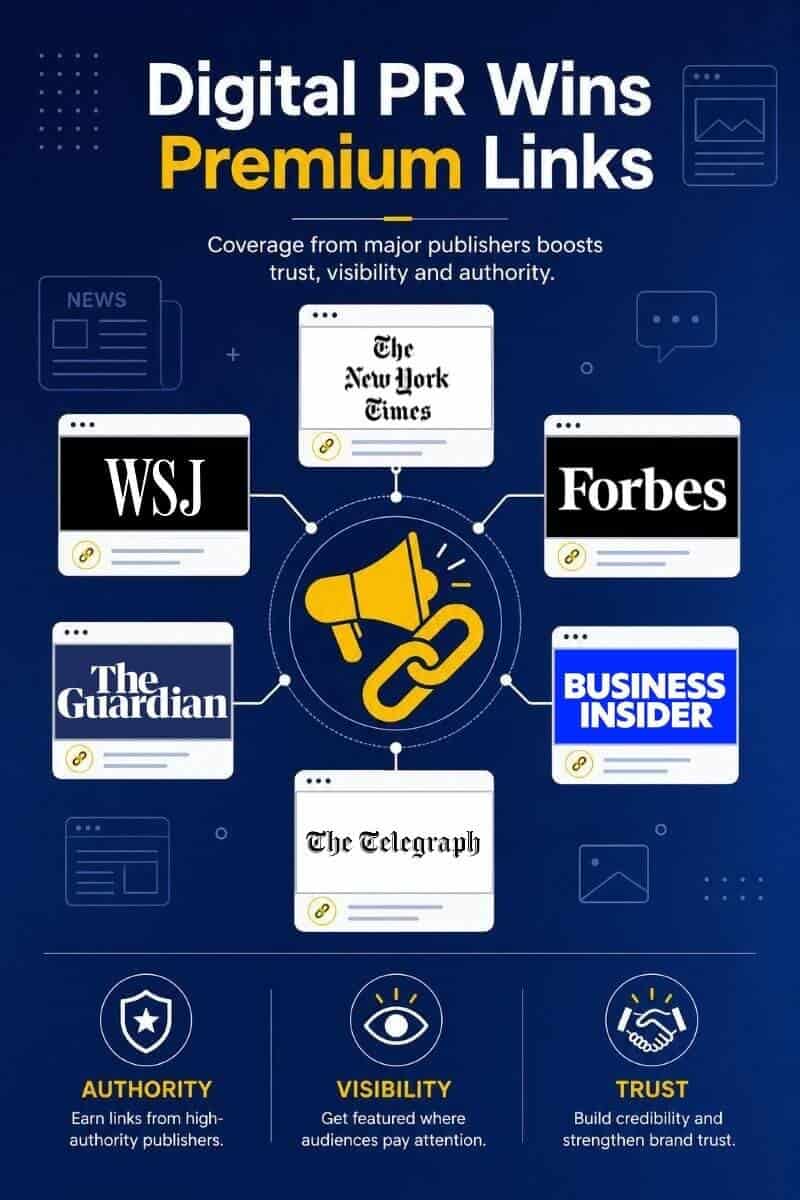
These are the exact types of media brands that Google, ChatGPT, Perplexity, and Gemini trust.
A link from these sites passes their trust to your brand.
It makes you a trusted source in the eyes of Google and AI search tools.
These types of links are almost impossible to build any other way. That’s what makes digital PR so effective for link building.
Note: Many of these major publishers will tag outbound links nofollow, which is perfectly natural – just judge a placement by the mention and referral traffic too.
2. It Builds Brand Authority With AI Search Tools
Up to 90% of brand visibility in AI search can be driven by earned media.
What does that really mean?
Digital PR is essentially earned media. You earn the link through a quote, statistics, or direct response as a source.
These types of links increase brand authority and the likelihood of being cited in an AI answer.
That’s exactly what you want.
Earned digital PR links can increase AI citations by up to 325%.
3. It Increases Rankings In Google Search
Links from major publications are exactly what Google wants to see.
Let me explain:
Google uses links as votes of confidence in your site.
The more quality links (votes) you have, the higher you will rank. Simple as that.
But the most important aspect is quality.
One quality link does more for your site than ten generic links.
You can’t get higher-quality links than those from brand-name media publishers.
The bottom line is that digital PR will earn you the highest quality links available. And those links are not easy to replicate. That means digital PR links form a real competitive advantage around your SEO that isn’t easily taken away.
Why Should You Focus On Digital PR Now?
Digital PR merges:
- Brand visibility
- SEO authority
- AI citations
Into one complete strategy.
It’s one of the few link building tactics proven to deliver results across almost every aspect of SEO.
Here’s the truth:
Digital PR isn’t easy.
It takes the right strategies and time to get consistent results.
But the good news is that most of your competitors won’t bother with it. That gives you an opportunity.
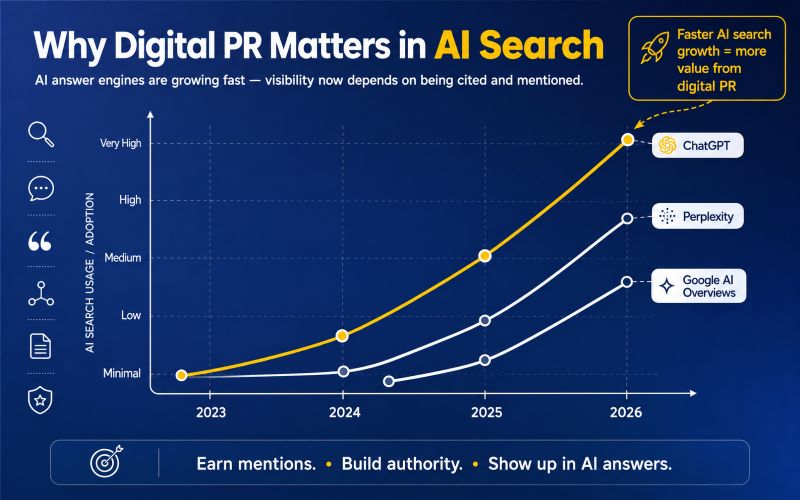
AI search is growing fast. The brands that show in AI search tools such as Perplexity, Google AI Overviews, and ChatGPT aren’t there by accident.
They’ve built the authority that these search tools need to see.
That’s exactly what digital PR does.
Businesses building digital PR links right now are creating a gap between themselves and their competitors.
And that gap is only going to get bigger.
There has never been a better time to start building digital PR links that boost your rankings today and set you up for the future too.
4 Proven Digital PR Strategies
The best digital PR strategies combine content marketing with SEO.
But it goes deeper than that. You need to give journalists a reason to cite your content and link back to you.
Use these four digital PR strategies to build high-quality links.
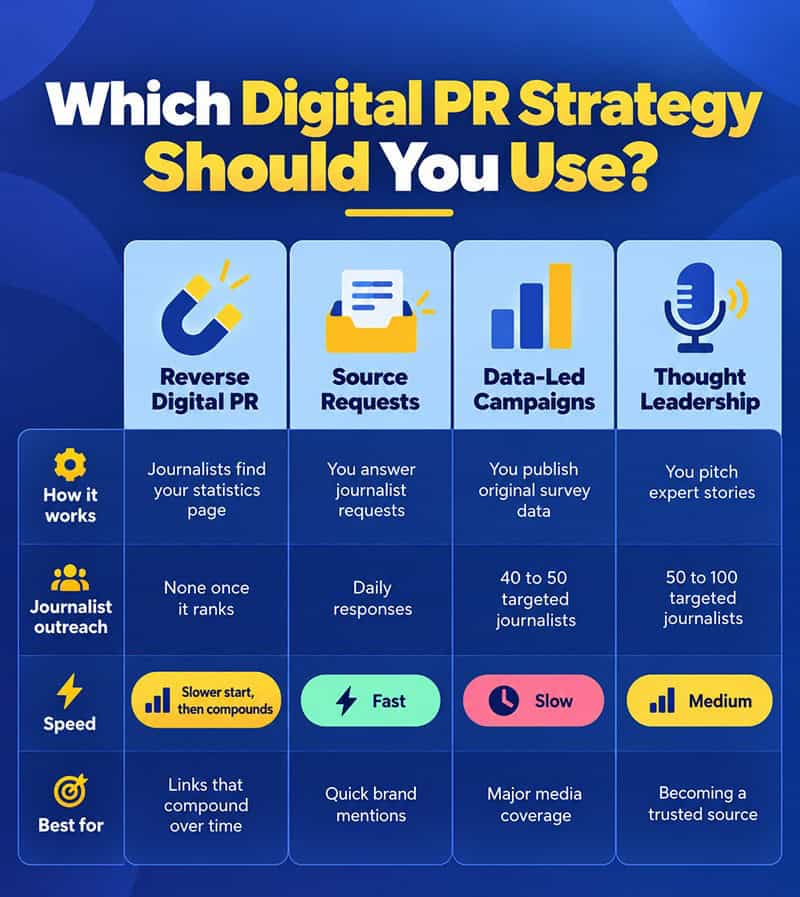
Strategy 1: Reverse Digital PR
Reverse digital PR is the opposite of what you normally do.
You create a page that journalists find on their own, cite as a source and link to.
There’s no other strategy in this guide that gets you links from journalists with no outreach.
Here’s how it works:
Almost every article that journalists write needs some kind of statistic. They’ll either look on Google or use an AI tool to find it.
Whichever page they find the statistic on gets the link.
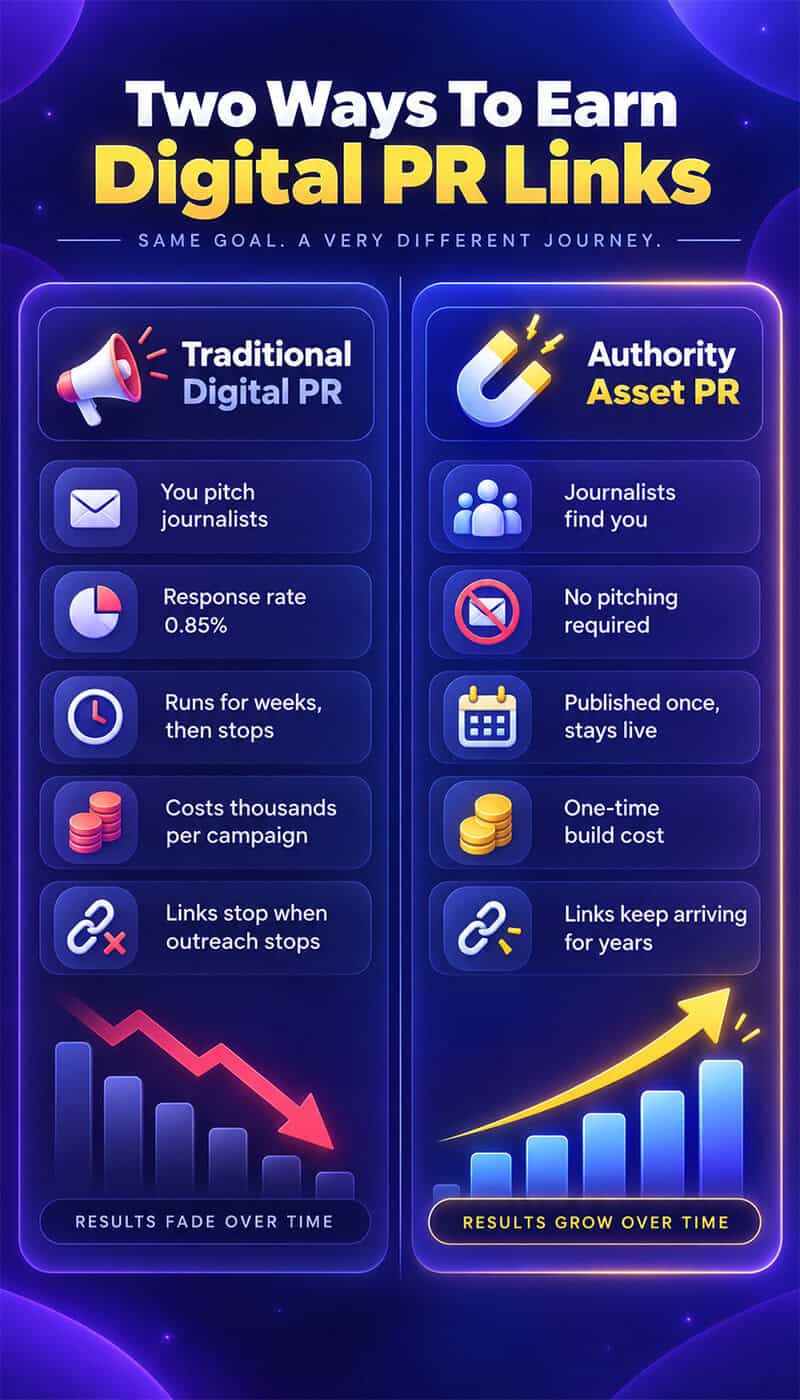
So if you can become that page, you’ll get the link.
Create the go-to statistics page for a topic in your industry, and journalists will link to it when they write about that topic.
Then the next time they write about that topic, they’ll link to you again.
Here’s proof that it works:
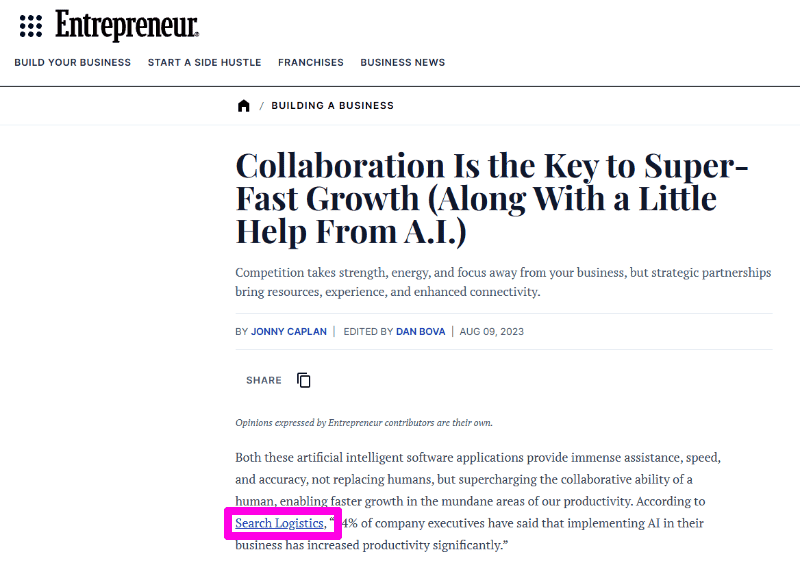
Our sister site Search Logistics' TikTok statistics page has earned links from 400+ referring domains without a single outreach email. That includes Forbes, Fortune and the LA Times.
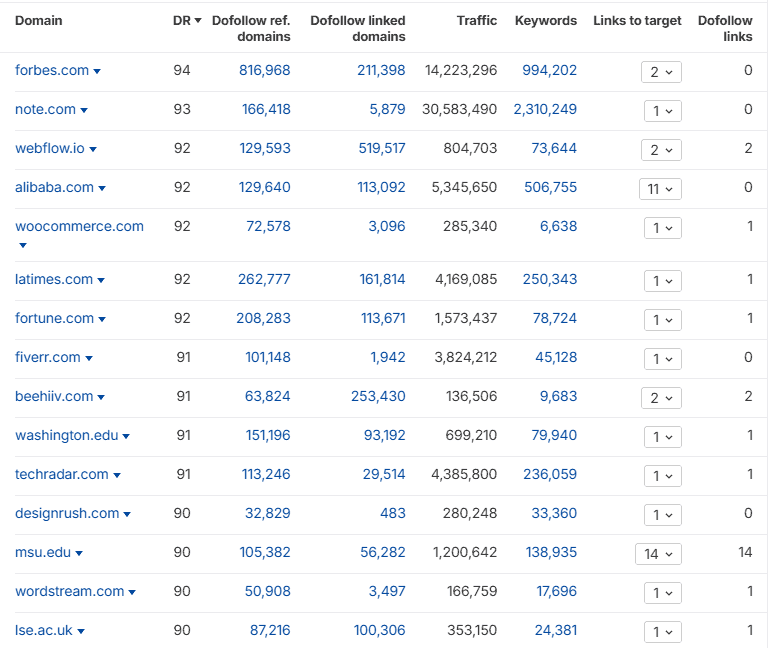
Your page will rank higher on Google with each link you gain. That means more journalists will find you and give you more links.
The page keeps compounding long after you publish it.
Watch how reverse digital PR works:
Here’s the process to build a statistics page that earns links:
1. Choose a statistics topic journalists regularly cover in your industry
2. Compile the most recent statistics from credible sources
3. Add your own analysis to create data points nobody else has
4. Structure the page with question-style headings and direct answers
5. Add Dataset schema markup to the page
6. Build a handful of seed links to get it ranking
7. Update the statistics every 12 months
You might think a topic isn’t worth a statistics page because of low search volume.
Most keywords related to statistics have little to no search volume in Ahrefs and Semrush. However, when articles are written about that topic, there’s a spike in demand. Keyword tools don’t take this into account.
Most people will overlook step 5 (schema)
By adding Dataset schema, you can appear in Google Dataset Search. This allows your data to be found by researchers, academics and journalists. Our sister site Search Logistics’ TikTok statistics page appears there too.
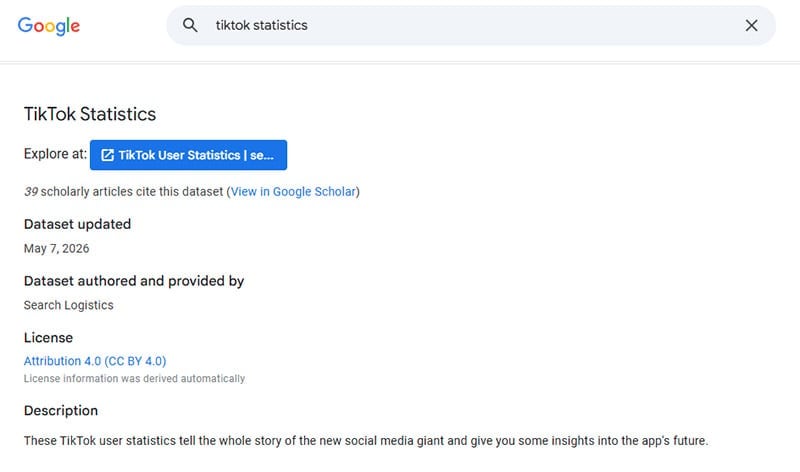
The work is front-loaded. You need seed links to get the page ranking, then annual updates to keep the links coming.
Want to learn more?
Check out our full guide on creating a statistics page that earns links. We even share the AI prompts we use to find data faster.
Not sure you have the time to create and maintain a statistics page?
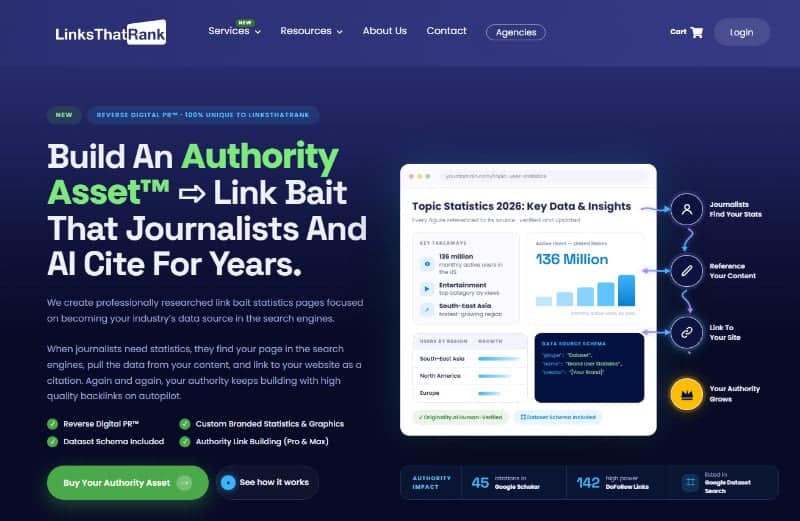
We created the LinksThatRank Authority Asset™ to help you out. We’ll find the data and write the page for you. We’ll also create graphics in your brand colours and add Dataset schema. All you have to do is publish it on your website.
Strategy 2: Source Request Digital PR
Source request digital PR is when journalists, bloggers and writers ask for information about a specific topic they’re covering.
They’re usually looking for:
- Quotes
- Data
- Expertise
- Recommendations
Your job is to sift through the requests and respond to the ones you have genuine expertise in.
If the journalist uses your response in their article, they’ll link to your website as the source.
What kind of links do you get?
Source request digital PR gives you an opportunity to earn links from some of the biggest media publications on the planet including:
- Forbes
- New York Times
- Daily Mail
- Business Insider
…and more.
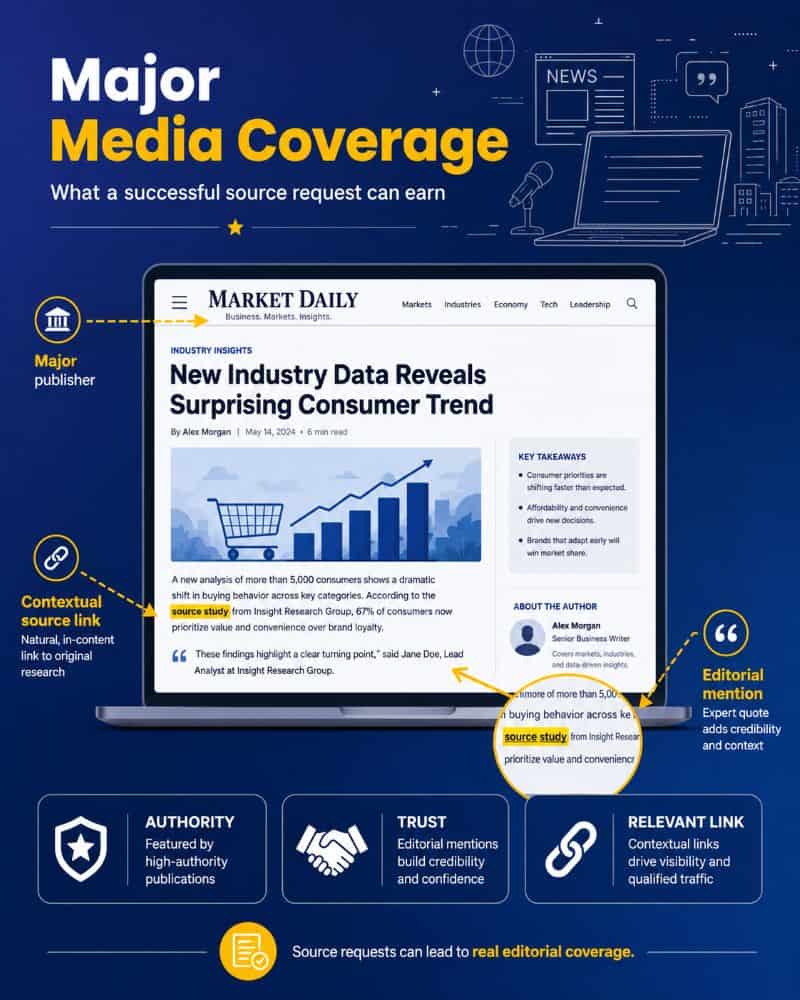
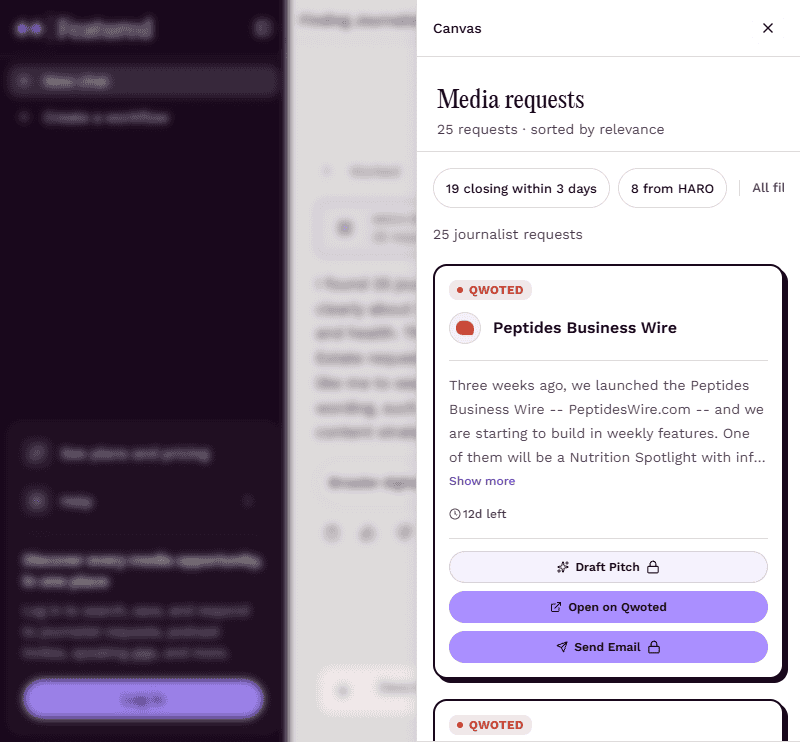
The first thing you need to do to build source request digital PR links is to use the right platforms.
The best platforms are:
- Qwoted
- Featured.com
- Source of Sources

You should also monitor these hashtags daily on both X and LinkedIn:
- #JournoRequest
- #PRRequest
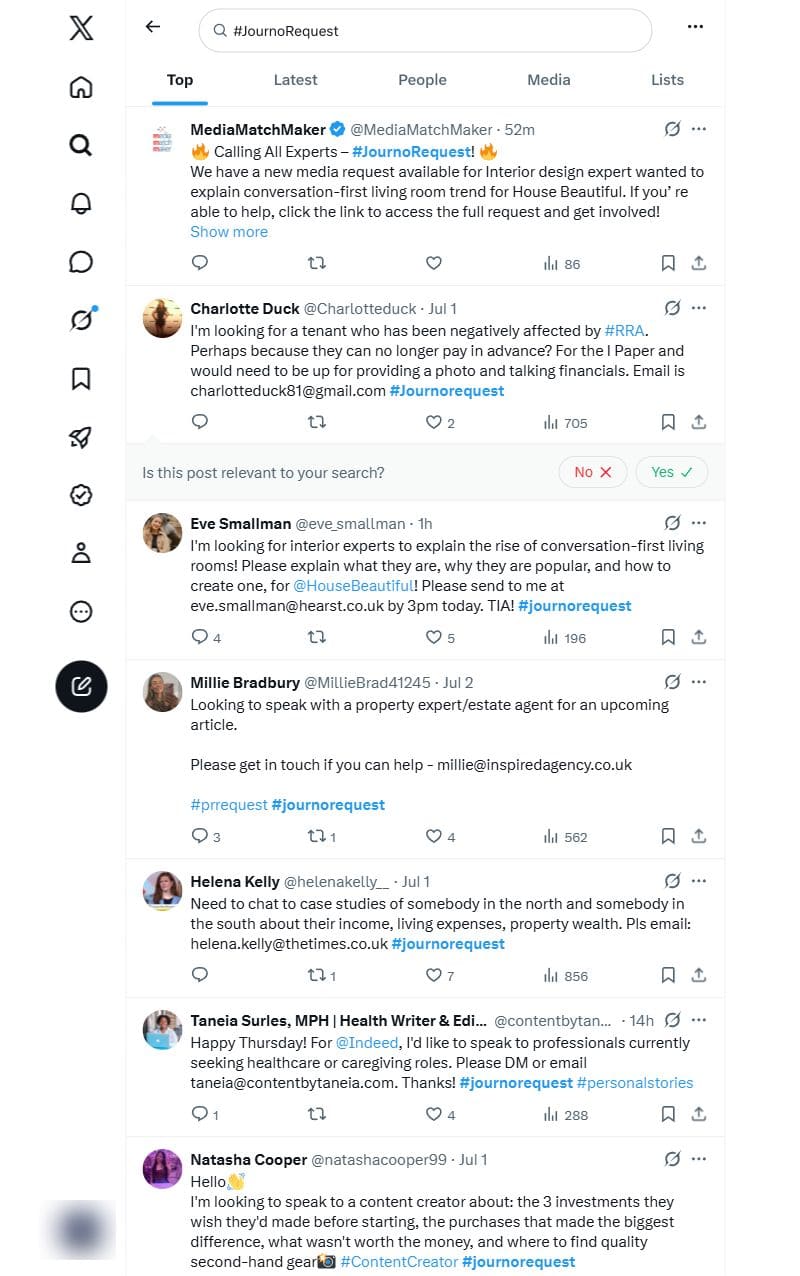
Journalists publish requests using these hashtags daily in real time.
Speed matters here.
The faster you respond, the higher your chances of earning the link.
Scan through the requests on each platform and look for ones that you’re a genuine expert in.
The request should be relevant to your industry to maximise the effectiveness of your link.
When you see a request that makes sense, respond quickly.
The best responses are short and straight to the point.
Journalists and writers are always pressed for time. They’re also sifting through hundreds of responses for multiple stories.
Your goal is to give them exactly what they need and make it as easy as possible to use the information you provide.
Lead with your strongest insight and answer their request directly.
All quality responses include:
- A direct answer to their query with the information they’re looking for
- A specific data point, experience, or proof that what you’re saying is reliable
- One unique or counterintuitive point that sets your answer apart
- A simple line with your name, credentials, title and website
Here’s the thing most people don’t realise:
Source request digital PR is a volume game. The average conversion rate is typically between 3% and 5%, depending on the industry.
Over 81% of digital PR pros secure first coverage within a week.
In most cases, you won’t get a response from the journalist, even if they use you as a source.
That’s why it’s important to track your links manually.
Use a tool like Ahrefs or Semrush to track each link you get.
Record your earned links in a spreadsheet.

Over time, you’ll start to get a feel for the requests that convert best for you.
That allows you to double down on what’s working and continuously improve your digital PR link building.
Strategy 3: Data-Led Digital PR
Data-led digital PR is the process of doing original research on a trending topic.
Your goal is to run a survey that collects data on a topic that journalists and writers naturally want to source.
Here’s why it works so well:
Journalists are always looking for new topics or stories that their audience will be interested in.
They also prefer to cite the original data source.
That’s your opportunity.
The best data-led digital PR campaigns combine real, original research data with topics that have natural curiosity or are counterintuitive.
And they earn major backlinks like this:
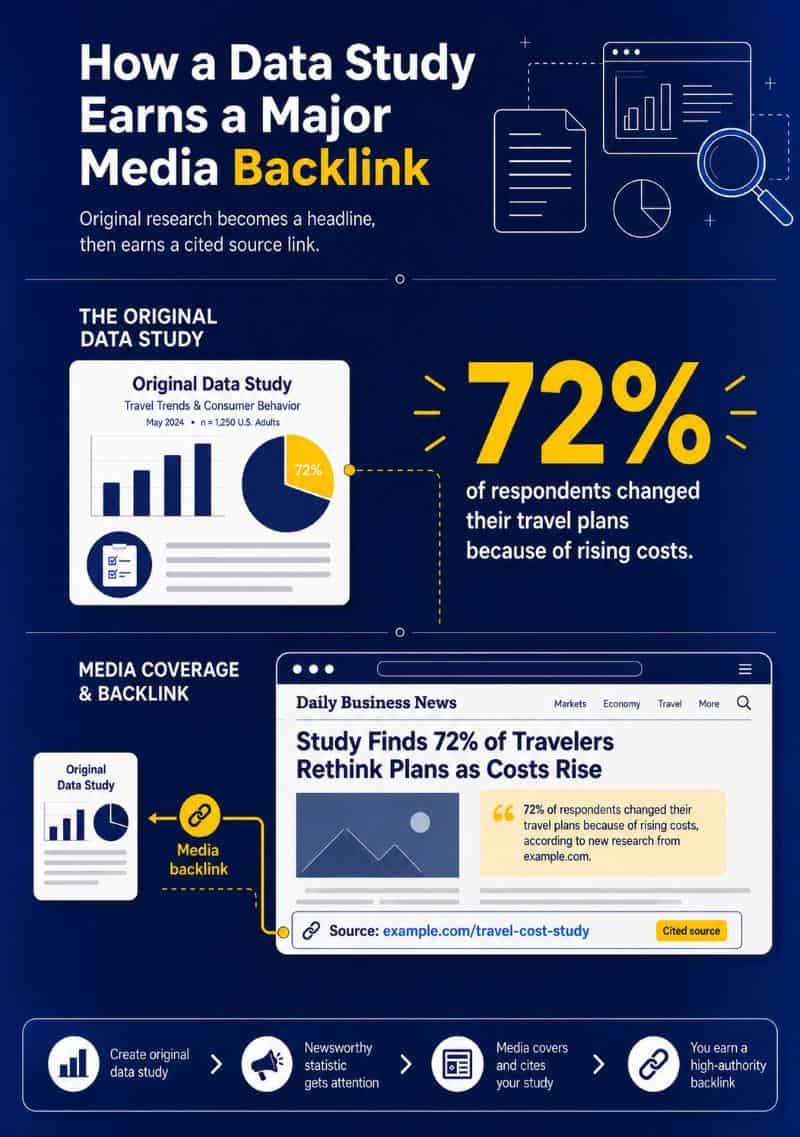
How do you get original data?
Short answer: Surveys.
And you don’t need a huge number of responses either.
Just 200 to 500 responses are more than enough to make the data statistically relevant.
That means even if you only have a small email list or social media following, you can easily get enough data to make this strategy work.
Even if you don’t have any followers, there are survey platforms you can use to collect data.
Here’s the process.
Find A Newsworthy Angle
Most people think that data-led digital PR is all about the data.
But that couldn’t be further from the truth.
The secret is covering a topic that journalists actually want to cover.
That means finding a topic that is:
- Newsworthy
- Counterintuitive
- Curiosity generating
The data is simply there to prove what you’re saying is true.
It’s worth spending time coming up with a great topic.
It’s the difference between earning a ton of powerful links and getting none at all.

Ask yourself these questions to find a great topic:
- What assumption in your industry could you test?
- What questions could you answer with data?
- What trend could you quantify?
- What’s a question people are always asking?
The answers to these questions will help you come up with a newsworthy angle that will resonate with journalists.
That’s the main goal.
Struggling to come up with a topic?
Use this prompt in ChatGPT:
Give me 10 newsworthy survey topics for the [YOUR INDUSTRY] industry. Each topic should be counterintuitive, curiosity-generating, or challenge a common assumption. Include a suggested headline and the core question the survey would answer. This will be for my data-led digital PR campaign.
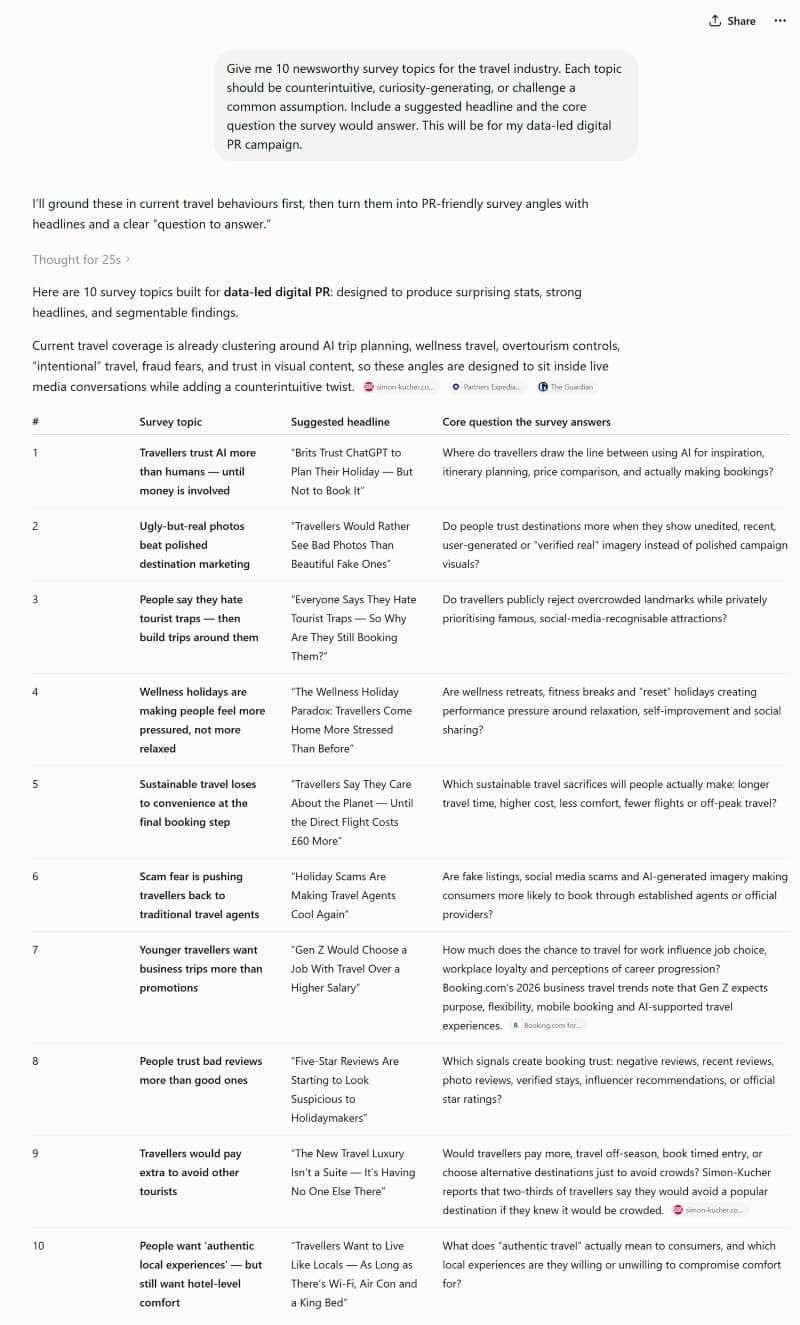
Cool, right?
Sift through all the topic suggestions and choose the one that resonates with you most.
Survey Your Audience
Now that you have your topic, it’s time to run your survey.
A quality digital PR survey consists of 8 to 10 questions that will naturally generate insightful results.
Use this prompt to do it quickly:
I want to create a mini-study about [YOUR TOPIC] that generates 8 to 10 citable findings for journalists. Provide: (1) Methodology (2) Specific survey questions (3) Analysis plan (4) Key findings framework with headline-ready statements journalists would cite (5) Visualisation suggestions for shareability.
Within seconds you’ll have a perfectly mapped out survey strategy.
Trim and fine-tune the questions. In a mini-survey like this, it’s more about quality over quantity.
That means your survey should be designed to extract the best citable data with as few questions as possible.
Got your survey designed?
Use a tool like Google Forms or Typeform to collect the results.
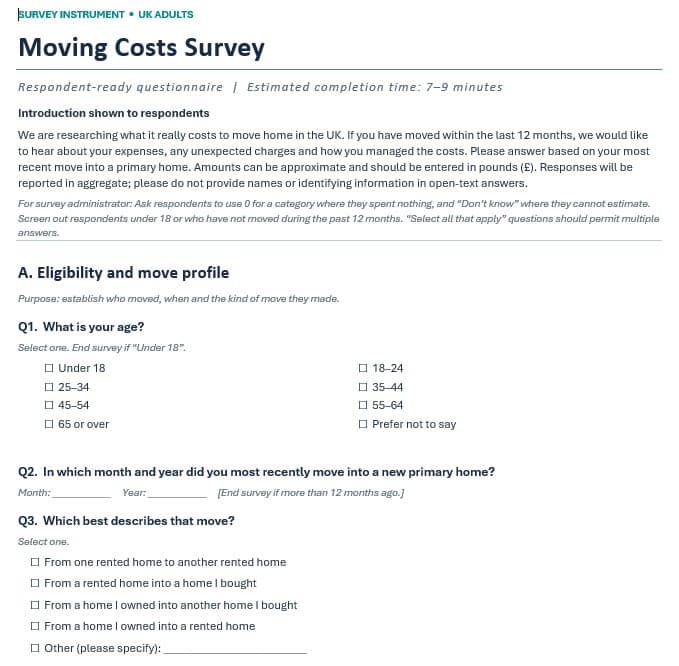
Then simply email your list and post it on social media.
If you have website traffic, add a simple announcement bar at the top of your website.
It’s a great way to increase the number of responses from people who may not be following you.
Pro Tip: Offer a free gift or incentive for people who finish the survey. A free checklist, digital product or tool works the best. It will significantly increase the number of responses you get.
What if you don’t have an audience?
Use a survey platform like Pollfish to collect responses.
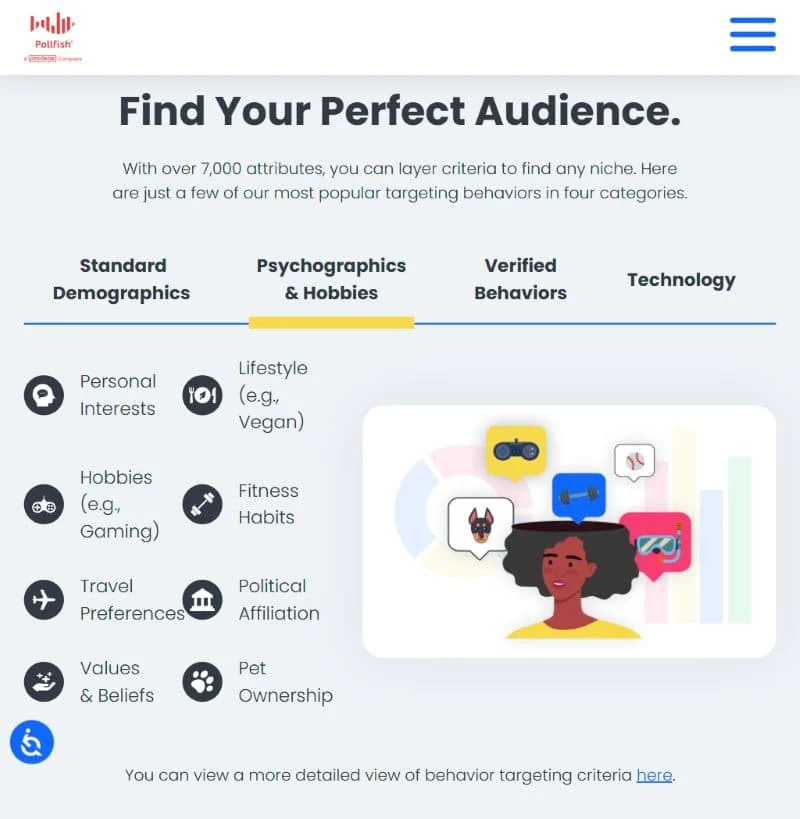
You can expect to pay between $0.80 and $1.00 per response.
Aim for 200 to 500 responses to make the data statistically relevant. This will allow you to extract reliable insights while still making your survey data manageable.
Be sure to add the sample source and margin of error in your methodology.
Publish Your Data
Your data is only as powerful as the page it lives on.
Structure the page like this:
- A punchy headline built around the most surprising statistic
- An executive summary with the top 3 to 5 findings
- Each key finding listed on the page with the bolded stat and supporting context
- A clear methodology showing how the data was collected, the sample source and the margin of error
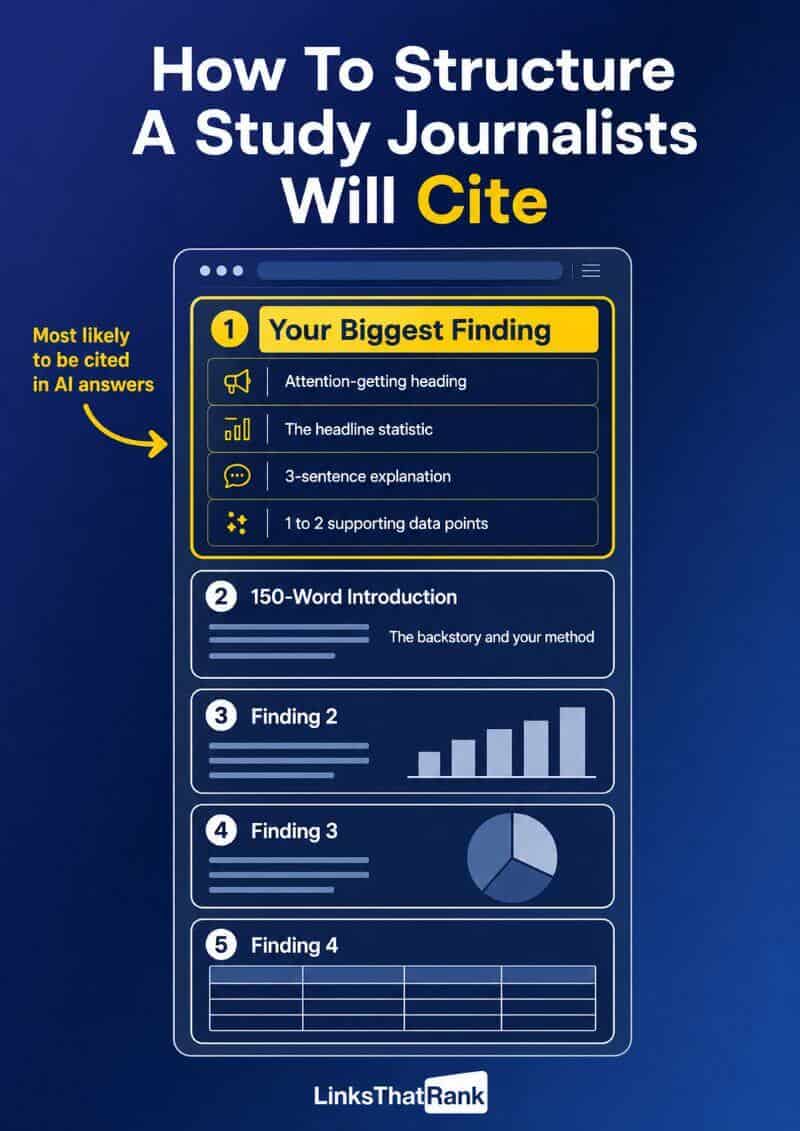
This is one of the most important aspects of the whole campaign.
Your results need to pop off the page.
That means adding graphics, charts and graphs to help your audience visualise the data.
Make it easy to scan.
Journalists, writers and bloggers are busy.
Your goal is to ensure that it’s easy to scan the results and extract all key insights easily.
Pitch Journalists To Earn Initial Links
You won’t earn any links if journalists don’t see it.
Put together a list of 40 to 50 journalists who have covered similar topics before.
Use social media and search operators to find the right journalists to contact.
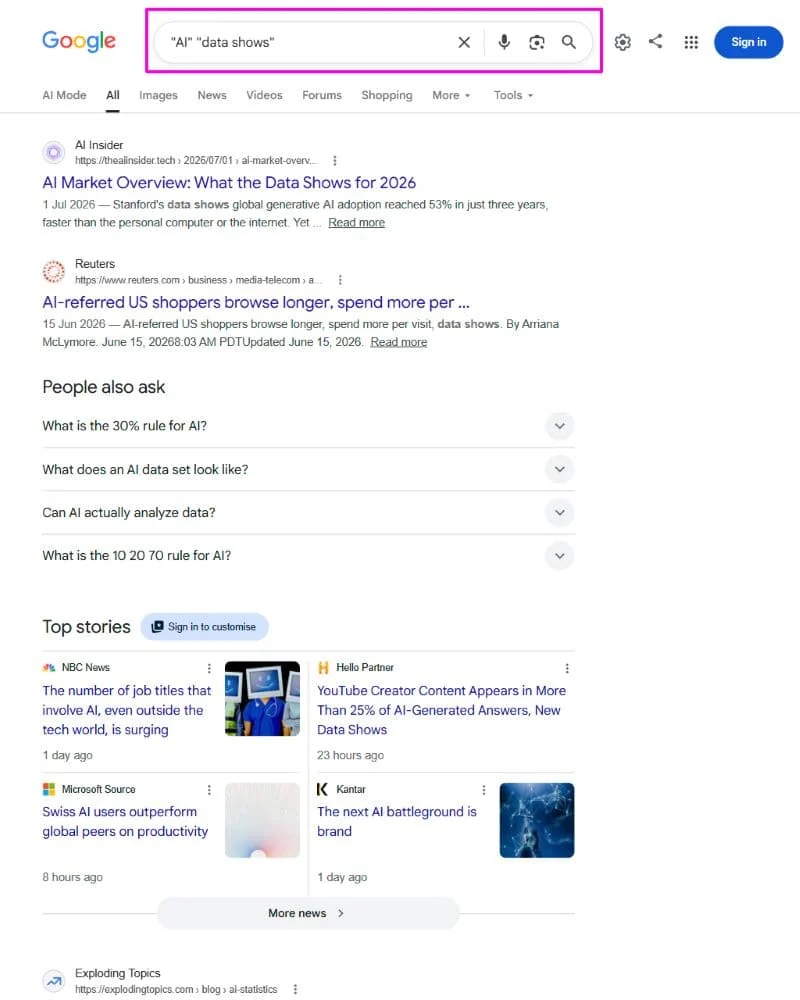
On Google, search:
"your topic" "study" journalist
"your topic" "survey" "according to"
"your topic" "data shows"
"competitor name" "your topic"
site:forbes.com "your topic"
site:techcrunch.com "your topic"
On X, search:
"your topic" from:journalisthandle
"looking for sources" "your topic"
"pitch me" "your topic"
This should give you a foundation of journalists to reach out to.
But there’s one other tactic you should take advantage of…
Find 10 to 15 posts that are currently ranking on Google or being cited in AI search on a similar topic.
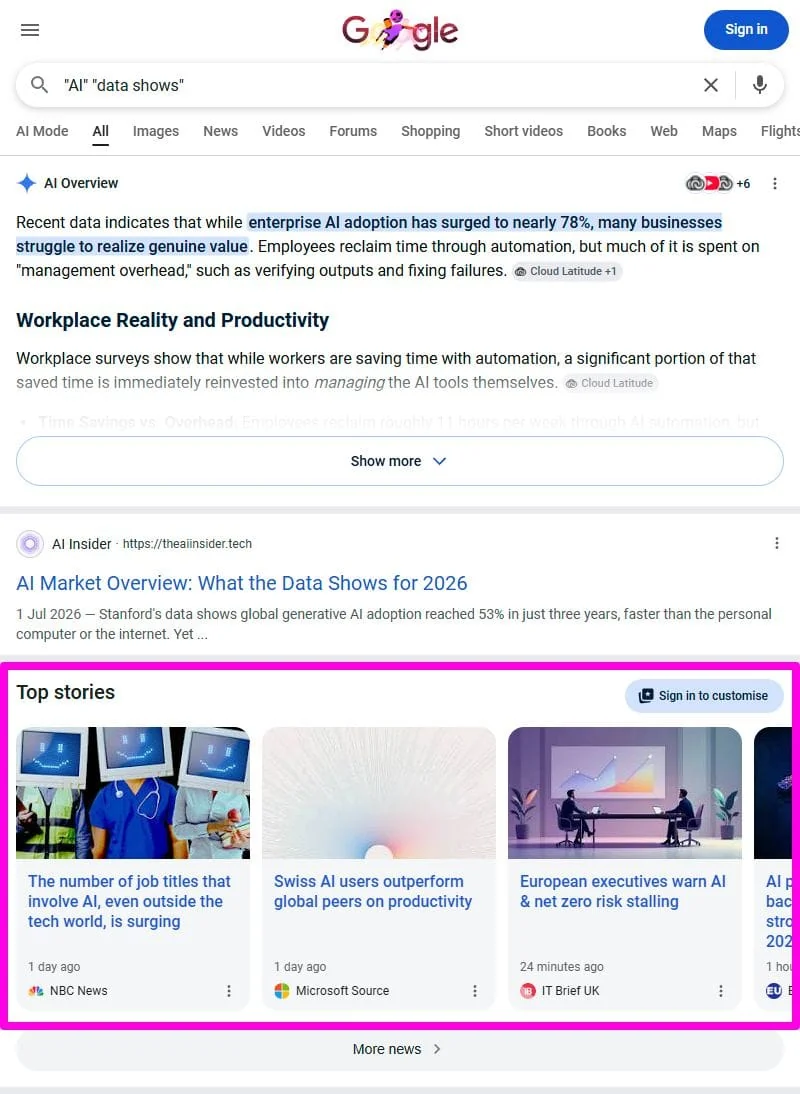
Then add each URL to Ahrefs or Semrush to see all of the backlinks pointing at them.
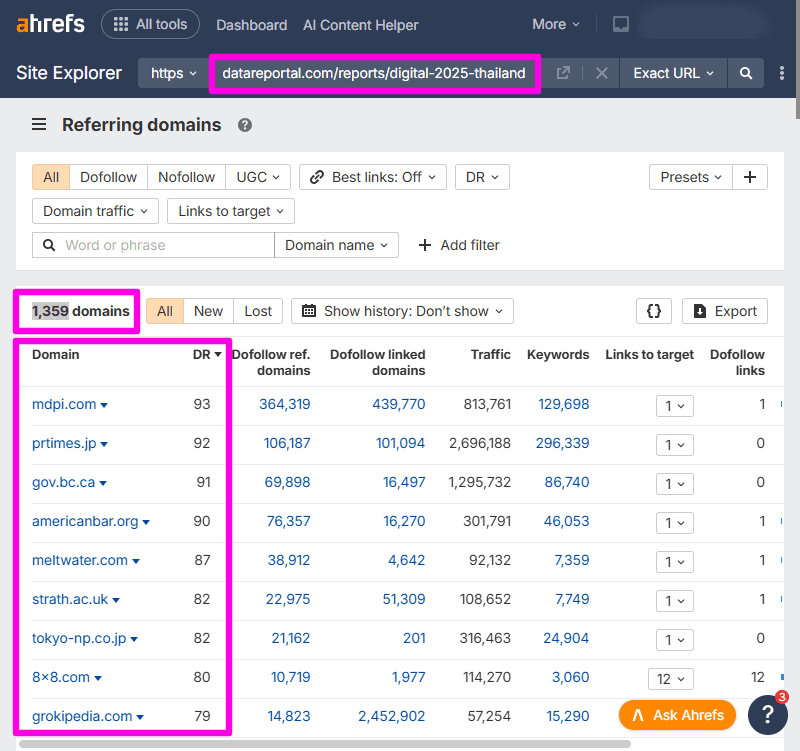
Specifically look for large media publications that have linked to these pages. Add the journalists who wrote the articles to your target list.
These are perfect targets because you know they’ve already covered similar topics to yours and linked out to the source page. If they’ve done it before, they’re far likelier to do it again.
Got your list?
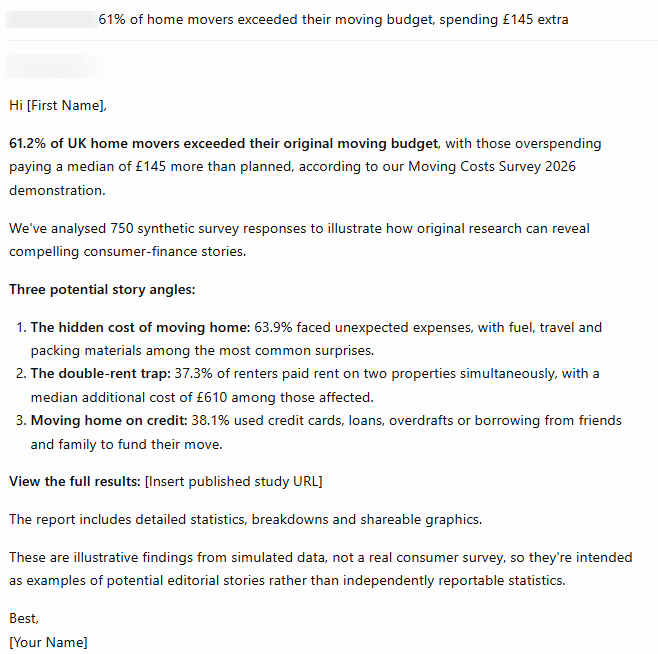
Send each journalist an email with the main finding and 2 to 3 ready-made angles they can use.
Keep it brief and straight to the point.
Journalists literally get hundreds of requests per day.
Use the main finding as the subject line.
This is a good way to get their attention and increase the open rates of your initial outreach.
Include a link to your published results at the end of your email.
Make it easy for them to learn more if they want to.
I recommend following up once after 4 to 7 days.
More than one email follow up can get you blocked – so don’t be a pest.
The follow-up should be short and ultimately just bump your original email to the top of their inbox.
I’ve found that most journalists don’t respond even if they use your data in an article.
That means you’ll need a tool like Ahrefs or Semrush to track results.
Data-led digital PR does take a lot of time and effort.
But you own the data, and it can earn massive backlinks you would never have been able to build otherwise.
Strategy 4: Thought Leadership Pitching
Thought leadership pitching is when you proactively pitch journalists with:
- Expert commentary
- Original insights
- Stories
- Data and statistics
With thought leadership pitching, you’re going to journalists with a story they could use.
But here’s the thing:
This strategy works best once you have a few media placements under your belt.
Think of it as proof that you deliver wins for journalists.
Early on, journalists don’t know your brand or whether they can trust your pitches.
But if you have some proof from past campaigns, it changes everything.
Even having media publication links from previous linkable assets you’ve built can work.

With that in mind, here’s the process to follow.
Find Your Story
Your story is what you pitch.
It’s the difference between having a lot of success and struggling to get any traction at all.
Let me explain:
Journalists are always looking for relevant stories they can write and share with their audience.
If you can give them a good story to use, you’ll get a lot of coverage.
It’s as simple as that.
Here’s the good news…
You don’t need to do original research to come up with a great story. In other words, the story doesn’t need to be your own.
You can use trend stories and articles by simply covering the same topic from your perspective.
It’s your unique insights and expertise that are the difference.
There are three places to find a good story:
- Cover a trending story in your niche that you can add insights and context to
- Use existing third-party data and build an expert opinion around it
- Use your own business insights and publish the information as a report
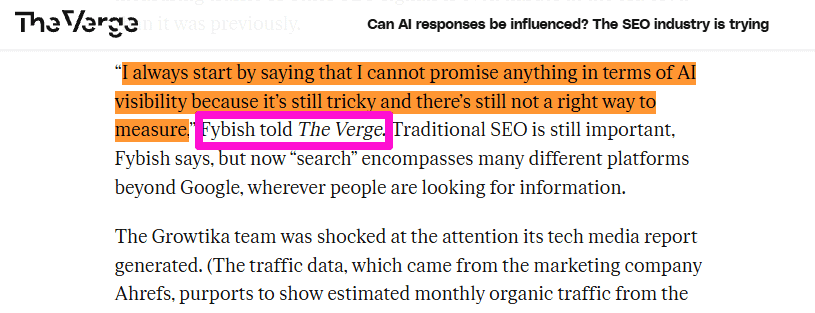
All of these can work.
It’s about what you think will work best with your expertise and your industry.
A few tools make this easy:
Google News and Google Trends surface breaking stories, while Exploding Topics and BuzzSumo show you what is gaining momentum in your industry right now.
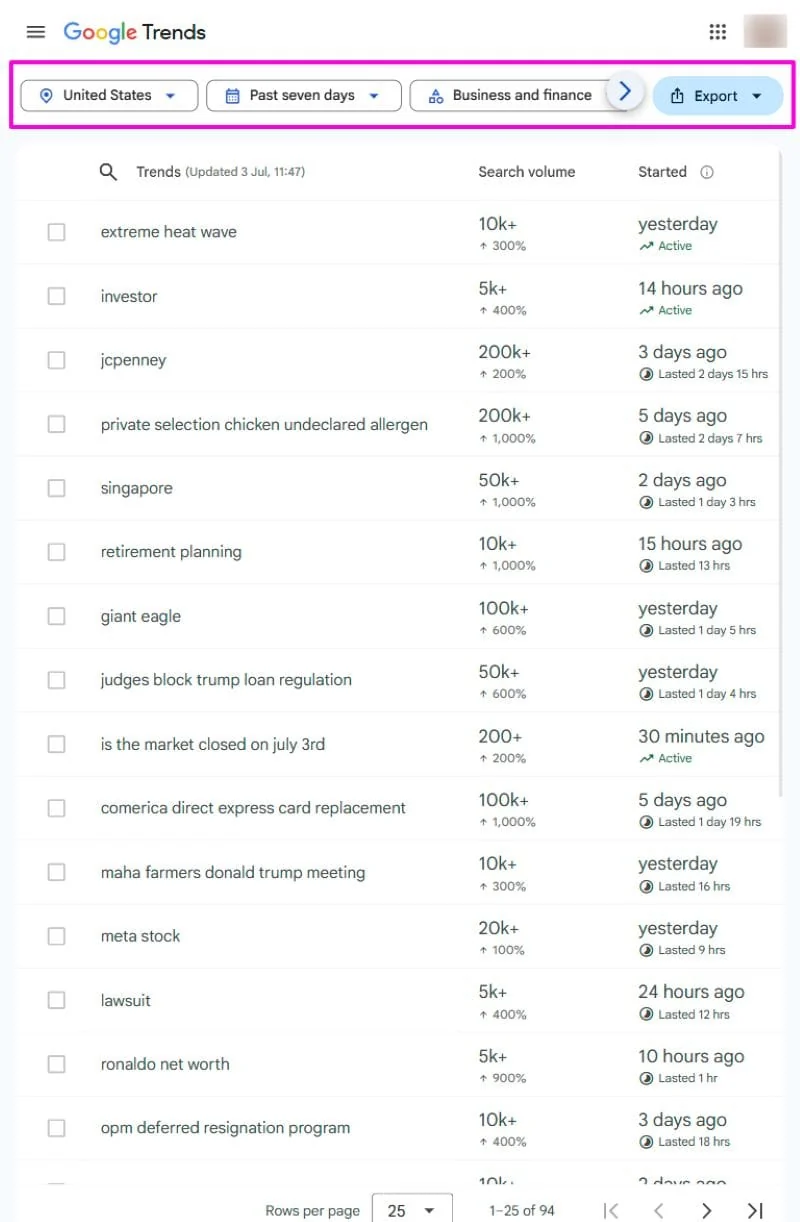
These tools will show you what articles, topics and trends are exploding in your industry right now.
Pick a few topics that make sense and put them aside for later.
Prepare Multiple Story Angles
Once you have your story, you need to break it down into multiple angles.
A generic pitch won’t work for every single journalist.
In the same way that different marketing angles work for different customer avatars, journalists will respond to specific story angles more than others.
That means you should prepare 5 to 10 different angles before you send a single email.
For each angle, you need to have:
- A working headline that makes the story obvious
- 2 to 3 credible statistics that support that angle
- One expert quote that adds credibility
- A clear reason why that story matters right now
Let me explain:
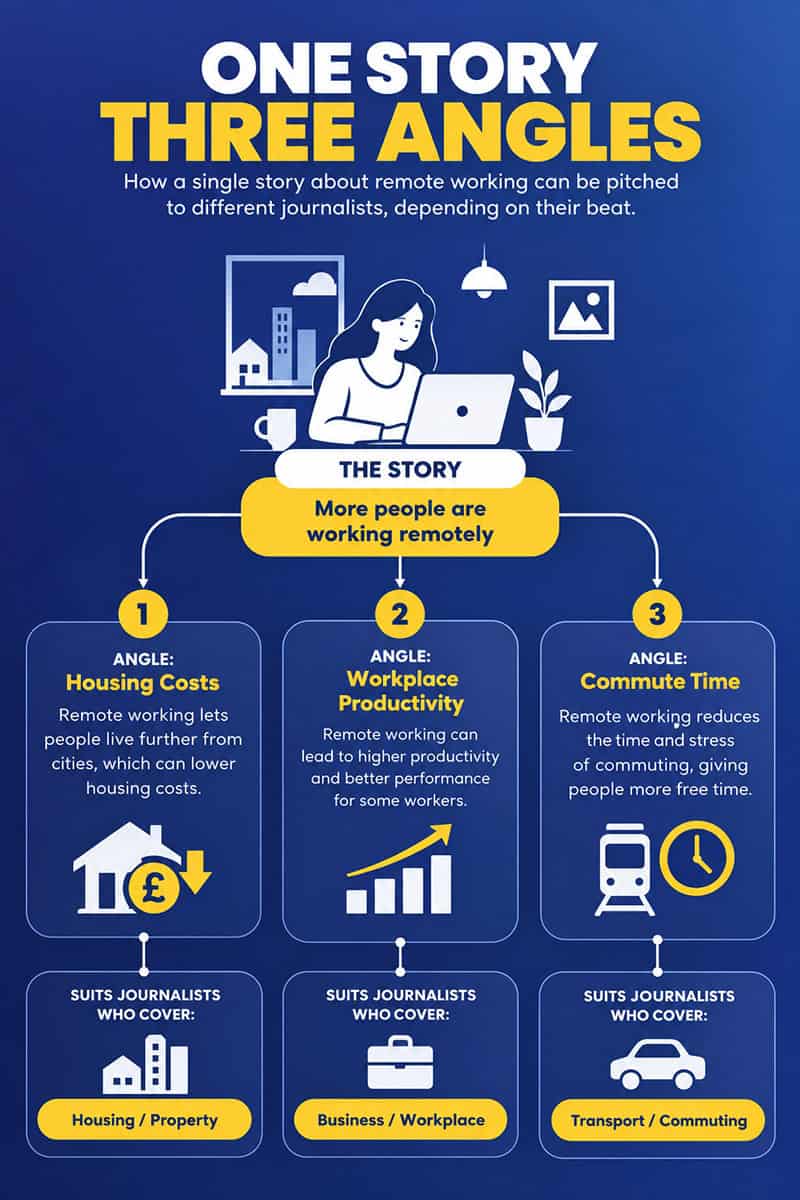
Imagine your story is about remote working habits.
That one story contains multiple angles that will stand out to different people.
If you watch a movie with a friend, different parts of the movie will stand out to you compared to your friend.
It’s the same with your story.
For example, a journalist covering housing might care about how remote working is driving up housing costs for other homeowners.
On the other hand, a journalist covering workplace trends might care about how remote work is affecting productivity.
Same story, different angles that speak to different types of journalists.
The good news is that AI is excellent at coming up with different angles.
Here’s the prompt:
Read through my attached story about [YOUR TOPIC]. Generate 5-10 different story angles I can use to pitch journalists. For each angle, provide: (1) A working headline (2) The target journalist beat this angle suits best (3) 2-3 supporting statistics or data points (4) One expert quote (5) A clear reason why this story matters right now.
Simply attach your content to this prompt, and you’ll have 5 to 10 usable angles in a matter of seconds.
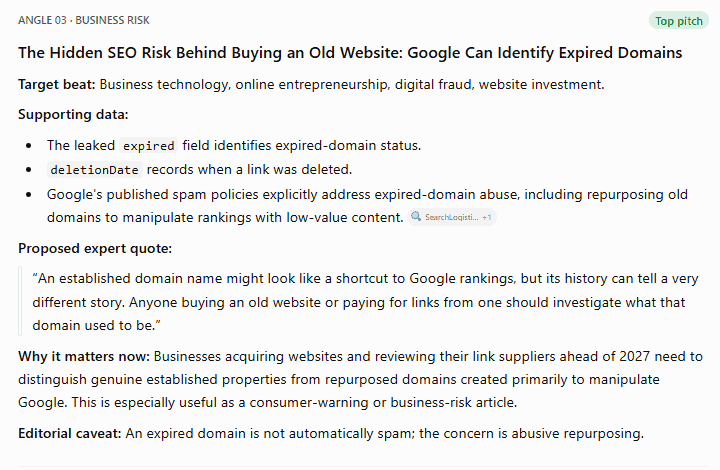
Familiarise yourself with them and tweak them as necessary.
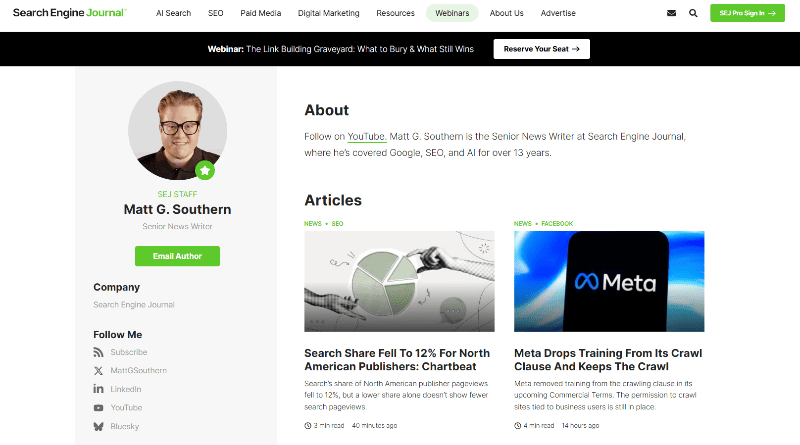
Build A Targeted Journalist List
Start by building a list of 50 to 100 journalists who cover similar topics to your story.
Don’t think of this as just another outreach campaign.
You only want journalists who are actually likely to care about your pitch and topics.
The best way to do that is by choosing journalists who have at least written 2 to 3 stories in the past that are highly relevant to the story you’ve chosen.
Any of the tactics in strategy 3 will work well for this.
List them all in a spreadsheet, including:
- Journalist name
- Publication
- Contact information
- Topics they write about
- Links to their most recent articles
- Notes on the tone and format of their content
- 2 to 3 angles that are most likely to resonate

Don’t use AI to do all of this for you.
Not only are you building a highly targeted contact list…
But you will learn a lot about who they are and what they cover. This is gold for later.
Why?
So you know which angles will work when you pitch your story. The more aligned your angle is with the journalist, the better your results.
A list of 60 highly relevant journalists who you know will outperform a contact list with 500 generic ones.
Keep that in mind as you create it.
Personalise Each Pitch
Personalised outreach gets better response rates.
Higher response rates mean more backlinks.
That’s the end goal, right?
And with the help of AI, there is no excuse not to personalise each email you send.
Here’s the prompt to use:
Write a pitch email to [JOURNALIST NAME] at [PUBLICATION]. They recently wrote about [RECENT ARTICLE TOPIC]. My story is about [YOUR STORY] and the angle for this journalist is [YOUR ANGLE]. The key stat to lead with is [YOUR STAT]. Include a link to the full story at [YOUR URL] and one expert quote. Write a subject line under 50 characters using the key stat. Keep the email under 120 words. End with a simple one-line call to action.
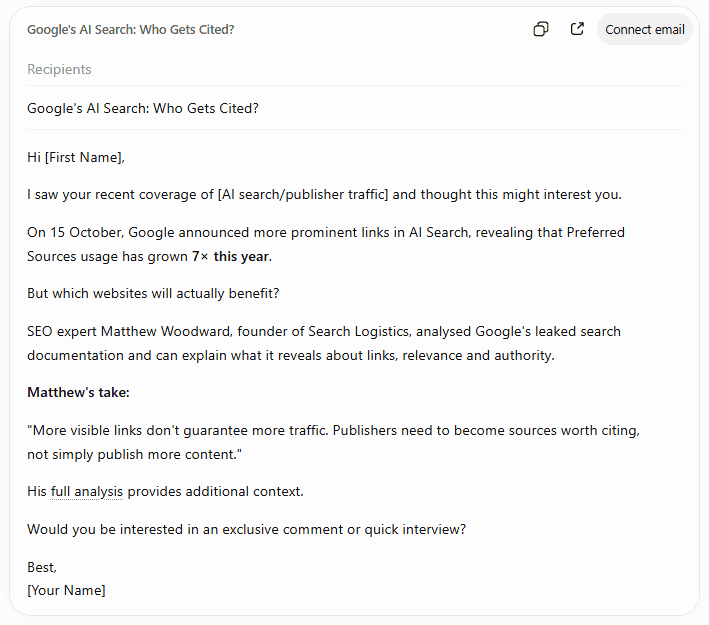
This should do most of the heavy lifting for you.
All you need to do is tweak it and hit send.
The truth is that shorter emails perform better.
Journalists are busy.
All they want to know is:
- Your story idea
- Why they should care
- Why it matters now
It should take them less than 30 seconds to read your email and have all the information.
Here’s what most people miss with outreach…
Your goal with the first email is not to get the journalist to cover your story. It’s simply to intrigue them enough to click on the link to your story.
Your content does the rest.
Keep your email short and straight to the point.
Focus on contacting each journalist rather than converting each journalist.
Follow Up Once With A Different Angle
Don’t make the mistake of following up too often.
It’s the fastest way to get your emails deleted and your address blocked.
62% of journalists say that following up once is appropriate.
Over 50% of journalists say they will block you if you follow up repeatedly.
Wait 4 to 7 days before you send your follow-up email.
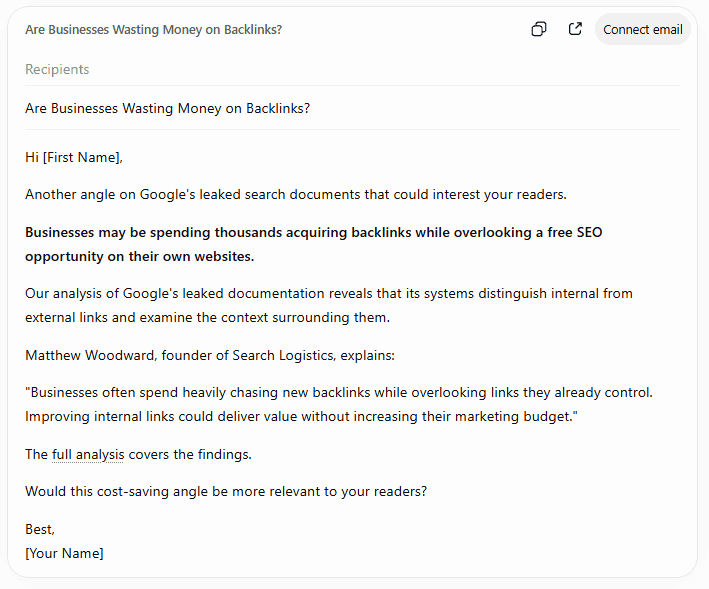
But don’t just send a “bumping this to the top of your inbox” type of email. This is exactly why you prepared multiple angles upfront.
Choose the next angle you think will work best for each email.
Then send them a personalised email using that new angle.
You’re essentially giving the journalist a fresh reason to care about your story rather than just a simple reminder email.
The reality is that most people don’t do this.
And that’s exactly why they aren’t successful.
It will help you stand out from the rest and increase the number of backlinks you get.
Don’t forget to track responses and links.
A lot of journalists won’t respond even if they use your story.
That’s why you need a tool like Ahrefs or Semrush to track every new backlink you earn.
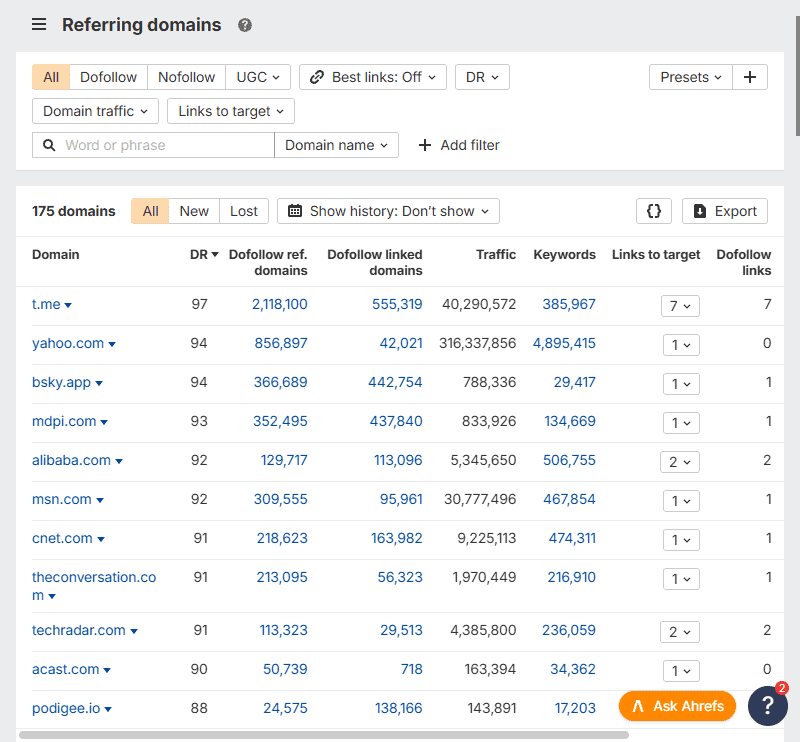
Keep a record of which journalists used your story and which angle worked.
Your goal is to become a trusted source.
The next time you pitch them, they already know you deliver.

How To Measure Your Digital PR Results
Measuring your digital PR results is an underrated part of your campaign.
But if you don’t measure results, how do you know what’s actually working?
And you should measure more than just the links themselves.
Here’s exactly what you should track to measure the success of your digital PR campaign.
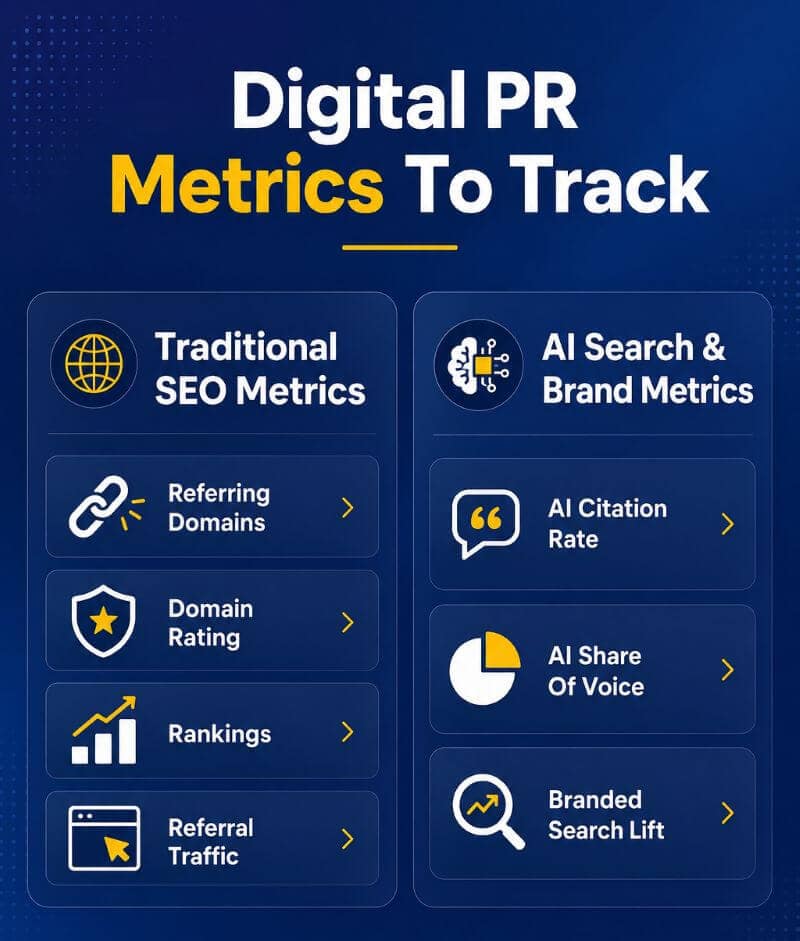
Traditional SEO Metrics
These are the baseline traditional SEO metrics you should be tracking:
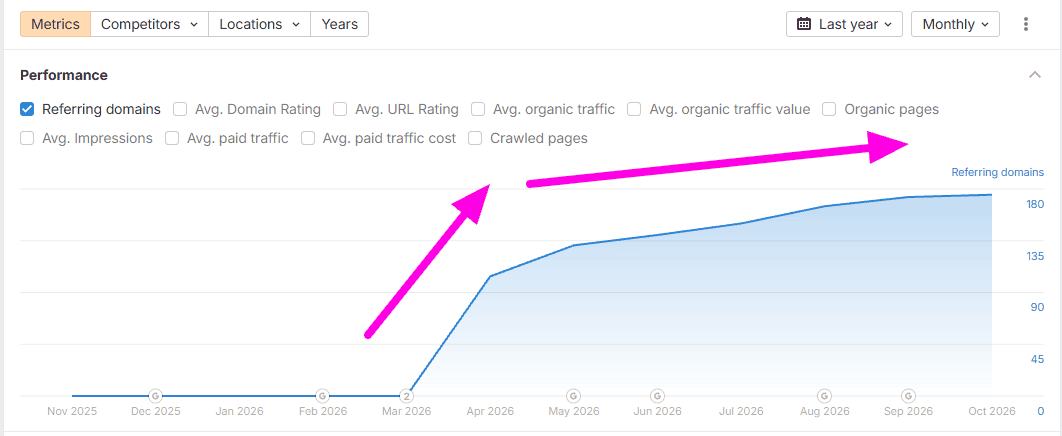
- Referring Domains: the number of individual referring domains you’ve gained during your campaign
- Domain Rating: increases to your Domain Rating on Ahrefs
- Rankings: effective digital PR campaigns tend to have a positive increase in rankings within 90 to 180 days
- Referral Traffic: the number of unique visitors that clicked on digital PR links you’ve earned to visit your site
Think of these metrics like your digital PR SEO KPIs.
They help you understand how effective your campaign has been, both in quality of links and the impact on your site.
AI Search & Brand Metrics
Only 16% of brands systematically track their AI search performance, according to McKinsey.
That is your opportunity. Most people aren’t tracking AI search as much as they should be.
The reality is that search is changing fast.
While traditional Google traffic still drives the majority of traffic online today, it won’t be like that forever.
37% of people now use AI search platforms like ChatGPT, Google AI Overviews, and Perplexity to start their search.
If you’re not paying attention to AI search visibility, you will get left behind.
Here are the AI search metrics you must track for your digital PR campaign:
- AI Citation Rate: the percentage of time your website is sourced or cited in an AI search
- AI Share of Voice (AI SoV): how often your brand is mentioned or recommended in multiple AI search tools for the same prompt
- Branded Search Volume Lift: the increase in searches for your brand online within 6 months of the digital PR campaign
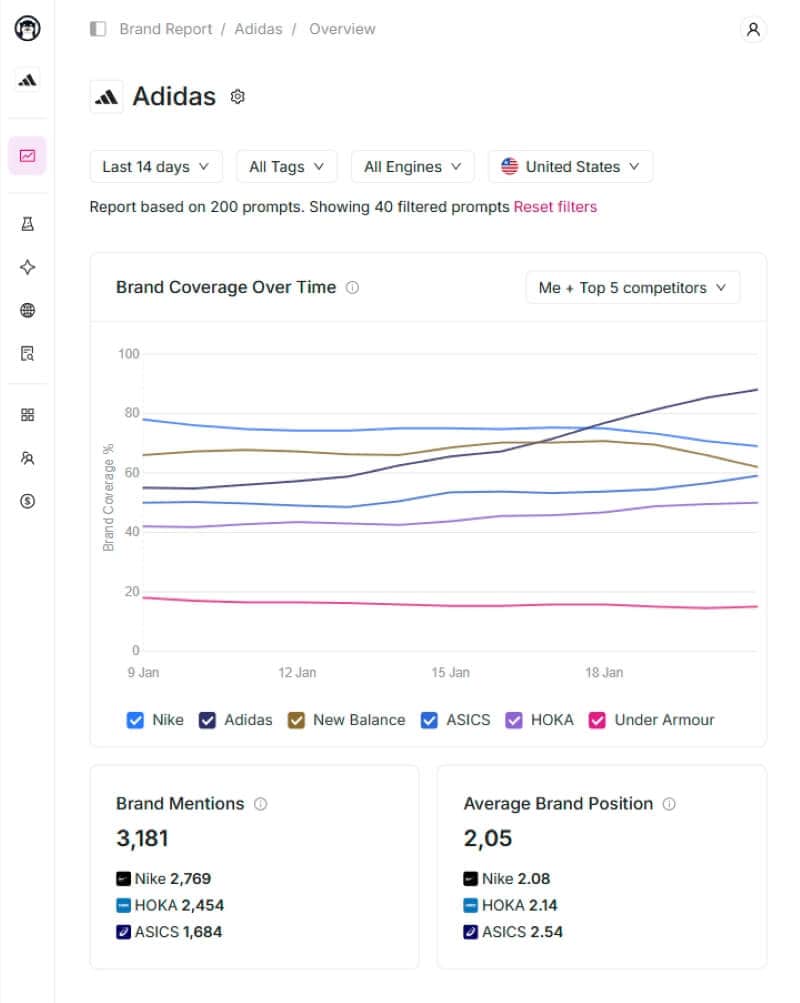
The best tools to track the AI-specific metrics are OtterlyAI and Profound.
These tools make it much easier to see how effective your digital PR campaign is at increasing your citations and references in AI search tools like ChatGPT, Gemini, and Perplexity.
But there’s one thing you should check first.
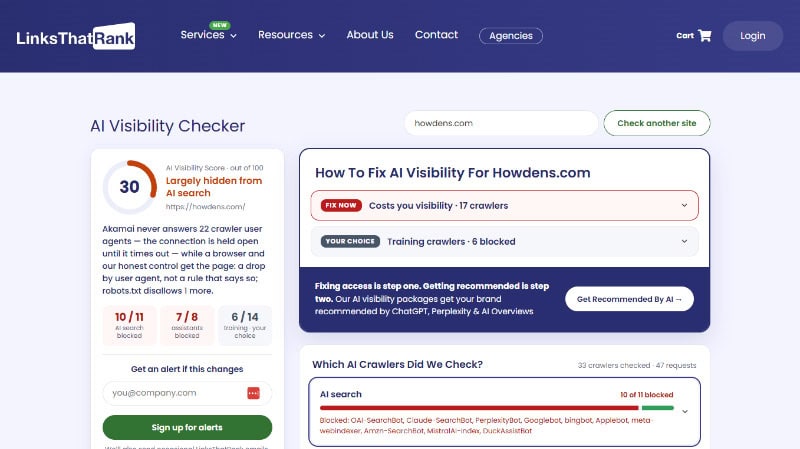
AI crawlers can’t cite pages they’re blocked from crawling, no matter how many digital PR links you earn.
And robots.txt isn’t the only factor. It can say “allowed” while your CDN or firewall blocks the crawler before it reaches your page.
Use our free AI Visibility Checker to see if any AI crawlers are blocked on your website. It tests 33 AI crawlers, including those used by ChatGPT, Claude and Perplexity, in about 15 seconds. Then it shows you what’s blocking them and how to fix it.
How Long Does It Take For Digital PR Campaigns To Work?
Short answer:
It takes 3 to 6 months to see meaningful, measurable results from your digital PR campaign. You may start to see minor spikes in traffic within 1 to 2 months, depending on your niche.
Here’s what you need to do:
Each month, record both your traditional SEO metrics and AI search metrics in a spreadsheet.
Don’t make any adjustments to your strategy for at least 6 months.
That’s how long it takes to accurately measure SEO ROI from digital PR specifically. If you try to calculate it too early, you won’t get an accurate result.

5 Mistakes That Quietly Kill Your Digital PR Results
Digital PR relies on building genuine authority through media relationships.
The truth is that even small mistakes can be the difference between successful campaigns and zero response.
These are the 5 mistakes that will quietly kill your digital PR results:
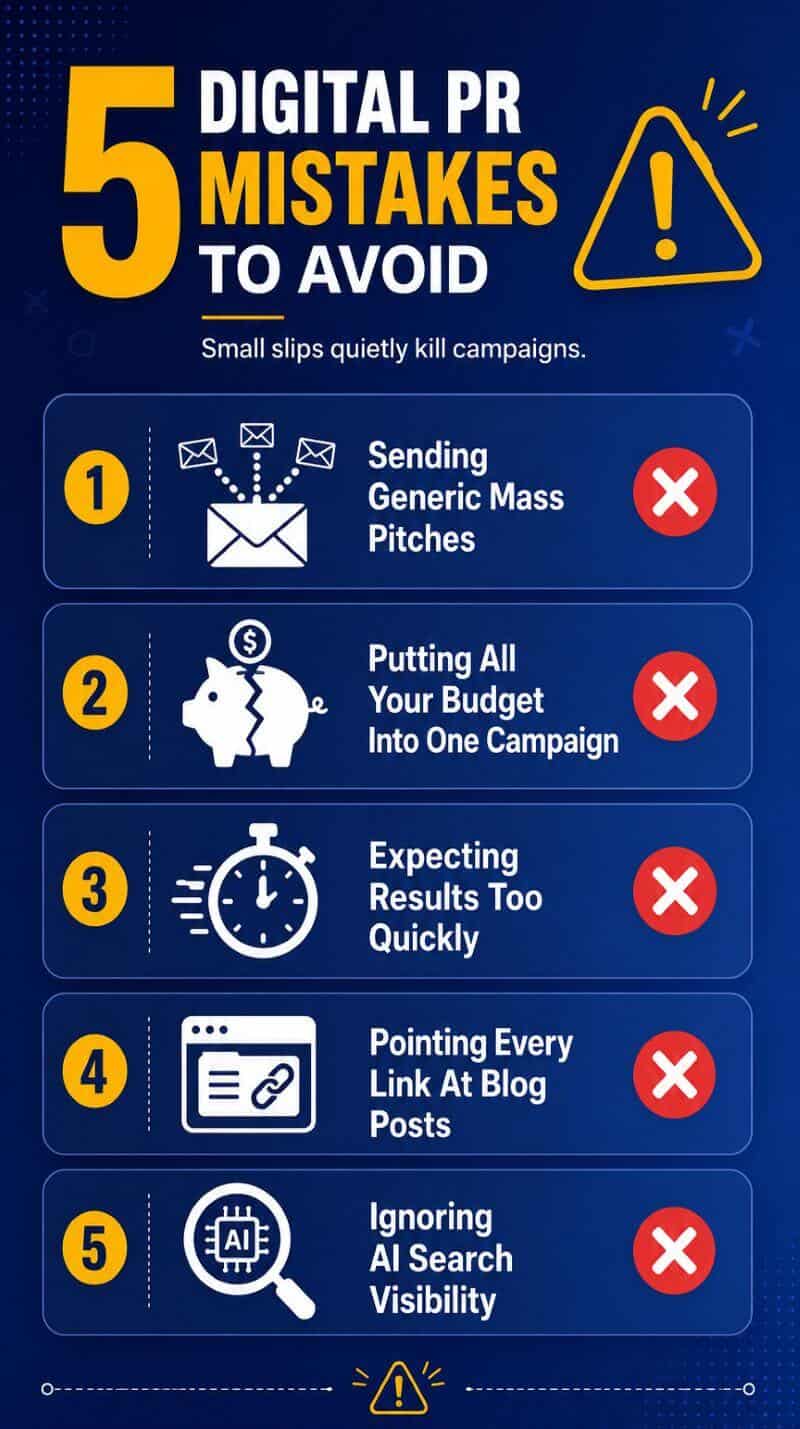
1. Sending Generic Mass Pitches
Generic spray-and-pray pitches are the fastest way to get your email address blocked and blacklisted by journalists.
Every pitch you send needs to be personalised.
This includes:
- Using the journalist’s name
- Referencing their work
- Connecting your story to them
- Giving them a unique angle
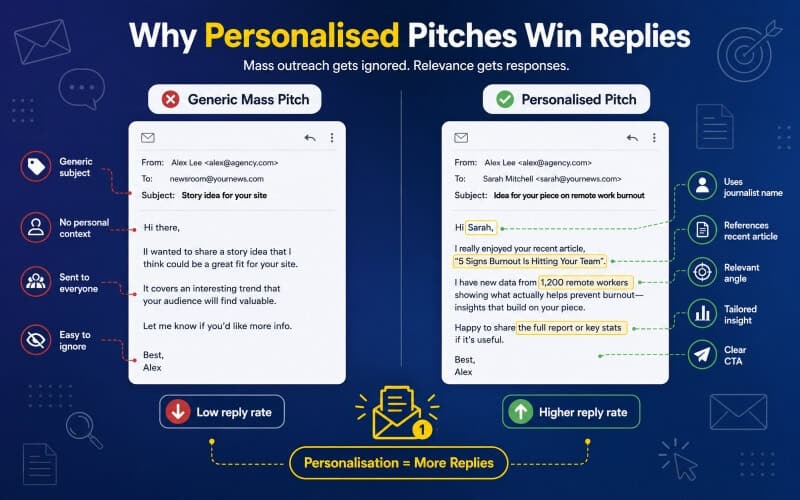
Keep in mind that journalists receive hundreds of email pitches every day. Most of them are simply looking to get something from the journalist.
Don’t be like everyone else.
Give them a unique, personalised pitch that leads with value.
That’s how you’ll get their attention and ultimately earn more links.
2. Putting All Your Budget Into One Campaign
Here’s the truth:
Not all digital PR campaigns are successful.
It’s not always possible to predict which stories and responses will land, and which won’t.
That’s why you have to be strategic.
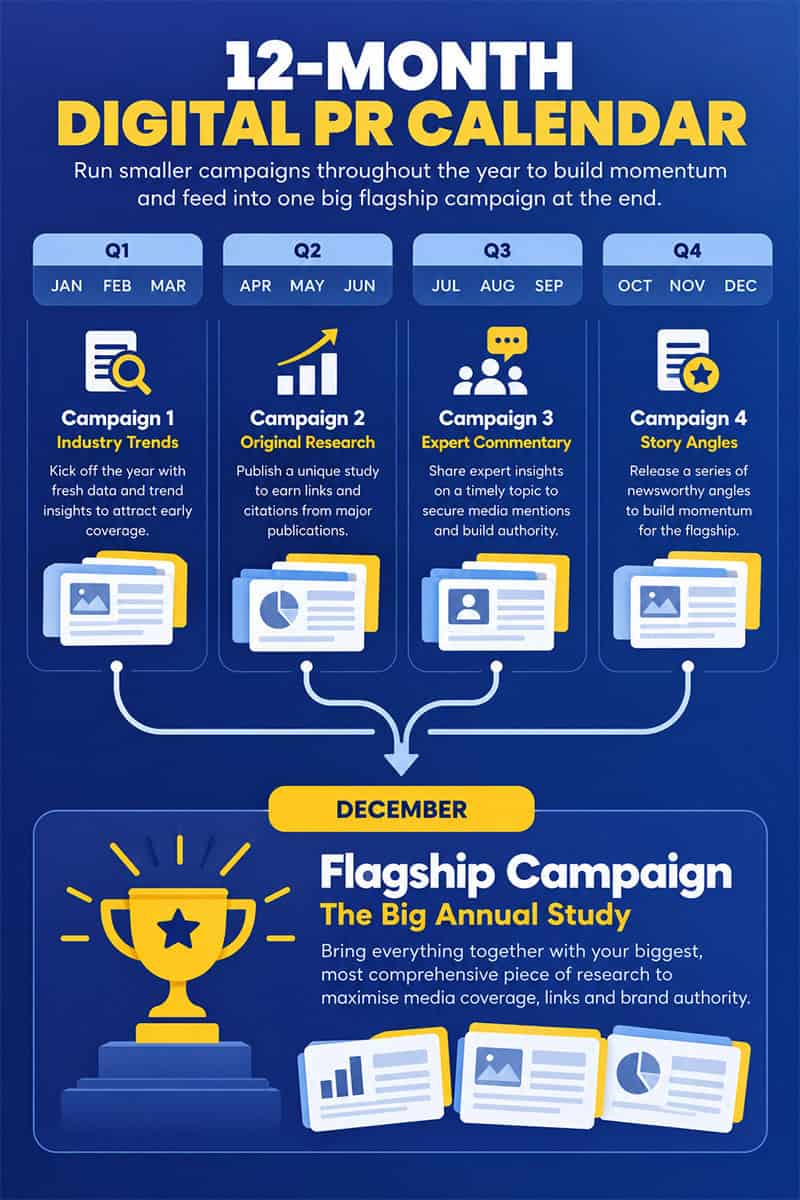
If you have a limited budget, don’t put all your eggs in one basket. Split your budget among multiple campaigns.
You only need one digital PR campaign to be successful and see significant results.
I recommend planning 3 to 4 campaigns throughout the year. Then consolidate all of the results into one flagship campaign at the end of the year. That’s how you get the best ROI on your time, effort and investment.
3. Expecting Results Too Quickly
Digital PR is a long-term SEO strategy.
It takes time to build relationships with journalists and work out exactly what types of stories they’ll run with.
After you start getting traction with your first campaign, it will take 3 to 6 months to measure the results accurately.
Don’t try to accelerate this process.
Set realistic expectations from the start and stick to the process until you get results.
4. Pointing Every Link At Blog Posts
Editorial links from major publications are some of the most powerful links you’ll ever earn.
It can be tempting to just point them at individual blog posts that drive targeted traffic.
But that is short-sighted.
Whenever possible, point digital PR links at:
• Product pages
• Category pages
• Landing pages
• Homepage
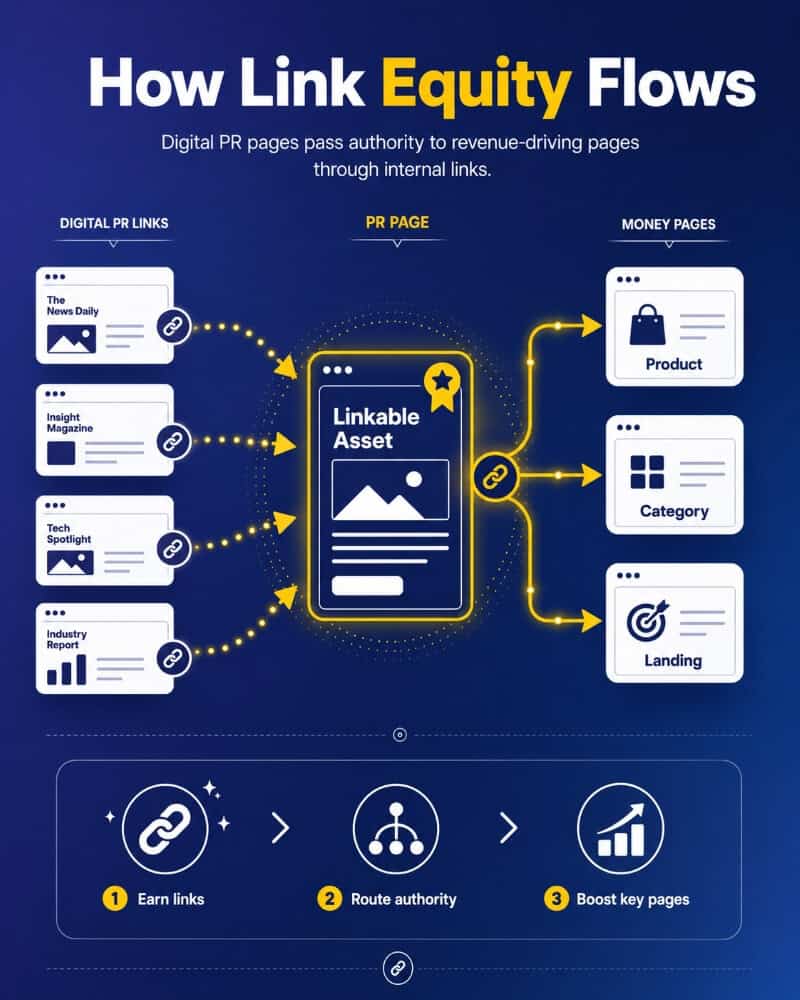
These are ultimately the pages that you want to surge in terms of authority, rankings and AI search citations.
The reality is that you’re often at the mercy of the journalist when it comes to digital PR link building.
They will choose the page they cite as a source.
But when the opportunity presents itself, be strategic in which page you build links to.
Pro Tip: Build internal links from pages with the most digital PR links to your money pages. This passes link equity and referral traffic through to your most valuable pages.
5. Ignoring AI Search Visibility
Running a digital PR campaign without tracking your AI search metrics means you’re missing out on measuring at least half of your ROI.
AI search tools like ChatGPT, Perplexity and Google AI Overviews are now a significant source of brand visibility and referral traffic.
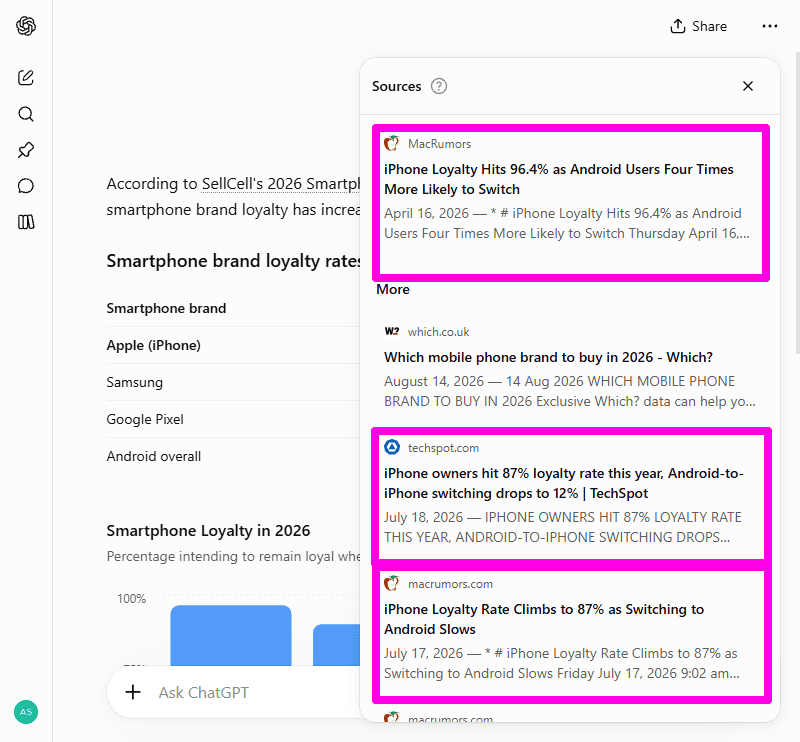
Here they cite a study directly:
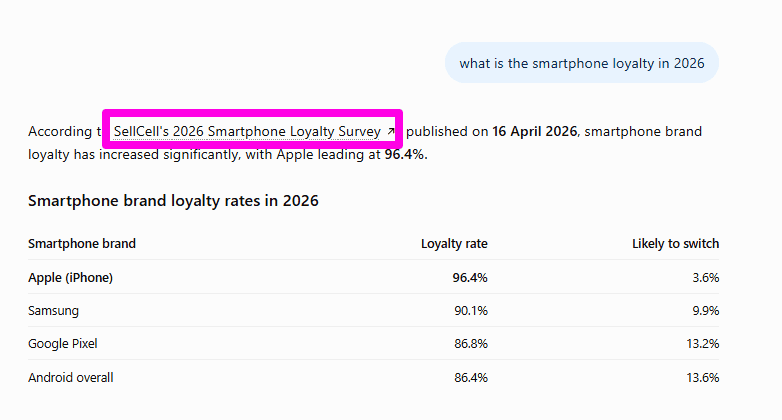
And the sources feature validation of coverage for the study:
Digital PR can directly impact how often your brand gets cited in these tools.
That’s what makes digital PR so powerful as a link building strategy.
But you need to track results to see how it’s impacting your brand visibility.
AI search isn’t a trend. It’s a significant shift in how search and the internet as a whole operate.
Spend the time setting up tracking now.
Not only will it help you improve your digital PR campaigns, but it will also give you a leg up on your competitors.

The Biggest Weaknesses of Digital PR Backlinks
There’s no doubt that digital PR helps you earn powerful links that build brand authority.
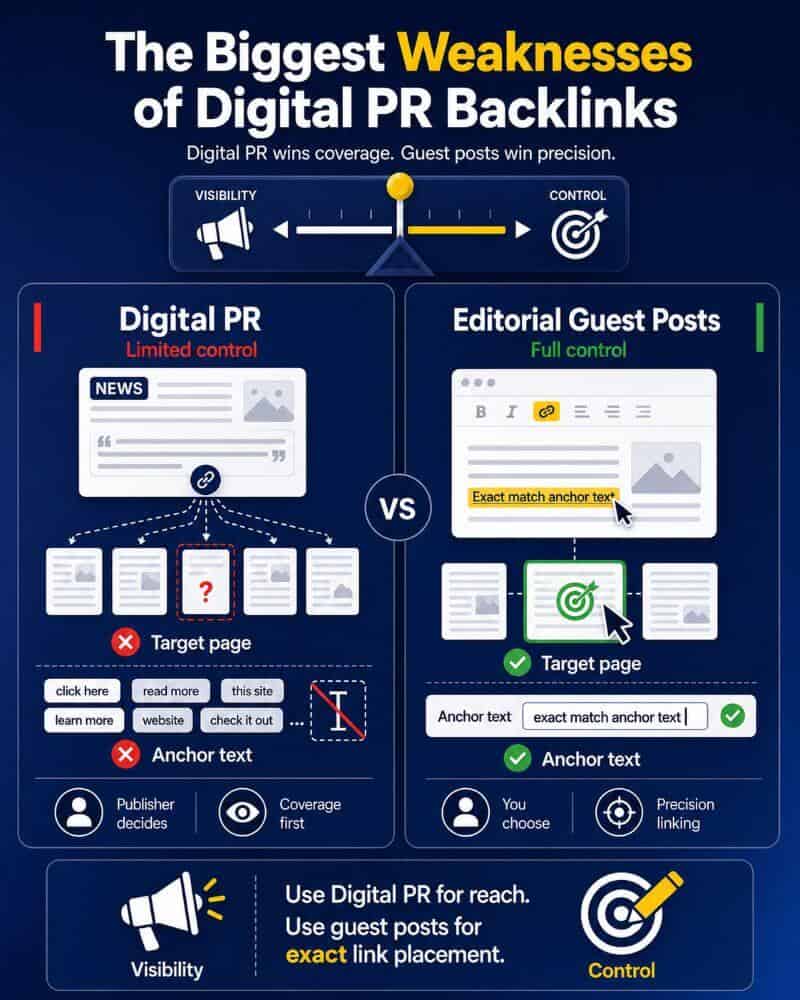
But there are 2 things you never have control over:
- The page the journalist links to
- The anchor text they use
The journalist might link to your homepage or your content page. But it’s very hard to get them to link to a service page or a money page.
At the same time, they typically use branded or generic anchor text. It’s essentially impossible to get them to use targeted anchor text.
That means digital PR alone will never give you full control over your link profile.
How do you solve this problem?
That’s where LinksThatRank comes in.
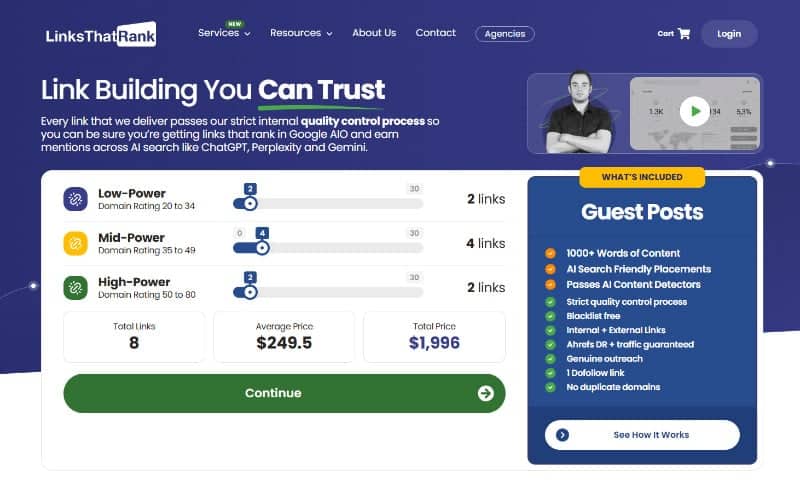
We build contextually relevant, editorial guest post links designed to increase your brand authority, rankings and AI search visibility.
Every link that we build is:
- Placed on a real site, relevant to your industry
- Placed with 1,000+ words of quality content
- Human-written and verified with Pangram and GPTZero
- Guaranteed not to be a PBN, link farm or spammy site
- Checked against our backlink blacklist of 84,285 domains
- Passed through our strict 23-point quality control checklist
Every link is built to that standard, including a check against our backlink blacklist. That’s how you only get quality backlinks that deliver real results.
All you have to do is choose the links you need, tell us your target URLs, and our team will take care of the rest.
See the results for yourself and place a test order with LinksThatRank.

Wrapping It Up
Digital PR is one of the most powerful link building strategies available right now.
It helps:
- Build authority
- Increase rankings
- Improve AI search visibility
But consistency is everything.
The brands that are winning with digital PR have a strategy that consistently allows them to earn quality links from major media publishers.
Pick one of the four strategies that makes the most sense for your brand.
Then follow the process until you start getting results.
Start with reverse digital PR if you want links to keep flowing in without constant outreach.
You can create your own statistics page, or have our team build a done-for-you statistics page.
While that page gains traction, use the source request strategy alongside it for some quick wins. It’s very simple to execute and will help you earn digital PR brand mentions consistently.
After that, you can start working on a data-led or thought leadership campaign.
Want high-authority backlinks without all the hassle?
Let our specialist team at LinksThatRank plug the gaps that digital PR leaves behind.

Every link we build passes our strict 23-point quality control checklist and gives you full control over the target page and anchor text.
- Authority Asset™ – Digital PR links from journalists & bloggers
- Listicles – Buyer-intent visibility + AI citations
- Reviews – Brand trust + AI answers
- Guest Posts – Ranking target pages in search engines
- Discounted Packages – Up to 17% off monthly links
- Link Inserts – Domain authority without new content
- Agency Account – 15% off our products for client campaigns
- Content Writing – Buy human verified by Pangram and GPTZero
Choose the links you need, and we’ll take care of the rest.
Frequently Asked Questions
How long does digital PR take to show SEO results?
Digital PR typically takes 3 to 6 months to produce meaningful results. You may see results within the first 30 to 60 days. It’s important that you don’t try to measure your digital PR campaigns too early, so you can accurately calculate the SEO ROI from the campaign.
What does a realistic digital PR budget look like in 2026?
A typical digital PR campaign with a professional agency costs between $5,000 and $15,000 per campaign. If you choose to do it yourself, a campaign can cost as little as $200 (ahrefs content explorer for building a list, hunter for finding emails, mailshake for sending, Claude for the datawork). The costs for a DIY digital PR campaign are usually only the tools you need to execute the campaign correctly.
Can AI replace digital PR outreach entirely?
AI can speed up the research, pitch writing, and personalisation of digital PR outreach. But it can’t replicate the entire outreach process completely. Journalists respond to relevant, human insights from real people. AI tools that mass-send outreach emails are easily filtered out. Use AI to assist your outreach process, but don’t completely automate it.
Is digital PR the same as press release distribution?
No, digital PR is not the same as press release distribution. Digital PR is a targeted, story-driven outreach process designed to earn genuine editorial coverage and backlinks from major publishers. Press release distribution is a generic blast of an article to a broad list of sites that are usually low-quality.
Do unlinked brand mentions still count for SEO?
Yes, unlinked brand mentions can still count towards your SEO as entity signals. But they aren’t as effective as getting linked brand mentions. A brand mention is only effective for SEO if Google or AI search tools like ChatGPT, Gemini, and Perplexity can attribute that mention back to your brand. A link to your brand name makes it easy for them to do that.