
Earned media accounts for the vast majority of AI citations, and brand mentions correlate with AI visibility 3x more strongly than backlinks do.
Digital PR is how you earn those mentions. Run original research, publish the results, and pitch them to the exact publishers AI is already citing.
Do it consistently and you build the brand trust AI search tools reward.
Use our free tool to check your AI Visibility before continuing.
Digital PR for AI search changes the goal from building backlinks for authority to entity building and brand trust.
AI platforms like ChatGPT, Perplexity and Google AI Overviews use information from what other sites say about you, not just what you say on your own website.
Here’s the truth:
You can publish quality blog posts on your website each day and still never get recommended by an AI search tool.
Why?
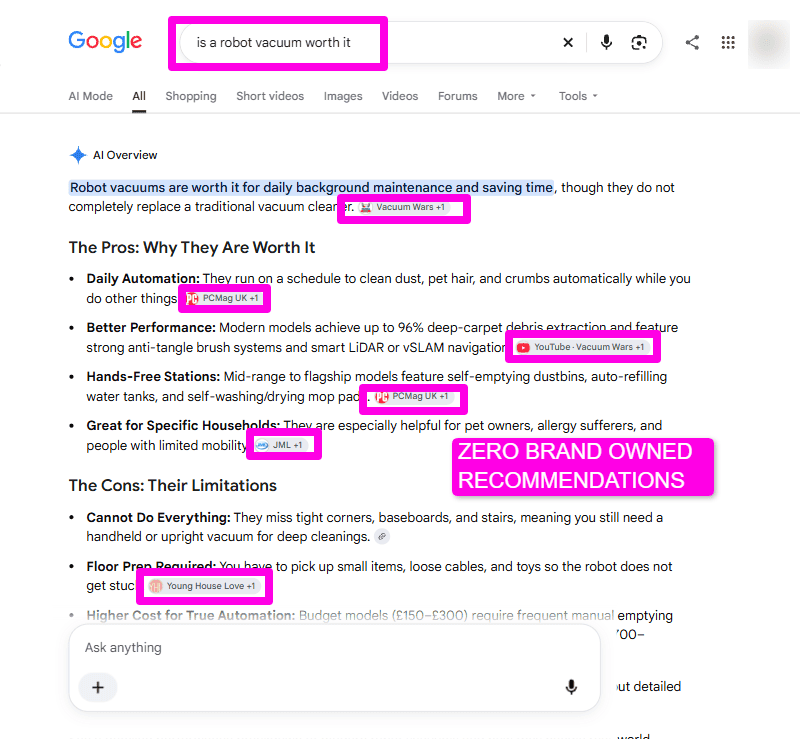
Because AI search engines build their answers from third-party sources. They recommend businesses that have strong reputations online.
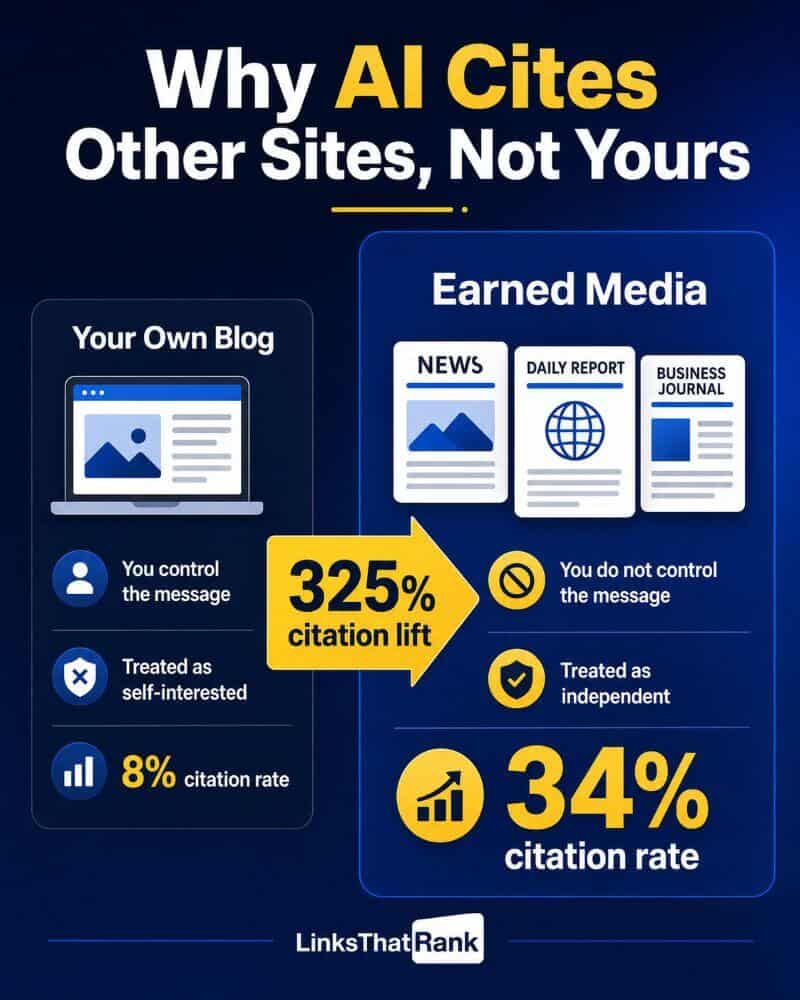
That’s why brand mentions correlate with AI visibility 3x more than traditional backlinks do.
Put simply: if you want to get cited by AI search tools, you need to start earning brand mentions from trustworthy sources now.
And the best way to do that is with digital PR.
In this blog, I am going to explain why digital PR is so important for ranking in AI search, how to run your own digital PR campaign and exactly how to measure success.
Why AI Platforms Cite Earned Media Over Your Blog Posts
Earned media now accounts for the vast majority of citations and mentions in AI answers.
Our analysis of AI citation data found that earned media accounts for 82% to 90% of all AI citations.
And that’s not all…
Stacker and Scrunch ran their own controlled study.
They wanted to measure how often AI cited the same articles on a brand’s own domain vs third-party sites.
The result?
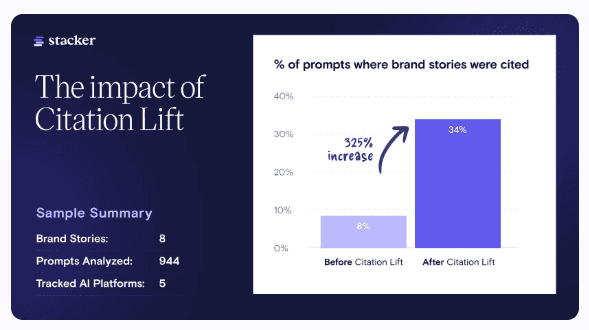
Brand's own site: 8% citation rate
Distributed across third-party sites: 34% citation rate
Overall lift: a 325% increase, from where the content was published alone
Here’s why:
AI platforms view your own blog posts as self-serving. You can say and publish whatever you want about yourself.
But that’s not the case with earned media…
A positive mention on another website is something you don’t directly control. That’s why AI systems trust mentions on other sites more.
Think about it like this:
If a pizza restaurant claims to have the best pizza in town, do you believe it?
No, because every pizza restaurant claims the same thing.
But if you read 100+ reviews saying it’s the best pizza restaurant in town, that’s a different story.
The only difference is who is making the claim. AI works the same way.
And that’s why earned media beats your own content for trust in the eyes of AI.
What about backlinks?
Ahrefs’ study of 75,000 brands found that brand mentions correlated 3x more with AI citations than backlinks did.
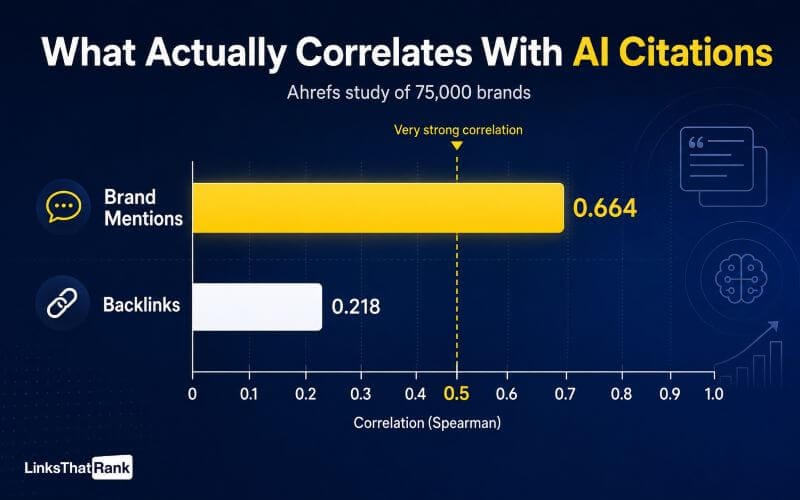
The study showed that brand mentions scored 0.664 in terms of correlation for AI citations, whereas backlinks scored 0.218.
For context, a correlation of 0.5 or higher is considered very strong.
Crazy, right?
Here’s how earned media stacks up against your own published blog posts:
| Your Posts | Earned Media | |
| Share of AI citations | Small minority | 84% of all citations |
| Citation rate, same article | 8% | 34% |
| Why AI weights it | Treated as self-interested | Editorial independence, fact-checking, and track record |
| Off-page signal strength | Backlinks correlate 0.218 with AI visibility | Brand mentions correlate 0.664 |
| Best use | State your facts cleanly | Get those facts into AI answers |
Does that mean you shouldn’t publish content or build links?
No, not at all. This is actually where link building gets interesting.
Let me explain:
If you build a brand-mention guest post link, you’re killing two birds with one stone. You get the brand mention AI wants to see, and you get the natural authority that flows from it.
Want to go one step further? A brand mention review gives you a whole independent article about your business on a relevant publisher’s site.
The most important thing is that you build the brand mention link on a trustworthy site with real readership.
Backlinks still matter for AI. But the site that it’s placed on and what it says about your brand matter more than the link itself.
That’s where digital PR comes in…

How to Do Reverse Digital PR to Get Media Citations on Autopilot
Most people associate digital PR with outreach.
You come up with a story and pitch it to journalists.
Sure, it’s effective. But there’s one big downside…
You have to chase every single link.
You do the research, build a pitch list and email journalists. If they like your story, you get the coverage and the link.
But your links only last as long as your campaign.
As soon as you stop pitching, the links stop coming. To get new ones, you have to do it all over again.
Traditional digital PR is like running on a treadmill. When you stop, so do the links.
Reverse digital PR lets you earn links without any outreach.
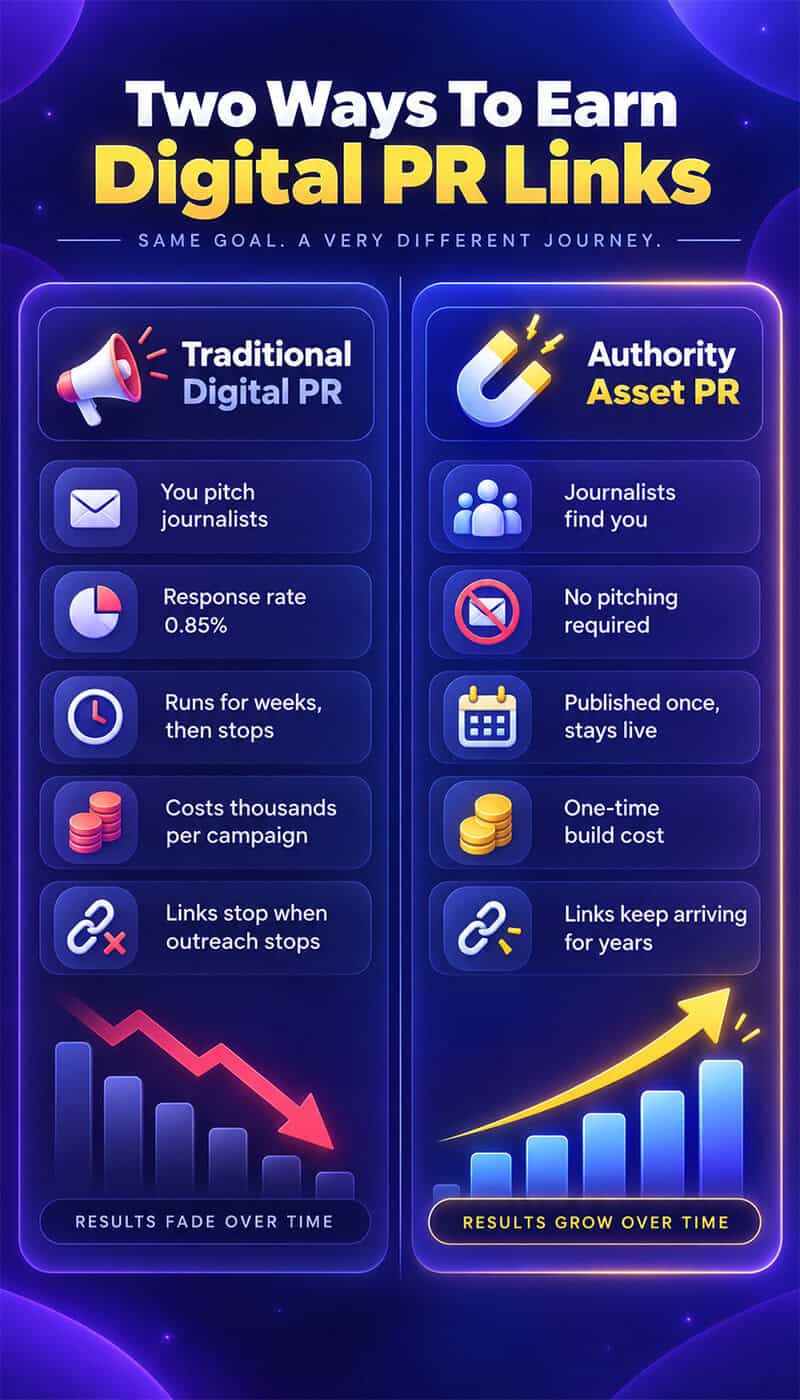
You create a page on your website that journalists are already searching for: a statistics page.
When a journalist needs a statistic for an article, they search for it, find your page and use it as their source. No pitch, no follow-ups.
And because every news cycle creates fresh demand for data, the page can keep earning links long after you publish it.
AI search tools love these pages too. They only need to read one page to gather everything for their answer.
Here’s the proof:
Search Logistics' TikTok user statistics page has earned 400+ referring domains with zero outreach, including Forbes, Fortune and the LA Times.
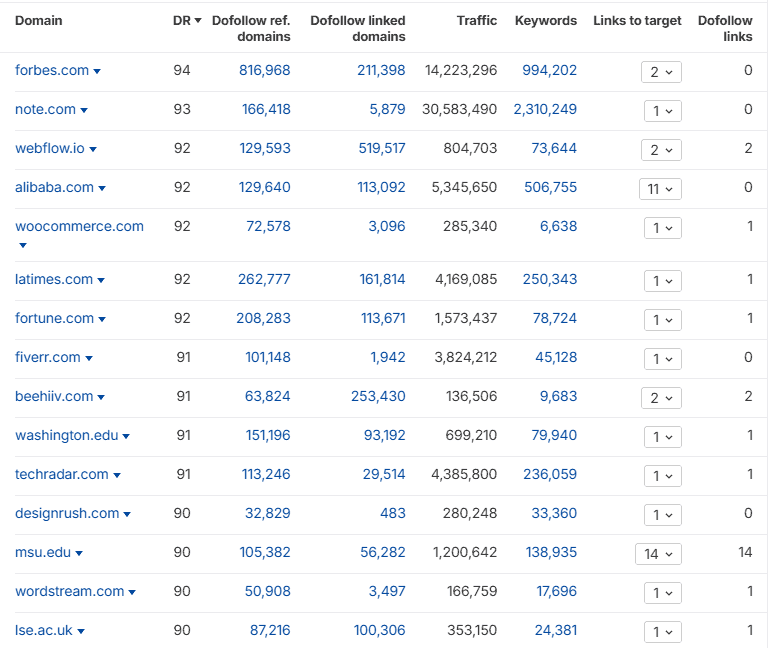
That’s what our Authority Asset™ service does for clients.
We create a statistics page for your niche, complete with graphics branded to your company and Dataset schema.
You host it on your own website and own it forever.
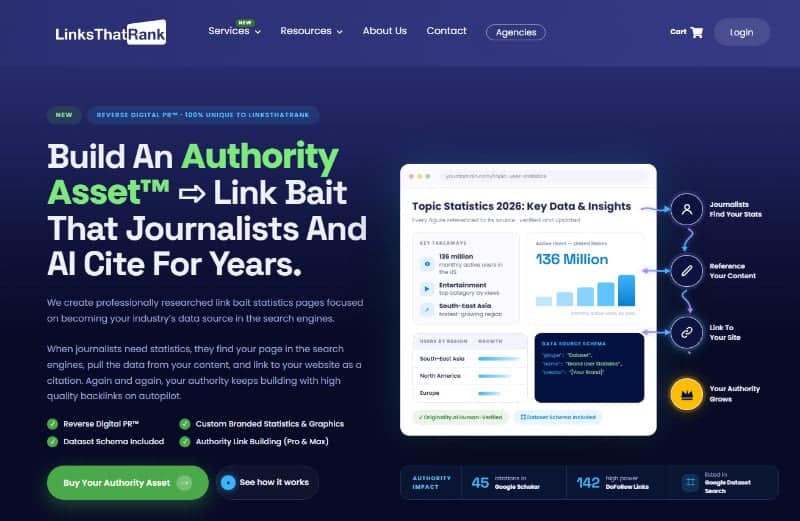
Want to build one yourself? Check out our step-by-step guide to building a linkable asset that earns links without outreach.
Of course, you can still do both. Here’s how to run a traditional digital PR campaign alongside it…
How To Run A Digital PR Campaign That Earns AI Citations
Ready to run your own digital PR campaign?
Use this step-by-step process to create a digital PR campaign that naturally earns AI citations and powerful brand mention backlinks.
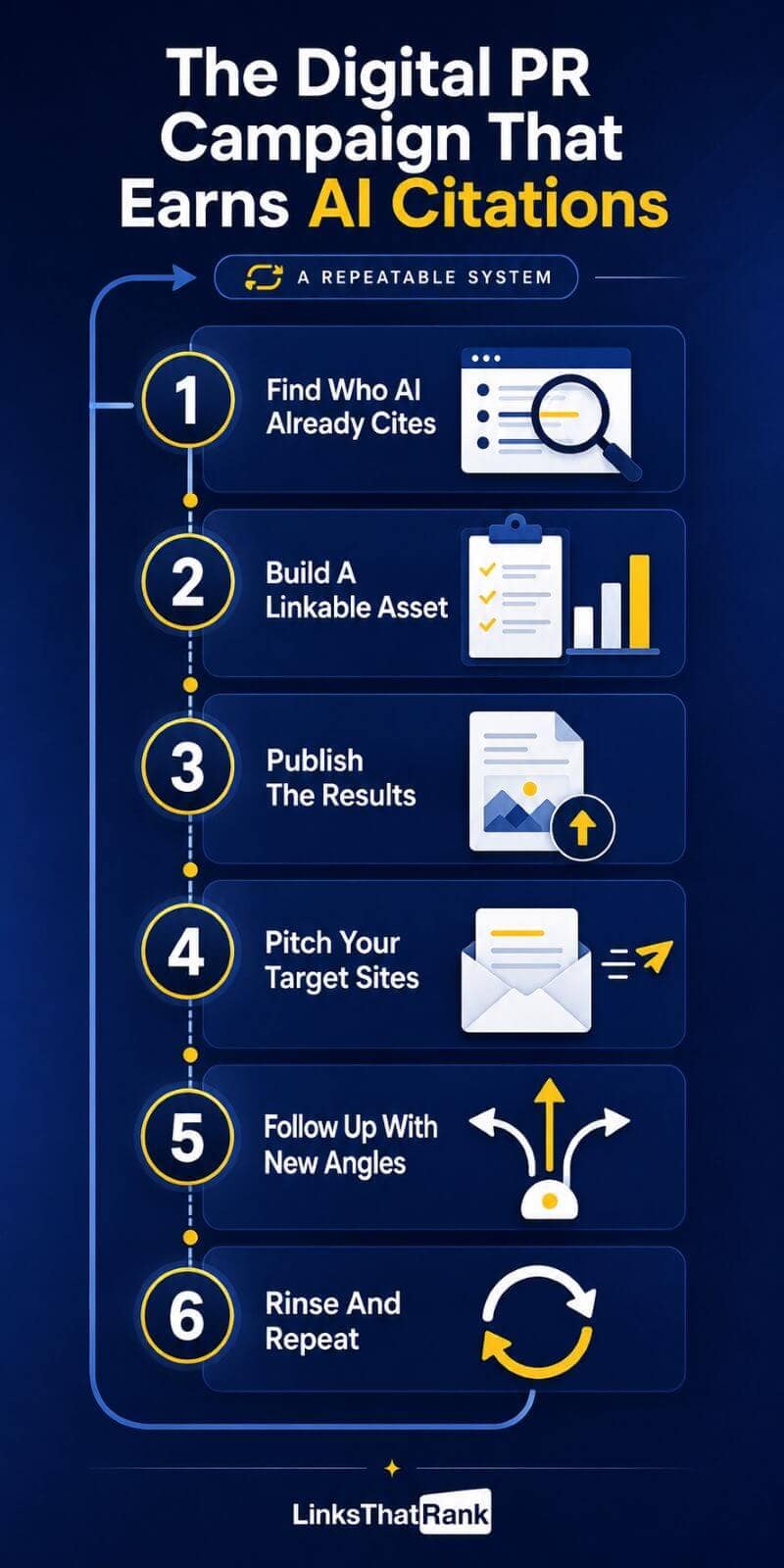
Step 1. See Which Websites AI Is Already Citing
List 5-10 search queries for your business. Make sure they’re commercial keywords that can actually bring you money.
Then let AI do the work for you.
You could spend hours running each query by hand and copying every source, but why would you? Use ChatGPT (with search switched on) and Perplexity, and give them this prompt:
“Search the web for each of these queries separately: [PASTE YOUR 5-10 QUERIES]. For each query, list every source you would cite in your answer. Return one table with these columns: query, cited URL, domain, publication name and type of site (news, magazine, blog, review site, forum or brand site). Then give me a second table that ranks every domain by how many of the queries it was cited for.”
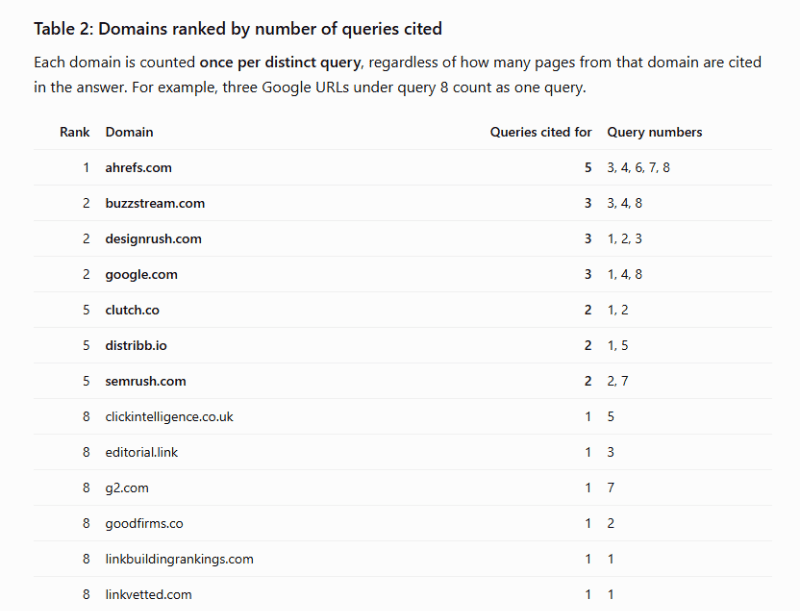
Run it on both platforms, then quickly check Google’s AI Overviews for your top three queries.
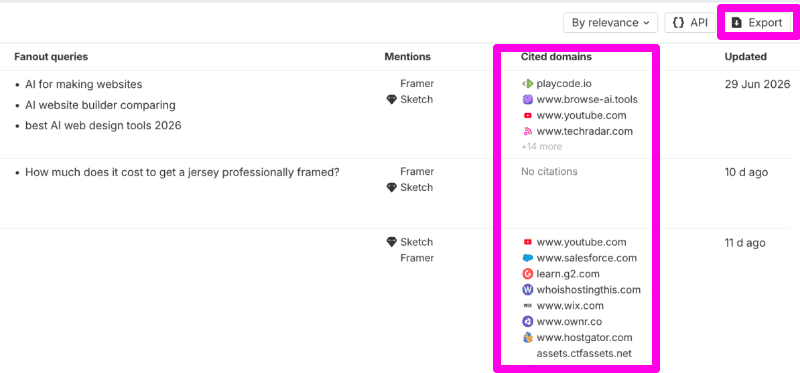
Using Ahrefs?
Its Brand Radar reports show which domains AI platforms cite when answering questions about your topic and competitors. No prompts needed.
Now sort your list:
- Cited for 3+ queries: priority targets
- Cited for 1-2 queries: second wave
- Brand sites and forums: skip
These are your target websites for later. The major AI platforms already cite them.
That means LLMs see them as reliable sources. A link from these sites gives your own brand a better chance of being cited.
Step 2. Create A Linkable Asset With Original Data
Now for the important part.
AI loves original research and data.
Creating high-quality content from your own research is one of the best ways to get cited and build powerful brand-mention links at the same time.
And it’s easier than you think.
Start by brainstorming angles that naturally attract people’s attention.
The two ways to do that are:
- Look at Google Trends or Google News in your niche to see what’s trending
- Come up with common misconceptions that people think are true
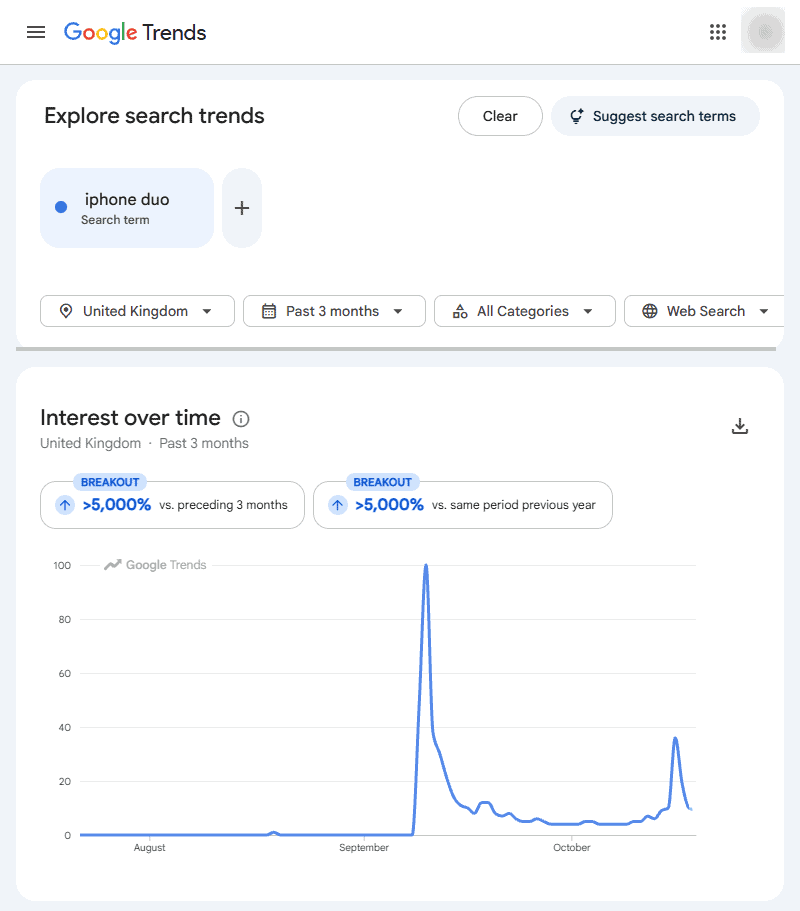
I recommend doing some research online on places like Reddit to understand what people are talking about.
The goal is a naturally newsworthy story or research that you can run.
For example, let’s say you run a moving company.
Good topics might include:
- Moving Back in With Your Parents Is No Longer a Failure, It’s a Wealth Strategy
- We Priced a $19.95 Moving Truck in 10 US Cities. None Cost $19.95.
- 10 Top Cities That Families Are Moving To In 2026
- We Surveyed 500 Homeowners. Here’s How Much It Really Costs To Move
These topics work because they grab your attention. You can’t help but click through to see what the story is about.
And that’s the important part.
If you’re struggling to find a topic, use this prompt:
“I run a business in the [your industry] niche. I am creating a digital PR campaign to earn natural citations and links from large media publishers. List 10 topics that are likely to go viral and that people want to read naturally. Think about misconceptions or counterintuitive topics that naturally go against what people believe.”
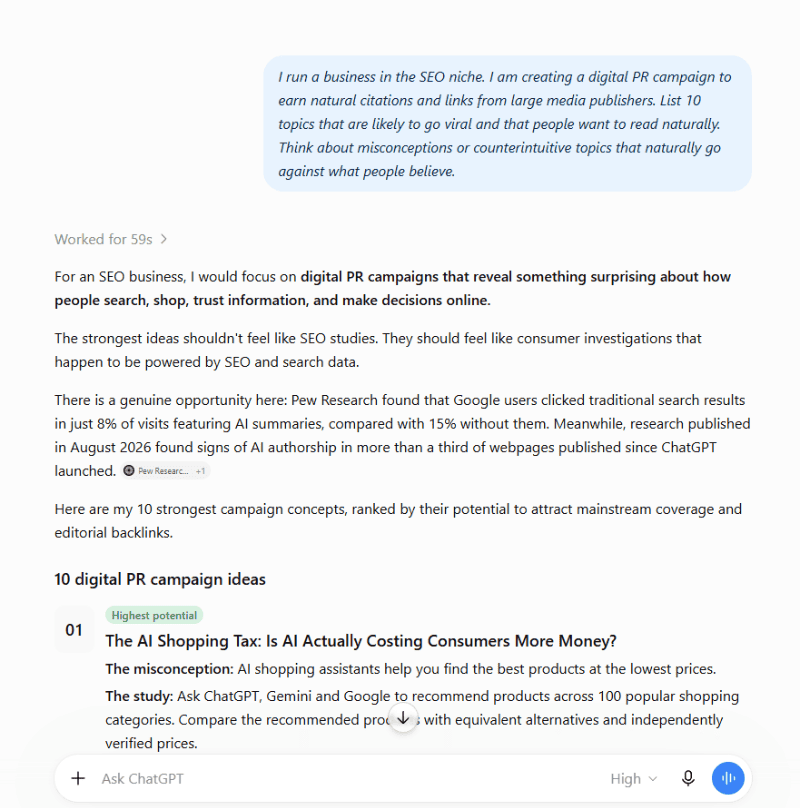
Cool, right?
AI and journalists love data. But the reality is that a story is the reason that you’ll earn links.
The data simply needs to prove the story you’re telling.
How do you get your data?
You have two options:
- Conduct your own original research
- Use publicly available data
Both can work. If you use publicly available data, you can’t just cite the data and publish.
You need to add value by drawing out a conclusion or doing your own analysis to create something unique.
I’ve found that original research is always better because it’s your own data. No one else has it, and they have to cite you as a source if they ever use it.
That’s exactly what you want.
But it also depends on your chosen topic and niche.
How do you get your own data?
Short answer: Survey your audience.
Use this prompt to create a survey in seconds:
“I want to create a mini-study about [ADD YOUR TOPIC] that generates 5-10 citable findings for journalists. Provide: (1) Methodology, (2) Specific survey questions or data points to collect, (3) Analysis plan for meaningful findings, (4) Key findings framework with headline-ready statements journalists would cite, (5) Visualisation suggestions for shareability. Make it achievable within a short timeframe.”
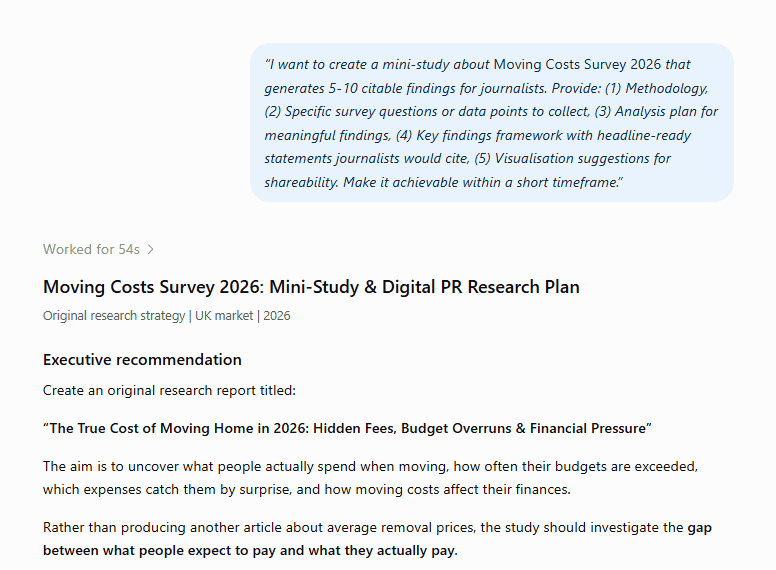
Fine-tune the results and add any questions you think the survey is missing. The goal is to have a 5-10 question survey that will naturally draw out insights that people will want to read.
Spend the time getting this right.
The better your survey, the better the data and story.
That means more citations and backlinks.
Use a tool like Google Forms or Typeform to run your survey and collect your results.
Then send the survey to your email list and publish it on your social media channels.
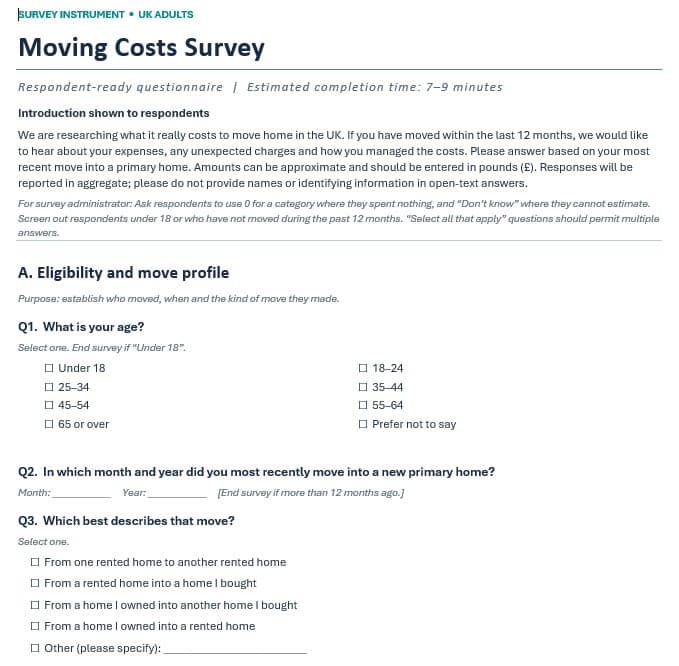
Don’t have a big enough audience?
Use a platform like Pollfish to run the survey on. You simply pay per response and still get the data you need.
200 to 300 responses are all you need to have statistically significant data.
Step 3. Publish The Results On Your Website
Collected your data?
The next step is to publish the results on your site.
Here’s what most people don’t understand:
Original research isn’t like a normal piece of content. You’re creating a page that AI naturally wants to cite.
The good news is that AI can extract your findings quickly.
Use this prompt:
“Here is my study data about [TOPIC]: [PASTE DATA SUMMARY]. Identify the 8-10 most interesting, surprising, or newsworthy findings. For each: (1) Write a headline-ready statement for news articles, (2) Provide the specific supporting data point, (3) Explain why this finding is significant, (4) Suggest what type of article might cite it. Focus on findings that would make journalists say ‘I want to write about this.'”
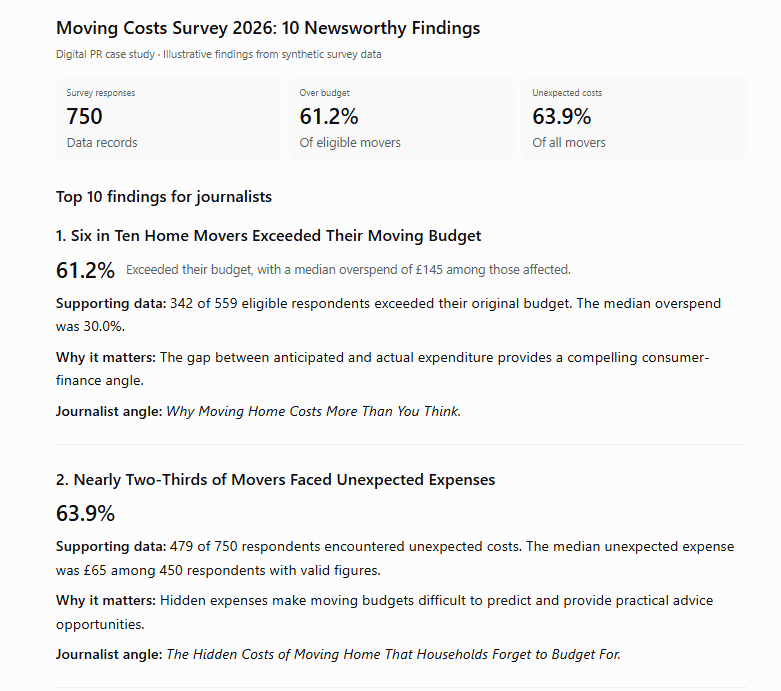
Simple, right?
This prompt should give you the top 8-10 points that are worth publishing.
Start by listing your biggest finding at the top of the post.
This is like your attention getter and should represent information that people will be most interested in.
It should have:
- An attention-getting heading with your main finding
- The statistic that backs up what you’re saying
- 3-sentence explanation of the point
- 1-2 supporting points or data from the study
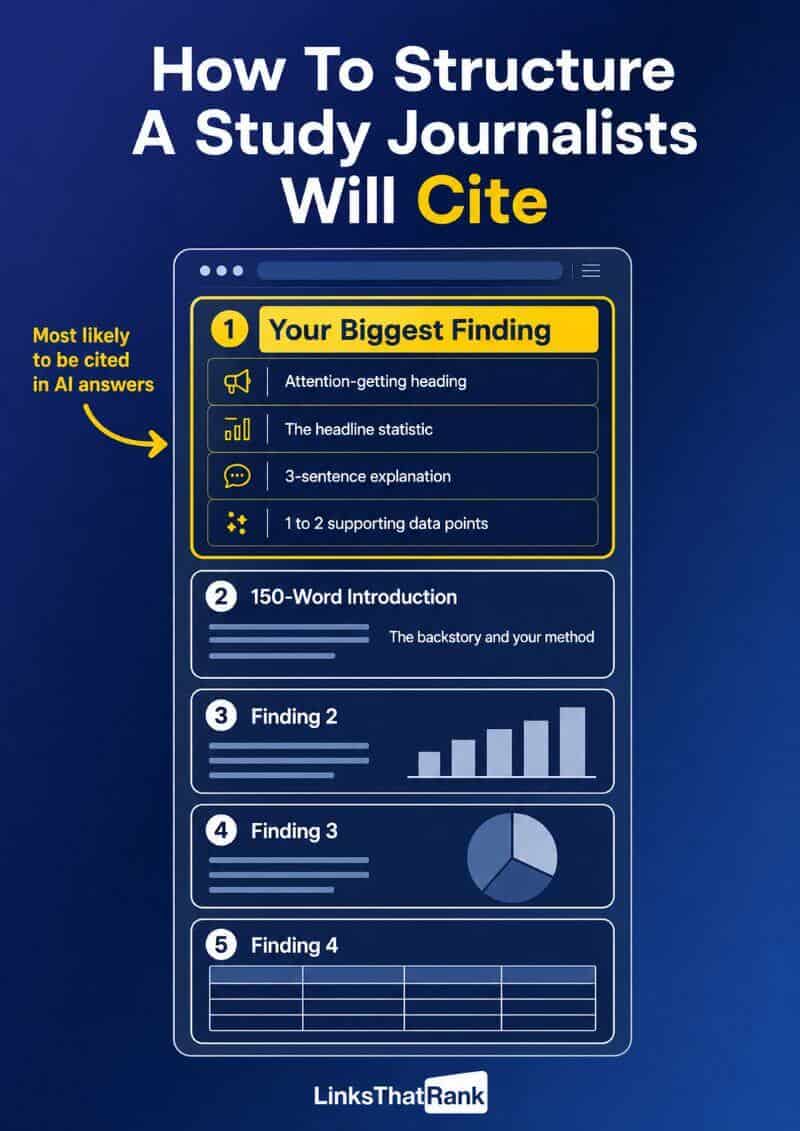
This is the most important part of the whole write-up.
Why?
Because this section will mean the difference between whether a journalist covers your results or moves on. It’s also the section that is most likely to be cited in AI answers.
You need to get your readers’ attention.
Done with the first section?
Write a short 150-word introduction.
This is the backstory behind why you chose to research this topic. It should also explain what you did to gather the research.
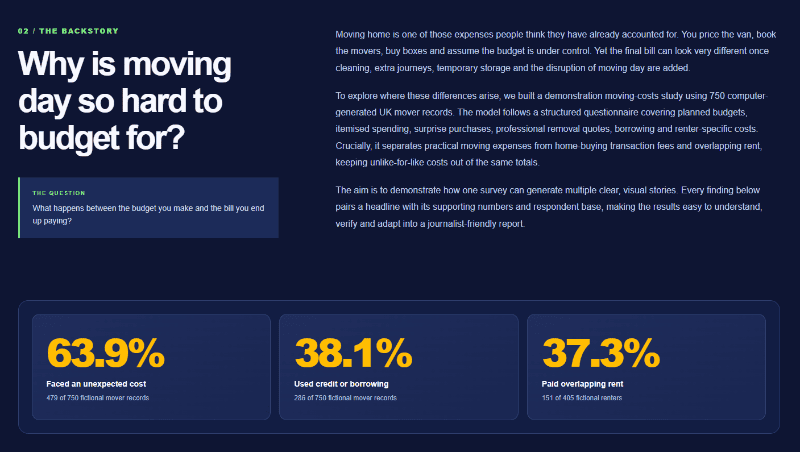
This is where you get to tell the story. The goal of the introduction is to grab the reader’s attention and draw them in.
Now list each other extracted point from your survey results. It should follow a similar pattern to your first section.
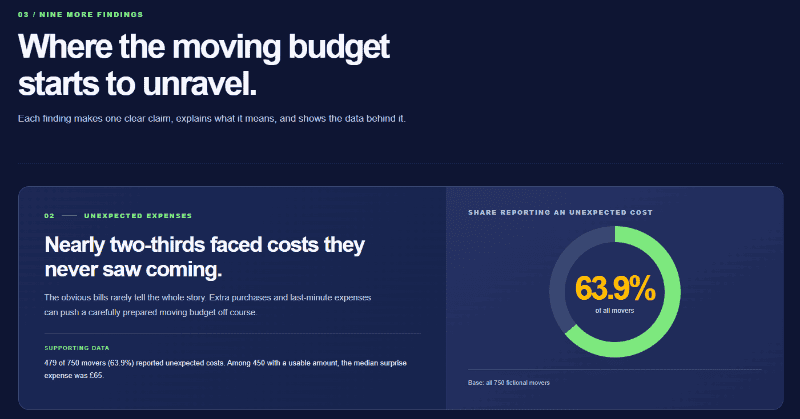
Keep each point short and straight to the point. Focus on interpreting the data for the reader and telling the story.
Important: Add graphics, charts, tables and more to bring your content to life.
The goal is to write great content that articulates the points clearly and is easy to consume.
The graphics and charts help the content pop off the page, which ultimately means more links.
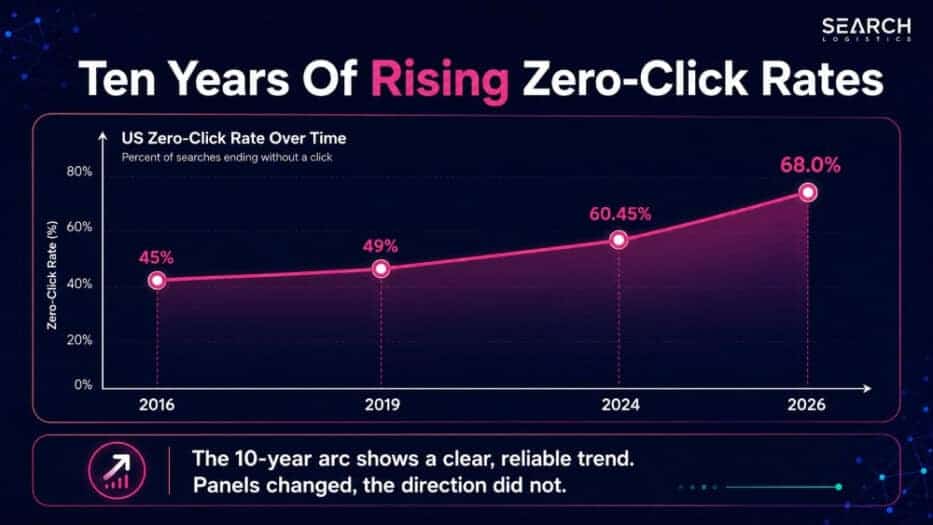
One last check before you hit publish…
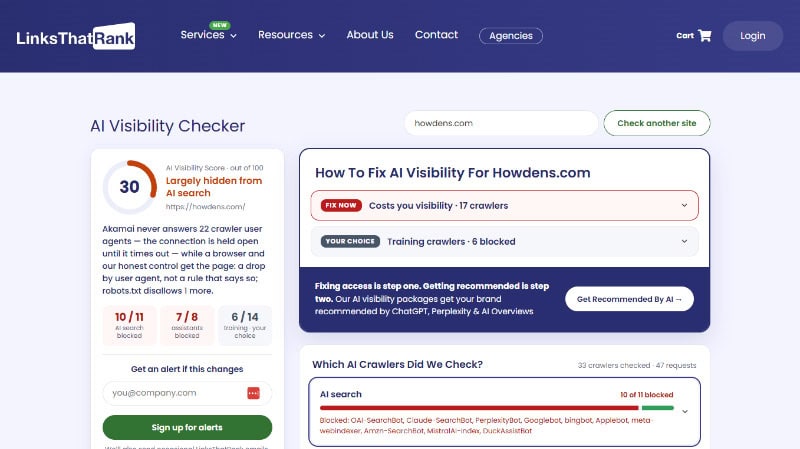
Make sure AI crawlers can actually reach the page.
A lot of sites block them without realising it. CDNs like Cloudflare can turn away bots like OAI-SearchBot and PerplexityBot with firewall rules that never show up in your robots.txt file.
If those bots can’t get in, ChatGPT and Perplexity can’t read your study, let alone cite it.
Run your site through our free AI Visibility Checker. It tests 33 AI crawlers in about 15 seconds and shows you exactly what’s blocking them and how to fix it.
Step 4. Do Targeted Outreach To Secure Initial Links
Think of this like a press release.
Gather all of the sites you wrote down in Step 1 and reach out to each website using the email address.
What should your outreach message say?
Keep it short:
- Write your primary finding
- Add one verified data point from the survey
- Provide a one-sentence explanation of why you chose to reach out
- Add the link to your write-up
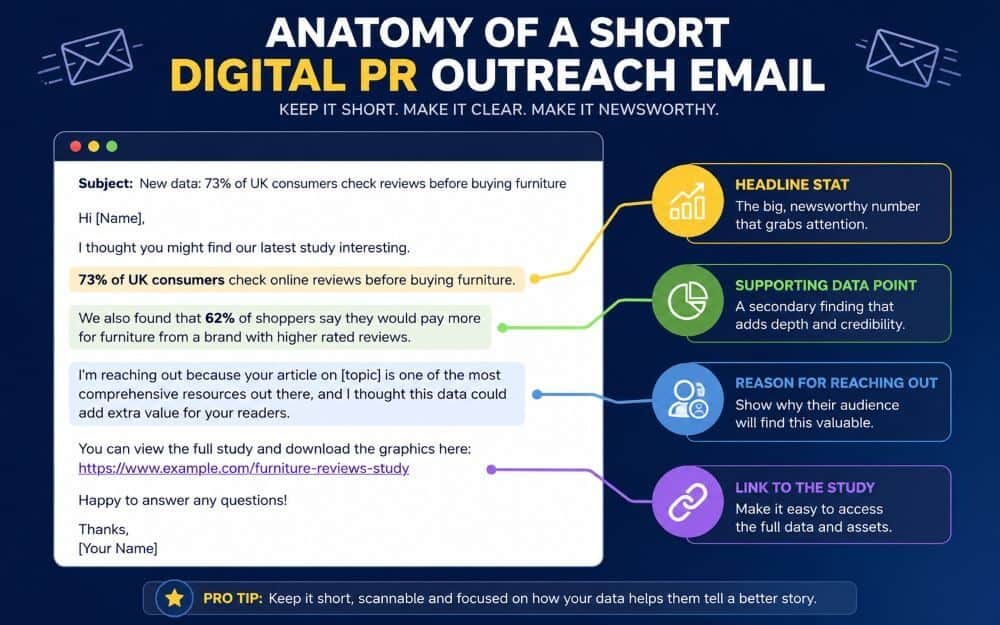
The most important part here is to personalise each outreach email. These sites probably get hundreds of cold outreach requests each month.
People are busy and don’t have time to read a long-winded email.
Remember:
You aren’t pitching a traditional link building guest post. You’re pitching a story they can share with their audience.
That means you want to give them the details and simply let them know WHY it could be a good fit for their audience.
Simple as that.
We’ve found that most of the time journalists from major media brands use the data but never reply to an email.
That’s why you need a tool like Ahrefs to track the links you earn.
Step 5. Pitch Different Angles From The Same Research
Creating an original research digital PR piece takes real time and effort. That effort goes to waste if you send one outreach email per site and move on.
That means you need to follow up.
But how you follow up will determine exactly how successful your campaign is.
If a journalist ignores your pitch, sending the exact same email again likely won’t change their mind.
That’s why you need different angles.
Here’s what I do:
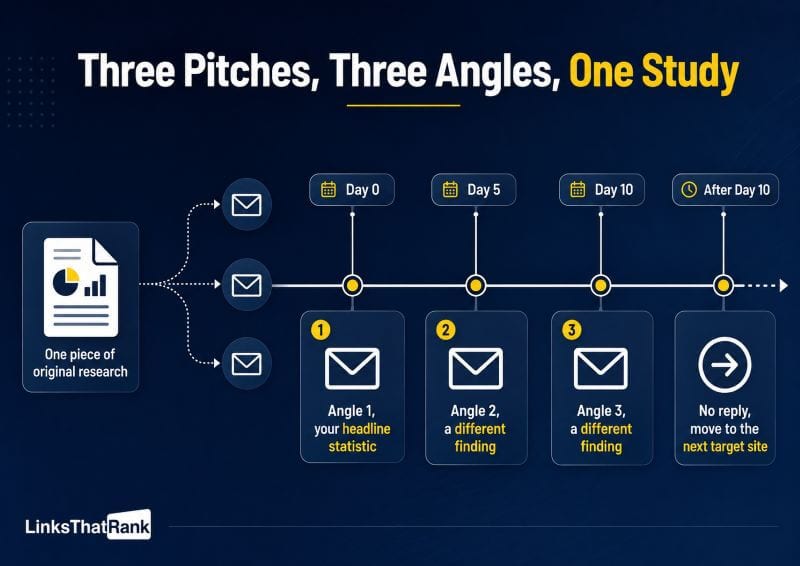
Come up with 3 different angles from the same data.
The first email pitch should be your headline statistic.
But your follow-up emails should use a different angle from the same data, each one built around a different finding from your research.
Struggling to come up with different angles?
Use this prompt:
“Give me 3 newsworthy angles from this research that journalists would naturally want to cover. [Paste your content here]”
Simple, right?
Wait 5 days between follow-up emails. Follow up 2 times, each with a different fresh angle from your data.
If they haven’t replied after the third pitch, they’re not going to. That’s just part of the process.
Move on to your next target site.
Step 6. Rinse And Repeat
Digital PR for AI search isn’t a one-and-done strategy.
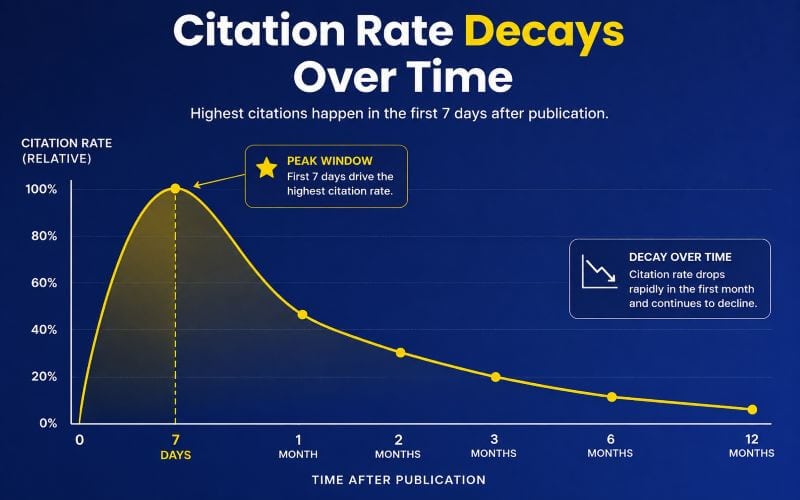
Over time, your campaign coverage will fade.
That’s completely normal.
More than half of earned media citations come from content published in the last 12 months.
The highest citation rate also comes within the first seven days of publication.
What does all this really mean?
You need a consistent digital PR campaign.
The more research and newsworthy content you publish, the more coverage you’ll get.
The good news is that you already have the process.
Set a target to run 3-4 digital PR campaigns for your business each year.
Then simply rinse and repeat this digital PR process.
That will ensure you have a steady flow of content that ultimately leads to more backlinks and citations.
Want links that keep coming in between campaigns?
That’s exactly why we built the LinksThatRank Authority Asset™.
It’s the reverse digital PR approach from earlier, done for you.
How to Measure Your Digital PR Results Accurately
The two ways to measure the success of your digital PR campaign are:
- Earned backlinks
- Citations in AI search
Here’s how to measure both accurately.
Measure Your Backlinks
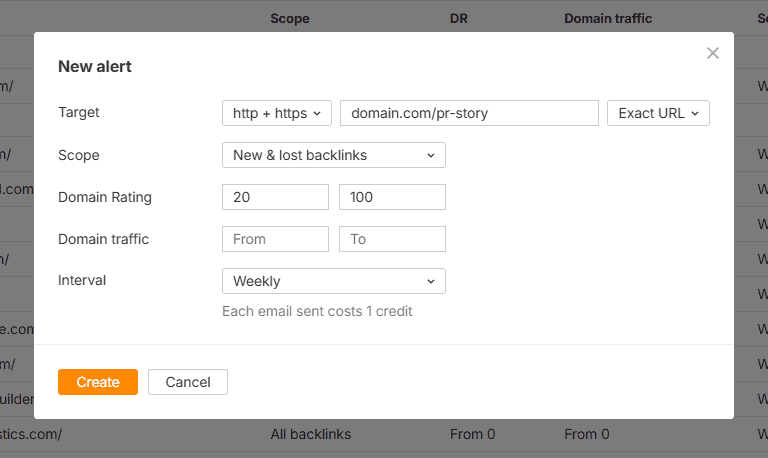
Ahrefs‘ backlinks report is the best way to track the backlinks you earn from your site.
The best part?
The free version of Ahrefs is enough to track your backlinks.
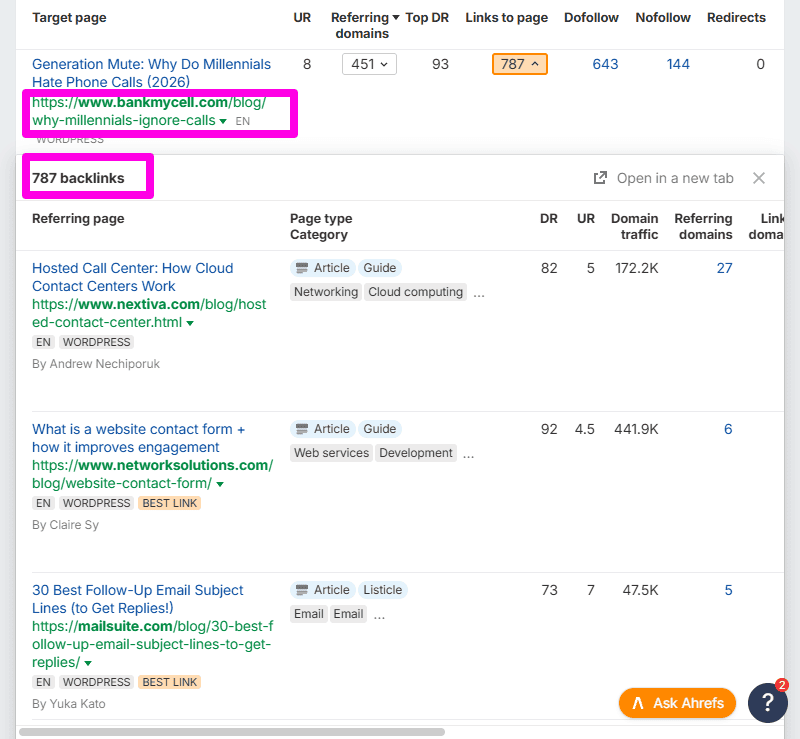
Log in to Ahrefs, click on your site, and select the Backlinks report on the left.

Sort by first seen to see all the latest backlinks that you’ve acquired.
What you’re looking for is backlinks pointing directly at your published content page or homepage from major media sites like this:
Record each backlink that you received from the campaign.
Then calculate the amount you spent to launch the campaign and estimate your hours.
Now you can measure your link building ROI based specifically on the number of backlinks you’ve earned.
Measure Your Citations
The primary goal of digital PR for AI search is to earn more citations.
The good news is that you can track citations on your website for free with tools you’re already using. Here’s how to do it.
Google Search Console
Use the Google Search Console Generative AI report to see which pages are cited in Google AI Overviews and AI Mode.
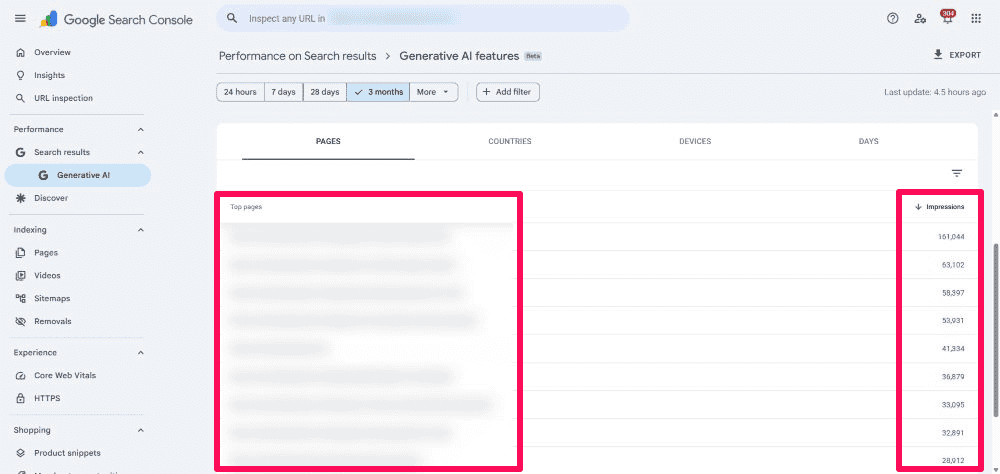
It shows you how many impressions your website gets from Google’s AI models.
Track your digital PR linkable asset pages to see exactly how many citations you’re earning in Google.
Bing Webmaster Tools
Bing Webmaster Tools gives you a powerful AI Performance report.
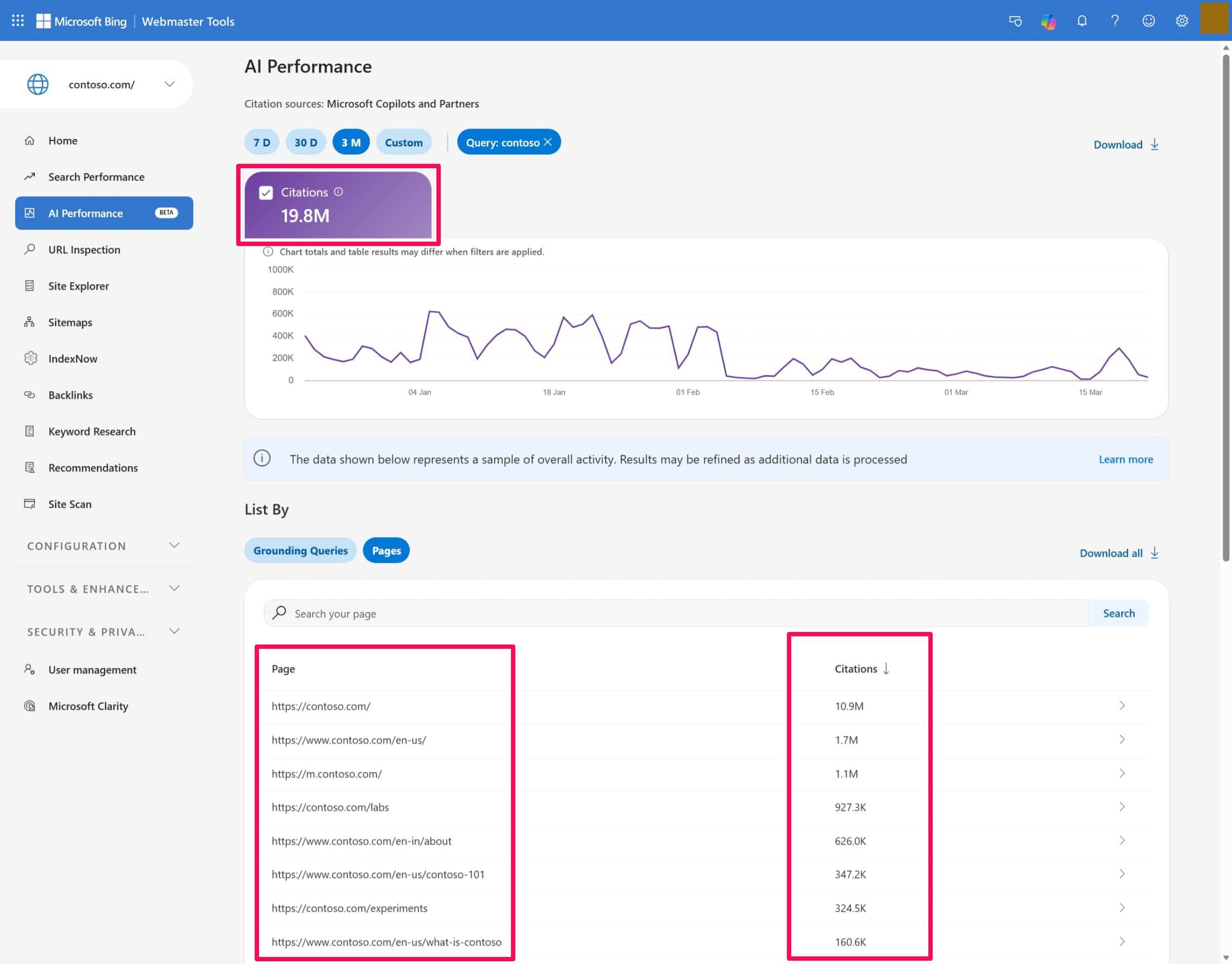
You can see your:
• Total Citations
• Average Cited Pages
• Pages
• Grounding Queries
• Citation Share
And more. Bing Webmaster Tools shows you data directly from Microsoft Copilot.
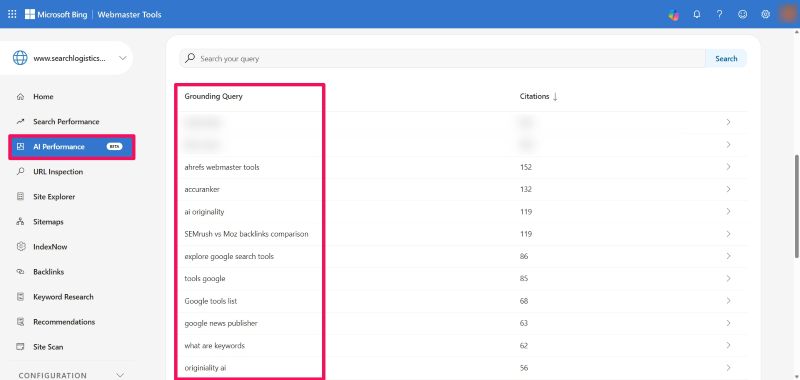
You can track your linkable asset pages, how many citations they earn and what queries are triggering those citations.
I am using this data to double down on what works and create more linkable assets that ultimately compound the entire strategy.
But here’s why Bing is even more important now…
ChatGPT retrieves websites through Bing’s search index.
But the reason that matters so much is that 87% of ChatGPT’s citations match websites ranking positions 1 to 20 on Bing.
Crazy, right?
Keep in mind that ChatGPT now has over 1 billion weekly active users. And 47% of all queries typed into ChatGPT trigger a search through Bing’s index.
The bottom line is that if you rank well on Bing, you are more likely to be cited by Copilot and ChatGPT. That’s a lot of opportunity for search visibility.
Use the AI performance report to track your citations and refine your digital PR strategy in the future.
Seeing fewer citations than you expected?
Check that bingbot and OAI-SearchBot can actually reach your pages. Our free AI Visibility Checker shows you which AI crawlers your site is turning away, and why.
Google Analytics 4
I use Google Analytics 4 to track exactly how much referral traffic I get from each major AI platform, including ChatGPT and Perplexity.
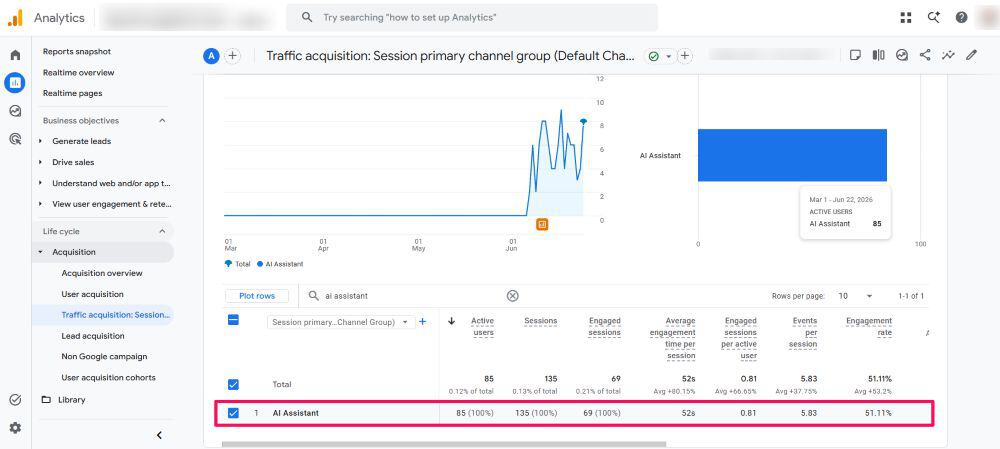
The citations you earn in AI will lead to an increase in traffic.
AI referral traffic is 4.4x more likely to convert than traditional Google search traffic.
Cool, right?
That’s why I recommend setting up conversion goals in Google Analytics 4 so you can see exactly which pages earn AI traffic and how many conversions you get.
Wrapping It Up
Digital PR is now one of the best ways to earn AI citations.
Brand mentions from real publications carry a lot of weight with AI search platforms.
The good news is that digital PR isn’t as hard as most people think. You just need the right process.
Start at Step 1 and work your way down the process.
The first campaign you run will likely take time to get right.
That’s completely normal.
The key is consistency. The more campaigns you run, the better you’ll get.
And the powerful backlinks and citations you earn will set you up to take advantage of AI search as it grows.
Don’t have the time to run campaigns in house?
You can always outsource your link building and let LinksThatRank keep the brand mentions flowing between campaigns.
- Authority Asset™ – Digital PR links from journalists & bloggers
- Listicles – Buyer-intent visibility + AI citations
- Reviews – Brand trust + AI answers
- Discounted Packages – Up to 17% off monthly links
- Guest Posts – Ranking target pages in search engines
- Link Inserts – Domain authority without new content
- Agency Account – 15% off our products for client campaigns
- Content Writing – Human-written, professionally edited articles
Frequently Asked Questions
Does digital PR help AI search?
Yes, digital PR significantly increases your visibility in AI search engines like ChatGPT, Perplexity and Google AI Overviews. Most digital PR backlinks are brand mentions. Those backlinks increase your brand entity authority and trust signals that AI search models rely on when choosing which website to cite in answers.
What percentage of AI citations come from earned media?
LinksThatRank’s analysis of citation data found that between 82% and 90% of all AI citations come from earned media. It depends on the industry and the AI platform for exactly how many citations different types of content get. AI systems naturally prioritise independent, third-party content over brand-owned content.
How do I get media coverage for AI visibility?
Getting media coverage for AI visibility requires earning brand mentions on trusted and authoritative media publishers. The best way to earn mentions is by running a digital PR link building campaign. Start by identifying newsworthy topics that journalists would naturally want to cover and then conduct your own original research. Publish the results on your website, then run a press release outreach campaign.
Do press mentions help ChatGPT specifically?
Yes, press mentions can help you get cited more by ChatGPT specifically. 47% of all queries typed into ChatGPT trigger a search. ChatGPT prefers to cite verified third-party sources and the brands mentioned in those sources. That’s why press mentions can be so effective for ChatGPT.
Does earned media or owned content matter more for AI?
Both earned media and owned content matter for AI citations. But earned media gets cited 325% more than owned media in AI answers. That means you should prioritise creating great content that naturally gets mentioned and earns links from trusted editorial publishers.
Is digital PR for AI search different from traditional SEO digital PR?
The general strategy for digital PR for AI search is the same as digital PR for SEO. But the difference is the target websites that you get listed on. With traditional SEO digital PR, the goal is to earn as many high-authority backlinks as possible. With AI search, the goal is to get brand mentions from publishers that are likely to be cited by AI.