

Link equity is the ranking value that is passed from one webpage to another through a hyperlink.
The more link equity a page receives, the more authority it builds and the higher it can rank in Google.
Link equity can also significantly affect whether your website is cited in AI search platforms like ChatGPT, Perplexity, and Google’s AI Overviews.
That’s what makes link equity worth paying attention to.
But here’s the thing…
Not all links are created equal.
Two websites can have the exact same number of backlinks but get dramatically different performance results in Google and AI search.
Why?
Because what ultimately determines link equity is:
- Quality
- Relevance
- Authority
Think of each backlink like a reference letter.
A recommendation from the CEO of a company is worth more than the same recommendation from an intern.
Links work the same way…
Some links move the needle, while others do nothing.
That’s why in this guide I will explain the factors that control link equity and how to build links that maximise your own link equity.

What Is Link Equity?
Link equity (also called link juice) is the SEO value passed from one webpage to another through a hyperlink.

When a high-authority website links to your page, it transfers some of that trust and credibility.
Next time Google or an LLM crawls your site, they value your page and content as more trustworthy.
Not every link will carry the same amount of link equity.
The value depends on the site itself. Most website owners should have a diverse range of websites linking to them.
This creates a strong backlink profile that passes link equity and gives you real authority in the eyes of Google and AI search platforms.

Two Types of Link Equity
Link equity is categorised into two main types:
- External link equity
- Internal link equity
Here’s a breakdown of both of them and how they work together to improve your SEO.
External Link Equity
External link equity is passed when another website links to your website.

It serves as a major vote of confidence in your site in the eyes of Google and AI search platforms like ChatGPT and Perplexity.
Search engines treat these links as proof that your content is trustworthy and authoritative.
This makes them more likely to rank you higher in the search results and cite you in AI answers.
External links carry more weight than internal links because you can’t just build them yourself.
In other words, it’s one of the few parts of SEO that you can’t directly control yourself.
That’s why Google and AI search platforms rely on them so heavily.
The value of an external link depends on the external site’s:
- Domain authority
- Topical relevance
- Anchor text
- Organic traffic
- Placement page area
The more quality external links you earn from trusted sites, the better your site will perform in Google search and AI search.
Internal Link Equity
Internal link equity is passed when one page on your site links to another page on your website.

That’s why it’s called an internal link.
You are “internally” creating a link between two pages.
Internal links serve as a way to distribute authority around the site to the pages that matter most.
For example, your homepage is typically the most authoritative page on your website.
That means you want to have links from your homepage to your important money pages to help them rank better.
Search engines also use internal links to understand your site structure and discover new pages. The more internal links a page has pointing to it, the more Google sees that as a priority.
The Google API leak confirmed that Google evaluates internal and external links using the same scoring system.
That’s why internal links are so important.
Most website owners obsess over backlinks (which is good), but then ignore their internal link structure completely.
Instead, you should earn high-quality external links to key pages, then use internal links to pass that link equity around your site.
That’s how you use link building to increase your website’s visibility online.

5 Factors That Decide How Much Equity A Link Passes
Not every link passes the same amount of link equity.
Two links from two different pages can pass completely different link equity.
Below are the factors that determine how much link equity is passed. Use them to help build higher-quality links that do more for your rankings.

1. Authority Of The Linking Page
Everyone knows that domain authority is important to measure link equity.
But what’s less well-known is that page authority also plays an important role in link equity.

The more external and internal links a page has pointing at it, the more page authority it has.
The more authoritative the linking page, the more link equity it passes to your site.
That’s why link inserts placed in aged content are such a powerful link building strategy.

2. Relevance
Google and AI search platforms actively measure the relevance of external and internal links.

The more relevant the link, the more weight they give it. That ultimately means more link equity flows through the link.
Here’s an example:
A link from a fitness site to a website selling protein powder carries more link equity than the same link to a car insurance website.
The fitness website is in the health niche, so the link carries more weight because it’s relevant to health-related sites.
On the other hand, fitness is not directly related to car insurance, which means Google will discount the weight of that link.
Every link you build should be highly relevant to your niche and industry. No exceptions.
That’s why relevance is built into the 23-point quality control checklist we run, ensuring every link we build has maximum impact on your rankings.
3. Anchor Text
Anchor text is the clickable text with a hyperlink.

And it can directly affect the amount of equity that is passed through a link.
Google and AI search platforms like ChatGPT and Perplexity use anchor text to better understand the connection between two pages.
Think of it like a sign that explains what the linked page is about.
Descriptive, keyword-rich anchor text can help Google understand your page better, and therefore, the link passes more equity.
Important: Don’t over-optimise your anchors. A website that has an unnatural amount of exact-match anchor text can trigger an anchor text penalty. You need a diverse, natural-looking anchor text profile to ensure maximum positive impact on your rankings.
Check out our anchor text optimisation guide to learn more.
4. Number of Outbound Links On The Page
Every link on a page gets a share of that page’s link equity.

The more links on the page, the smaller the amount each link gets.
Think of it like sharing pizza.
If you cut it 4 ways, each person gets a large slice. But if you cut it 30 ways, each person will only get a small slice.
It works the same with the number of links on a page.
That’s why a link from a targeted guest post that only has 3-4 outbound links can be way more valuable than a link on a directory page that lists 30-40 businesses.
The equity that each link receives is proportionate to the total number of links on the page.
5. Link Placement
Where a link is placed on a page directly affects how much link equity it passes.

Google’s Reasonable Surfer model assigns more value to links that users are actually likely to click.
That means a link naturally added to the body content of a page is worth significantly more than a link stuffed in the sidebar.
But that’s not all…
Where your link is placed within the body content is also important.
Remember:
Google assigns more weight to links that are likely to be clicked.
That means your links need to be naturally placed in a relevant section of the page where users would click to get more information.
This is a technical component of link building that most website owners and even agencies don’t pay attention to.

How to Audit Your Link Equity Step By Step
You need to understand how your internal links are pushing link equity around your site and what external links are primarily driving your link equity.
That’s exactly why you should run a link equity audit.
I recommend doing this once every 6 months to ensure you’re getting as much value as possible from your backlink profile.
Follow these steps to audit your link equity correctly.
Step 1: Crawl Your Site
Download Screaming Frog and run a full crawl on your site.
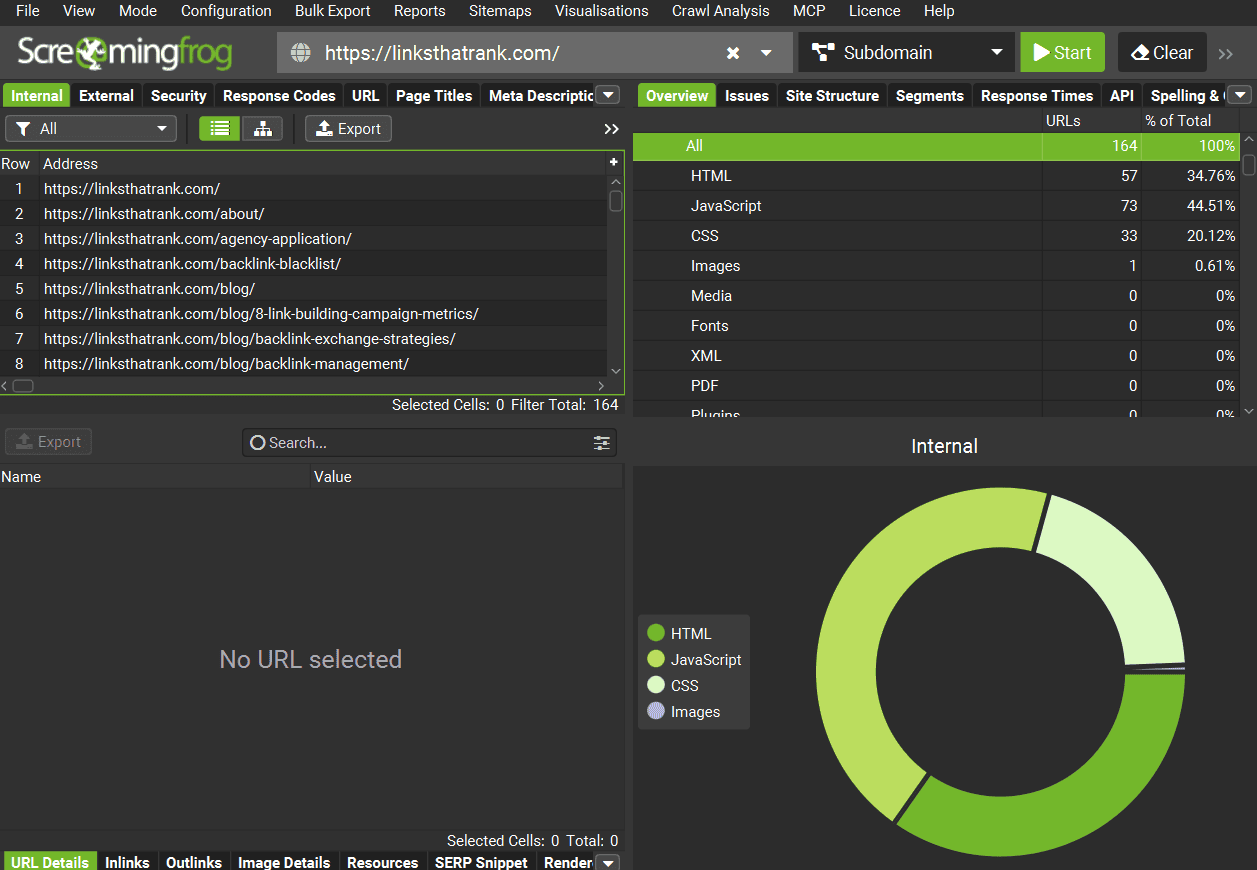
It’s free for up to 500 URLs.
Make sure that you have enabled “Crawl Linked XML Sitemaps” before running the crawl.
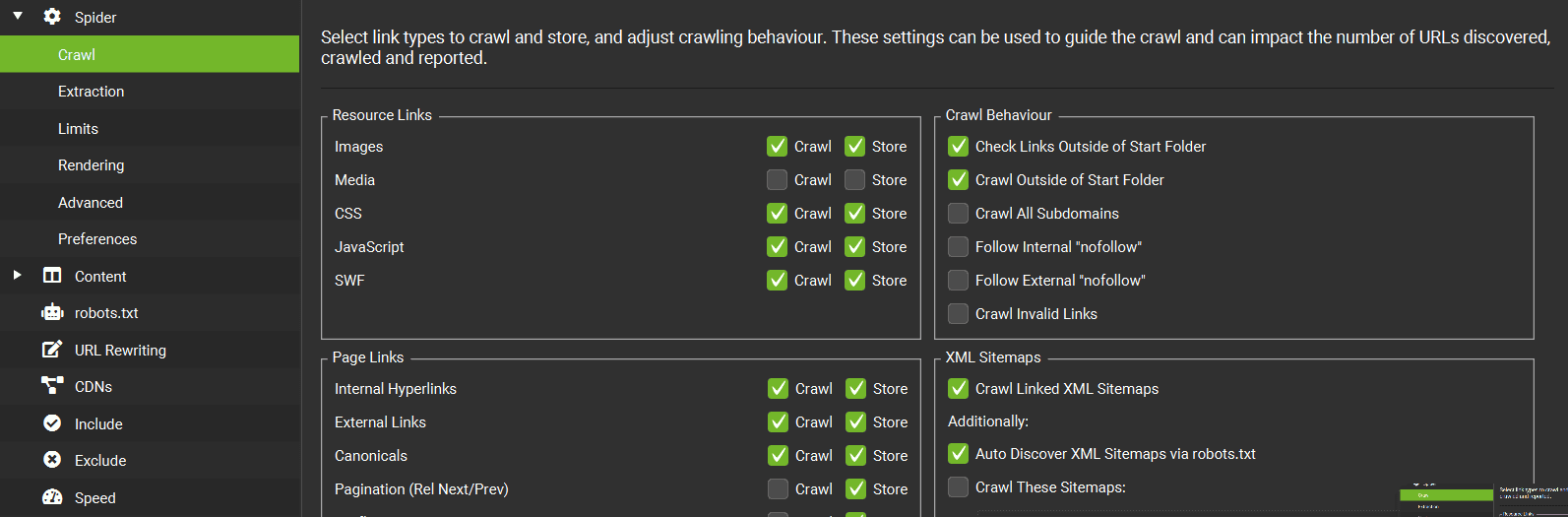
This will be important later.
Next, click on the Links tab and look at the Unique Inlinks column.
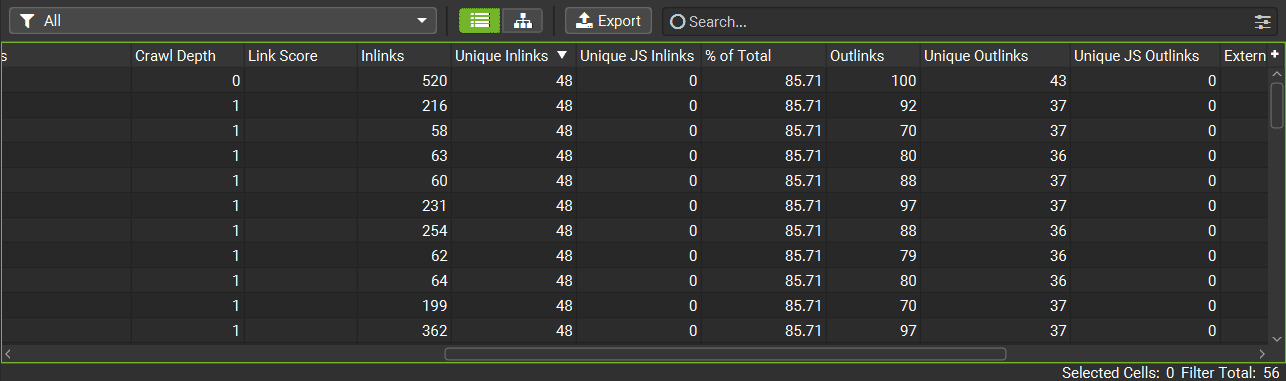
This column shows exactly how many internal links each individual page has on your site.
Look for important pages on your site that have only a few internal links.
Your job is to build as many relevant internal links to your most important pages as you can.
Internal links are the best way to pass link equity around your site and ensure that Google and AI search platforms know which pages are important.
This is the foundation of your entire link equity strategy.
Step 2: Find Orphan Pages
Go to Bulk Export, then Sitemaps, and select “Orphan URLs Inlinks”.
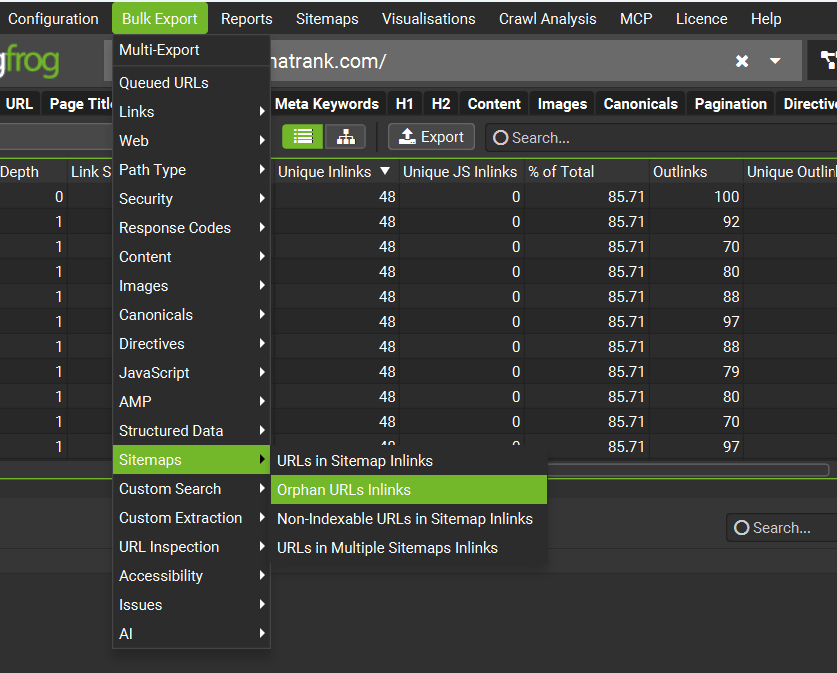
This is a complete list of all the orphan pages on your site.
Orphan pages are pages that exist on your site but don’t have any internal links connecting them to your site.
Here’s why that’s a problem:
Google and AI search tools like Perplexity and ChatGPT use internal links to find pages on the web.
If your page doesn’t have any links, it will never be found and added to the search index.
That means it’s essentially impossible for that page to get organic traffic. It’s also impossible for users to find that page on your site unless you give them the URL directly.
What should you do with orphan pages?
You have two primary options:
- Add relevant internal links so they are no longer orphaned
- Delete them and do a 301 redirect back to a relevant page
If the page still has value to your site, then adding internal links is the easiest option.
If it doesn’t, then you have to make a decision about whether you delete it or fix it up.
Step 3: Check Crawl Depth
Navigate back to the Links tab and look at the column called “Crawl Depth”.
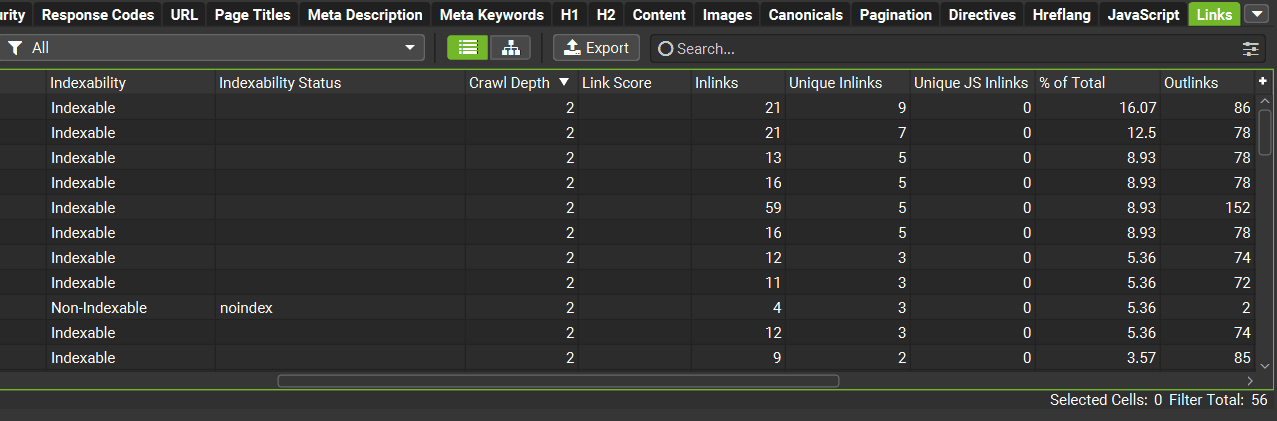
Crawl depth tells you how many clicks it takes to reach a page from the homepage.
For example:
A click depth of 2 means that if a user were on your homepage, it would take them a minimum of 2 clicks to reach that page.
What’s a good crawl depth?
A good crawl depth is considered 3 clicks or less.
That’s why your site must have an SEO-friendly, flat architecture.
Every extra click that a user (or search engine bot) has to make means you’re losing link equity. A page sitting 5 clicks deep is being starved of authority purely because of where it sits in your site architecture.
Look at each page in the crawl depth report. Any page that has a click depth of 4 or more needs to be fixed.
Don’t be afraid to restructure your navigation to improve your click depth.
Just make sure that you keep every page on its original URL.
If you delete a page or change the URL, use an appropriate 301 redirect to ensure you don’t have any broken links and preserve your link equity.
Step 4: Find Your Link Equity Power Pages
By now you should have fixed your:
- Internal links
- Orphaned pages
- Crawl depth issues
These three fixes mean that link equity is flowing much better around your site. The next step is to maximise the link equity you’re already receiving from other sites.
For this you only need the free version of Ahrefs.
Log in to Ahrefs, select your site, and under Pages, click the Best by Links report.
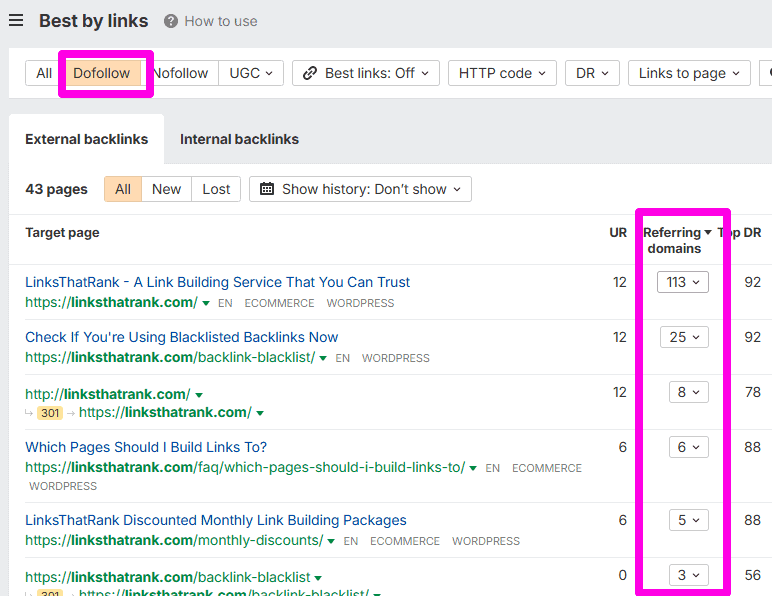
Click Dofollow to sort the pages by the highest number of dofollow links.
This report shows all of your pages ranked by the number of external links they have.
In other words, the pages at the top have the most backlinks pointing at them.
These are your power pages.
They are the most authoritative pages on your site and hold the most link equity.
Make a note of the top 10 to 15.
These are the power pages that you’re going to use first.
Step 5: Connect Power Pages to Money Pages
Now for the important part…
Because your power pages hold the most link equity on your site, you want to use internal linking to connect them to all of your money pages.

Why?
Short answer: The power pages pass link equity to your money pages, which helps them rank higher in Google and AI search.
What are money pages?
Any commercially valuable page that directly makes your business money, such as:
- Landing pages
- Sales pages
- Product pages
- Service pages
- Affiliate posts
- Lead gen pages
The more link equity these pages have, the higher they will rank and the more money you will make.
Simple as that.
Here’s how you do it:
Make a list of all the important money pages on your site. Take your first power page and read through it.
Look for opportunities where you can naturally add internal links to your money pages.
In most cases, you may need to add a section or rework the content.
The most important thing is that the new internal links look completely natural.
Don’t just stuff them in there.
Search engines will ignore internal links if they don’t seem natural, which means those links don’t pass link equity anyway.
Work your way down the list until you’ve added as many relevant internal links as you can.
This can have a significant impact on your rankings on both Google and AI search platforms.

Best Practices Frameworks To Improve Link Equity
Maximising link equity means structuring your site so authority flows naturally to the highest-value pages on your site.
The top three frameworks for that are:
- 3-Click Rule
- Topic Cluster Model
- New Content Rule
Use each of these frameworks to ensure that every page on your site naturally gets the maximum amount of link equity it can.
3-Click Rule
Every page on your site should be reachable within 3 clicks from your homepage.
It’s that simple.

And this is especially important for key content pages and money pages.
Link equity dilutes through every step (or click) that a search engine has to go through.
That’s why the 3-click rule is so important.
So how do you fix it?
Use this structure for your website:
- Top-Level – Homepage
- Middle-Level – Category pages, pillar pages, and main service pages
- Bottom-Level – Individual posts, product pages, and landing pages
The reason this works is that your homepage is like the front door to your website. It’s also typically the most authoritative page with the most external and internal links.
That’s why it’s the top-level.
The homepage feeds link equity through to the rest of the site.
Your middle-level pages sit just one click from the homepage and act like relay stations. They collect link equity from your homepage and pass it to your content pages.
Middle-level pages can sometimes attract backlinks as well, which means they tend to hold strong link equity. That’s ideal.
The last level is your bottom-level pages. These are the pages that you ultimately want to rank in Google and AI search.
They allow you to target a range of keyword searches and reach new potential customers.
As long as you follow this structure, you will never have an issue with website structure. Each page will be max 3 clicks from the homepage, and in most cases just 2.
That’s exactly what you want.
Topic Cluster Model
The topic cluster model (also called Content Hub) is a proven SEO framework that organises all your content around core pillars.

It keeps your content focused and allows you to get topical authority.
Here’s how it works:
You create 3-5 core pillar pages.
Each of these covers broad topics that map directly to product categories or services you offer in your business.
That’s the important part with the topic cluster model.
Each pillar page should directly relate to a product category or service you offer.
For example, if you run a plumbing business in Austin, your pillar page might be “plumbing services in Austin”.
It covers everything a customer needs to know about plumbing services.
Surrounding each pillar, you build 8 to 12 spoke articles. Each spoke covers a subtopic of the pillar page more in-depth.
This could be:
- Questions your audience asks
- Problems they need to solve
- Concepts that need explaining
For our plumber example, a spoke article could be “when to call an emergency plumber”.
Make sense, right?
It works the same way for your blog content. You create a pillar guide on the topic.
Then create specific, detailed spoke articles that go deeper into different sections that the pillar page mentions.
This is how it all ties in together…
You add links from your pillar page to each of your spoke pages. Then you link your spoke pages to the pillar page and to each other.
This does two things:
- Creates topical authority
- Ensures link equity flows around the cluster
It makes building strategic links much easier.
Essentially, every time you build a link to one page in the cluster, the entire cluster gets a share of that link equity.
This can lead to entire clusters ranking higher for individual keywords and getting more AI citations.
New Content Rule
Every time you publish a new piece of content, you must add 3 to 5 relevant internal links to it.
Simple, right?

This connects new content to other relevant pages on your site and immediately pushes link equity to it.
The new content rule will also help search engines like Google find and index your content faster.
The most important thing here is relevance.
You only want to add relevant internal links to new content.
That way, when search engine crawlers find and index the content, they know which searches it’s relevant for. That means faster rankings and more chances of being cited in AI searches.
But the cool part?
Google will tell you exactly which pages you should add internal links from on your site.
Here’s how:
Go to Google and use this search operator:
site:yoursite.com "target keyword"
What this does is get Google to show you all the relevant pages on your site to your new content’s primary target keyword.
And Google shows you them in order from the most relevant to the least relevant.
All you have to do is open the top 3-5 pages and add an internal link in a relevant section.
Easy, right?
It’s the fastest way to identify which published pages to add internal links to.
The whole process should take you less than 5 minutes.
7 Ways to Maximise Your Link Equity
Maximising your link equity means getting your internal link strategy right and building quality backlinks to important pages.
Use these seven proven ways to maximise link equity.
1. Build Backlinks To Important Pages
Most website owners build backlinks to whatever pages are easiest.

But the reality is that you should be consistently building links to your most important pages.
Why?
Because your important pages are the ones that you actually want to rank. They drive real commercial value for your business.
Important pages include:
- Service pages
- Product pages
- Landing pages
- Sales pages
- Affiliate blog posts
Any page on your website that makes you money is considered an important page. If you are unsure which pages to prioritise, start with the ones that drive direct revenue.
Here’s the problem:
It’s hard to get other website owners to link to your important pages.
Commercial pages are harder to get links to because they offer less editorial value to other websites.
That’s why our team at LinksThatRank specialises in building high-quality links to commercially valuable pages.

Just choose the links you need and tell us the pages, and we will take care of the rest.
2. Use Authority Pages To Boost Money Pages
Your authority pages are the ones that have the most backlinks and the highest link equity.
That’s why you need to use them strategically.

Here’s how:
If you haven’t already, go back to Step 4 in the link equity audit and use the Ahrefs Best by Links report.
This will show you how to find your most authoritative pages.
Then go through each page with a fine-tooth comb.
Your goal is to add as many relevant internal links to your money pages as you can. The important part here is relevance.
Don’t just stuff internal links in.
Only add them if they are highly relevant and naturally fit the section. Feel free to rework some of the content to make it fit more naturally.
You’d be surprised how much this can boost your SEO results.
Take matters into your own hands and control where your link equity goes.
3. Fix Redirect Chains
Every redirect that a search engine bot has to go through dilutes the link equity.
If you have a chain of 4-5 redirects, you have almost zero link equity getting through to the end URL.
The thing that most website owners don’t understand is that redirect chains are silent killers. They have a significant impact on SEO, and most of the time you don’t even know they exist.
That’s why you need to do a simple audit every 6-12 months and catch issues as they arise.
Here’s how to fix them with Screaming Frog.
Click on the Response Codes tab and filter for Redirection (3XX) from the drop-down.
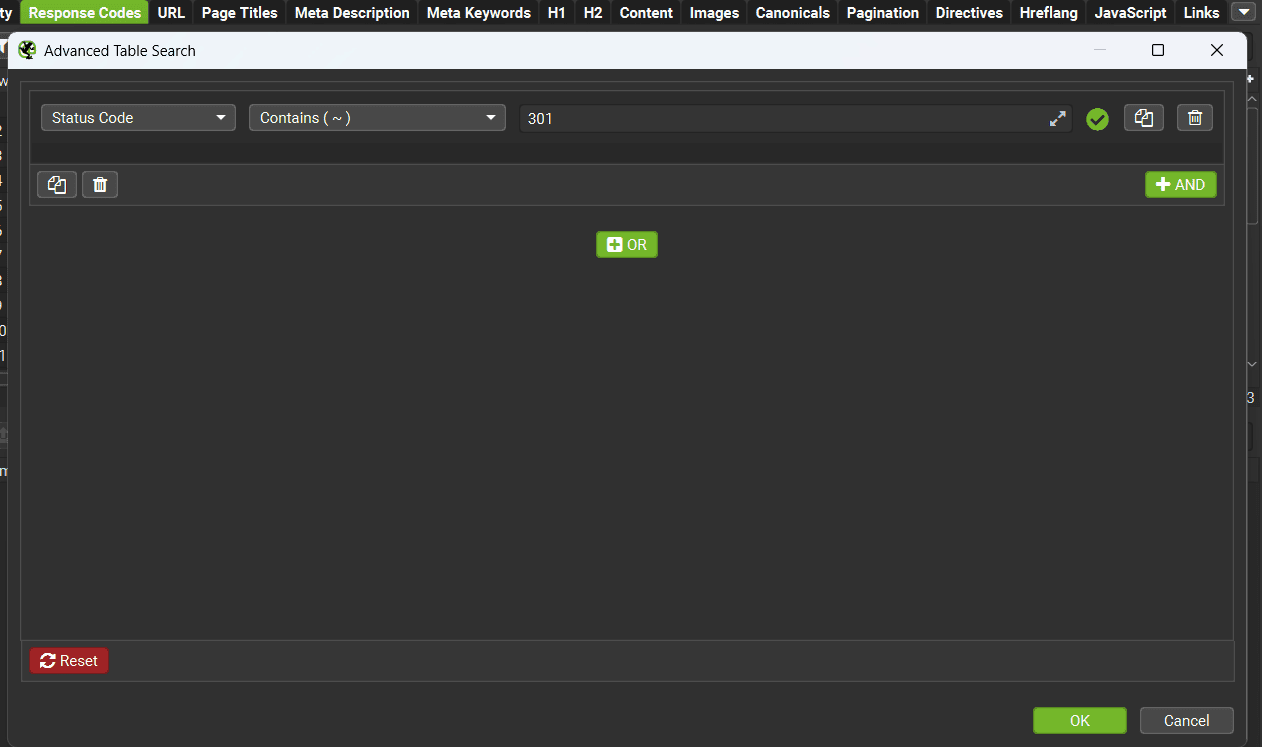
Click on any of the redirect issues and select the Inlinks tab at the bottom to view the source URL causing the redirect chain.
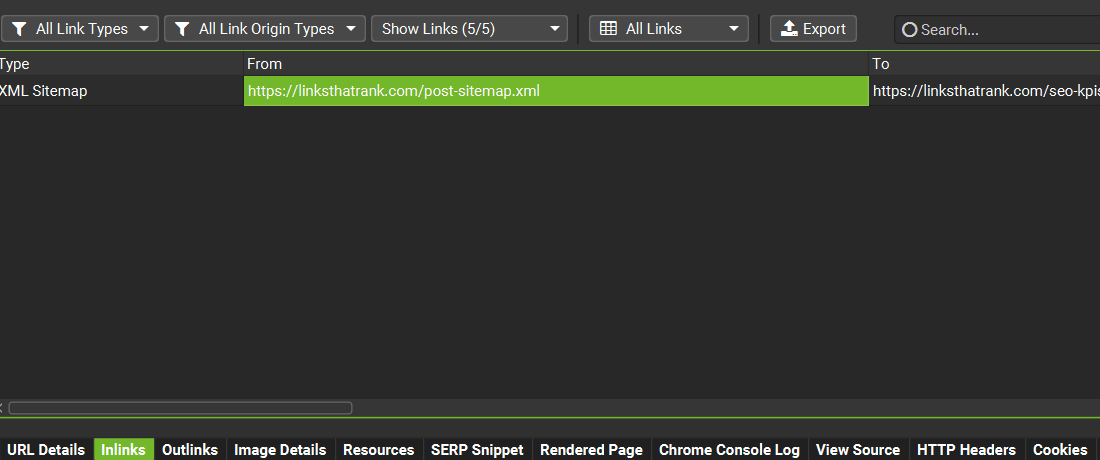
Then all you have to do is add a 301 redirect from the source URL to a relevant page on your site.
Don’t forget to also update any internal links that point to the old redirect source URL as well.
Fixing redirect chains will mean that link equity isn’t wasted and flows around your site.
This one quick win can have a significant impact on your rankings and AI search citations.
4. Reduce Click Depth To Priority Pages
Priority pages should never be hard to reach.

What does that really mean?
They should be as accessible as possible from your homepage and be reachable from anywhere on your site within 1 click.
Sounds impossible?
Let me explain…
Priority pages are your:
- Main service or product pages
- Pricing pages
- Category pages
- High-converting landing pages
You already know that your homepage is typically the most authoritative page on your site. Every click between it and a priority page is costing your link equity.
But that’s not all…
Think about your website’s customer journey for a second.
If a prospect lands on your homepage, where do you want them to end up?
The goal is to get them to your core service pages as fast as possible and let the pages do the work. If they have to click through a bunch of pages to get there, you’ll lose them.
And Google will notice that too.
The fix is simple. Add your priority pages to:
- Your main navigation
- Link to them from your homepage
Simple as that.
5. Reclaim Lost Link Equity From Dead Pages
Every broken link on your site is like a dead end for link equity.
The authority flows in and has nowhere to go. If your website is more than 3 years old…
There’s a good chance that you have backlinks that now link to dead pages on your site.
This is a huge missed opportunity and an easy fix.
Let me explain:
If another website links to a page on your site that is broken (404), you essentially lose all of the value of that backlink.
But if you simply redirect the broken page to another relevant page, you recover all of that link equity.
Simple, right?
The best tool for the job is Ahrefs.
Enter your domain in Ahrefs Site Explorer.
Click the Best by Links report, filter by 404 Not Found, and sort by referring domains from highest to lowest.

You now have a list of every dead page on your site ranked by link equity.
Start from the top.
Every URL with referring domains needs to be 301 redirected to the most relevant page on your site.
Be strategic about it.
These pages have link equity, so redirect them to the pages that have the most commercial value to your site while still being highly relevant.
This simple fix will add new link equity to your site without you having to build a link.
Pro Tip: Prioritise redirecting 404 pages that already have referring domains to maximise the link value.
But you should eventually fix all the 404 broken pages on your site to ensure it’s technically sound.
6. Prune Over-Linked, Low-Value Pages
The more links you have on a page, the more the equity is split.

Think about it like this…
If your homepage links to 80 pages, each one receives roughly 1/80 of the available link equity.
Most websites that I’ve audited bled link equity through overlinking in the:
- Navigation menu
- Sidebar
- Footer
- Homepage
What you end up with is a bloated mess of internal links that dilutes the link equity to important pages.
Internal linking should always be strategic.
Especially from high-authority pages such as the homepage.
Run a quick audit on your website, looking at key website pages and menus.
Ask yourself this one question – Does this link genuinely help my users or support my SEO strategy?
Cut any links that aren’t strategically valuable and highly relevant. Think of it like trimming the fat.
Every link you cut essentially increases the link equity of all the other pages.
7. Use Descriptive Anchor Text
Anchor text is the clickable text within the internal link.

It tells Google and AI search platforms exactly what the destination page is about. It also gives readers a short overview of what they are likely to find when they click on the link.
Here’s why that matters:
The more descriptive and relevant the anchor text is, the more link equity flows through that link.
Generic anchor text like “click here” and “read more” tells Google nothing about the page you’re linking to.
Googlebot has to go through the link and read the page to understand the relevance.
Compare these two examples:
- “Click here to learn more” – gives Google no context about the destination page.
- “Learn how to lose weight in 30 days” – tells Google exactly what the linked page covers.
See the difference?
It’s the same link, but you dramatically improve the value of that link just by changing the anchor text.
Use descriptive and relevant anchor text for as many internal links as possible.
But with external backlinks, you need a more balanced approach to ensure they look natural.
Check out our guide on choosing anchor text to learn exactly how to choose external link anchor text.
AI-Powered Link Equity Workflows
AI tools like Claude, ChatGPT, and Gemini can do in minutes what used to take hours of manual SEO work.
So I’ve put together for you 3 link equity prompts that turn data from Screaming Frog and Ahrefs into prioritised, actionable lists.
Prompt 1: Identify Internal Linking Opportunities
This prompt helps you identify more internal link opportunities for your site and prioritises them in order of the pages you should work on first.
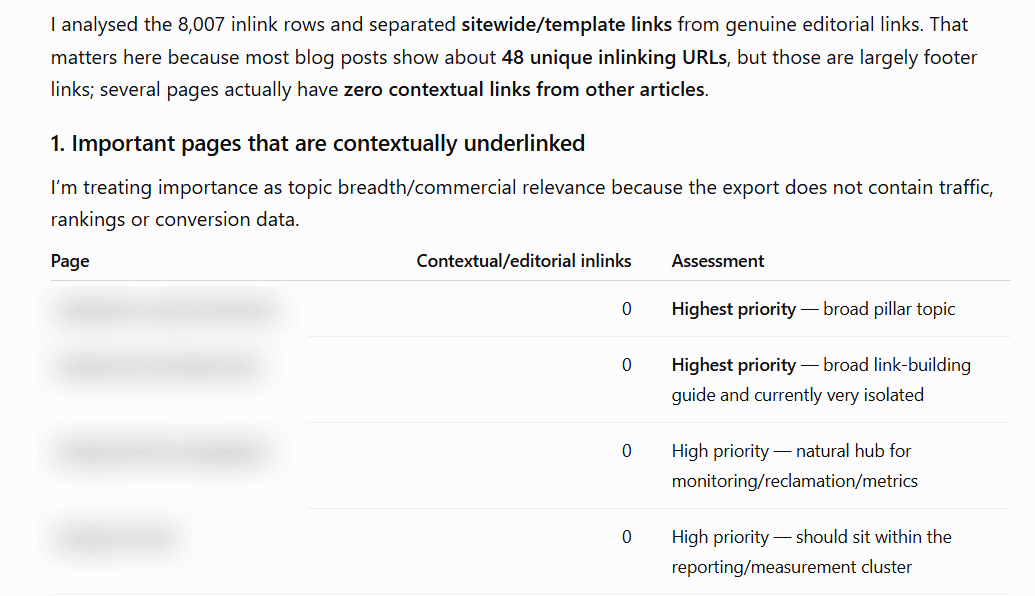
In Screaming Frog, go to the Links tab and export the Unique Inlinks report as a CSV.
Upload it to your chosen AI tool (I prefer Claude) and use this prompt:
“I’m auditing the internal linking structure for [your-domain.com]. Here is my Screaming Frog Unique Inlinks export: [paste CSV data]. Analyze this and identify: 1. Important pages with very few internal links pointing to them 2. Any orphan pages with zero internal links 3. Content clusters where internal cross-linking is missing 4. Specific page pairs where I should add internal links, with suggested anchor text for each. Output a prioritized action table: Source Page | Target Page | Suggested Anchor Text | Reason. Only suggest genuinely relevant connections.”
Prompt 2: Generate Anchor Text Variations
This prompt is designed to help you generate anchor text variations for any page on your site.
The AI tool will give you a list of relevant anchors that you can use to diversify your page anchor text profile for both internal and external links.
Take your:
- Target URL
- The primary topic
- The target keyword
And use this prompt:
“Here is a page I want to build links to: [target URL + page topic + primary keyword]. Generate 15 natural anchor text variations I can use across different internal and external links pointing to this page. Mix: 3 exact-match anchors, 5 partial-match anchors, 5 topical phrase anchors, 2 branded anchors. Each anchor must flow naturally inside a sentence. Avoid generic phrases like “click here” or “read more.” Format as a numbered list with one sample sentence showing each anchor in context.”
Prompt 3: Fix Redirect Chains and Recover 404 Pages
Use this prompt to quickly identify broken pages you need to redirect and redirect chains that need fixing.
In Screaming Frog, click on the Response Codes tab, filter by Redirection 3XX, and export as a CSV.
Then filter for 4XX errors and export those as a CSV.
Upload both CSV files and use this prompt:
“Here are two exports from Screaming Frog. The first is my redirect chains (3XX). The second is my broken pages (4XX): [attach both CSV files]. For each redirect chain: 1. Identify the final destination URL 2. Flag any chains that are 3 or more hops as priority fixes. For each broken page: 1. Suggest the most topically relevant live page to redirect to 2. Flag any broken pages with referring domains as priority reclamation. Output a ranked action list starting with the highest equity recovery opportunities first.”
Link Equity In The AI Search Era
Link equity still matters in the age of AI search.
But why it matters has changed.

Think of link equity like a points system of trust on the internet. With traditional search, the more quality backlinks you have, the more points you get.
The higher your “score,” the easier it is to rank.
But AI search engines like ChatGPT and Perplexity read the internet like a giant brain.
They don’t just count backlinks as points.
The primary goal of an AI search engine is consensus.
It wants to make sure that the answers it gives you are correct and accurate.
That’s where link equity and backlinks come in.
Instead of thinking of link equity as “link juice”, think of it more as digital validation.
AI engines and LLMs treat backlinks as citations.
When a trusted site links to you, the AI model views this as validation that you’re also a trusted source.
The more quality links you have, the more confident the AI model is that your site is a trusted source. This increases the chance of AI models citing your brand as a source in their answers.
But that’s just the beginning…
Context now drives equity in the age of AI search.
An LLM will read the whole paragraph around the link to understand exactly what you are an expert in.
For example:
If a bunch of trusted sources say that you’re an expert in local plumbing services in Austin, the LLM learns the connection.
When someone asks an AI search platform for a plumber in Austin, it will recommend you. That’s what makes building quality links so important in the age of AI.
Put simply – Backlinks get you in the room, context is what gets you cited.
Want to build quality links that help you get cited in AI search?
LinksThatRank specialises in building natural, high-quality links that are contextually relevant to your industry.

Our strategic guest post services get you placed on trusted websites and position your brand as a trusted source to earn stronger visibility in AI search.
Choose the links you need, and our team will take care of the rest.
Wrapping It Up
There you have it.
Everything you need to know about link equity.
Here’s what to do next…
Run a link equity audit on your website.
This will fix any link equity issues that already exist and ensure that you’re getting the maximum value from your backlink profile.
Then build more high-quality backlinks to important pages on your site.
These are the pages that drive commercial value for your business. The more links you build, the more external link equity those pages will have.
This improves your rankings in traditional Google searches and increases the chances of your brand being recommended in AI search.
Remember:
Context is now extremely important in link building. It plays a significant role in how much impact each link has on your site.
Want quality links from trusted websites in your niche?
Let our team handle the heavy lifting for you while you focus on growing your business.
- Guest Posts – High-quality AI search-ready
- Link Building Packages – Discounted monthly bundles
- Link Inserts – Niche-relevant editorial placements
- Agency Program – Discounted white label services
Every link we build is manually placed by a member of our team and passes our strict 23-point quality control checklist.

That means you can be confident that our links are highly relevant to your business, increase authority, and act as natural citations that AI expects to see.
Place a test order now and see the difference for yourself!
Frequently Asked Questions
Does link equity flow through 301 redirects?
Yes, link equity flows through 301 redirects. The new end URL inherits the authority and link equity from the original URL that was redirected. But you must avoid redirect chains. Redirect chains dilute link equity with every jump. That’s why you should always aim for a single redirect from the original URL to the new URL.
How long does it take to see results from internal linking changes?
Internal linking changes are one of the quickest wins in SEO. You can see initial results within 2-4 weeks and more meaningful results within 2-3 months. Sites that are crawled more often by search engines typically see quicker results. Every time you update internal links on your site, submit your URLs in Google Search Console to get the changes indexed faster.
Do nofollow links pass any link equity?
Nofollow links typically don’t pass link equity, but sometimes they can. Google and AI platforms like ChatGPT and Perplexity treat nofollow attributes as recommendations. If they accept the recommendation, the link doesn’t pass link equity. If they choose to ignore the nofollow attribute, then the link may pass link equity to your site. Only build backlinks that are natural, relevant, and dofollow for maximum link equity.
How many internal links should a blog post have?
A blog post should typically have 3 to 5 internal links per 1,000 words of content. The number of internal links your blog post has usually depends on the topic and length. The most important thing is that your internal links are relevant and add value to the page. Don’t stuff in links just to increase the internal link count artificially.
Can I use ChatGPT or Claude to do internal linking automatically?
Yes, you can use ChatGPT or Claude to do internal linking automatically. But neither tool is completely hands-off, and you must double-check the links they recommend. The best way to do it is to export all of your “inlinks” from Screaming Frog and upload them to ChatGPT or Claude. Then ask the AI to recommend internal links between pages based on context and relevance.